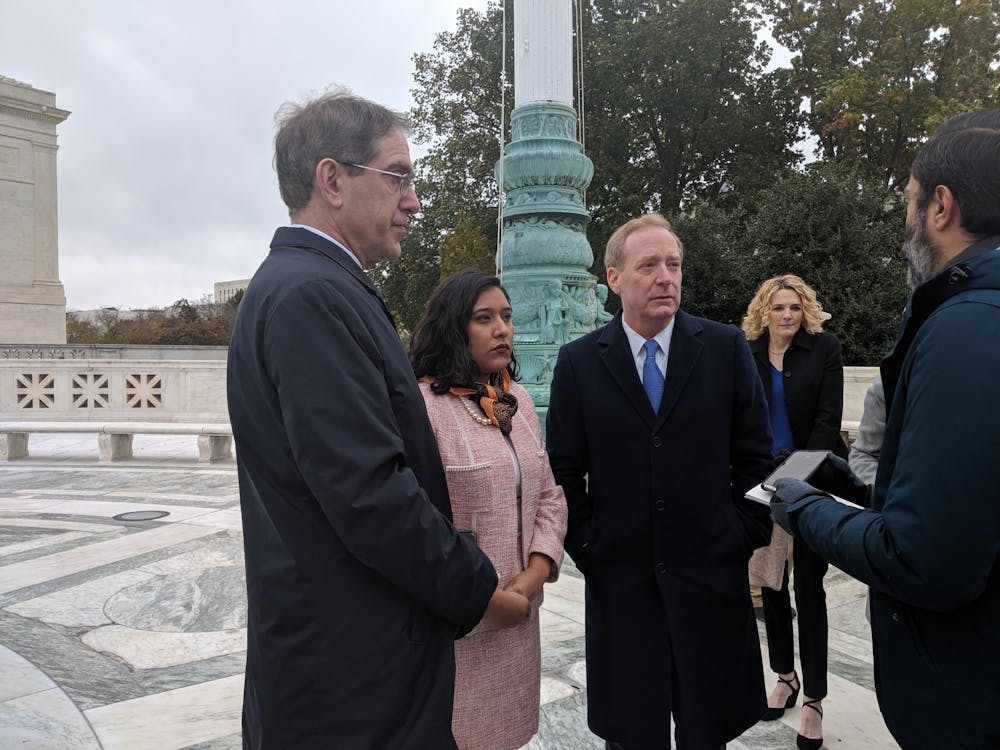
U. commits $1 million to local COVID-19 relief efforts
Marissa Michaels“The University is actively pursuing other partner organizations, especially those focused on helping local businesses,” noted a University spokesperson.
“The University is actively pursuing other partner organizations, especially those focused on helping local businesses,” noted a University spokesperson.
“The announcement is a recognition that the endowment has an impact on the climate,” Divest Princeton’s Tom Taylor GS said. “It is a recognition of that really basic premise, that groups like us have been talking about for a really long time.”
Insurance coverage on the University’s Student Health Plan (SHP) has been increased due to COVID-19, expanding both in and out of network coverage, in addition to telemedicine. While students appreciate the change, they feel the University could be more clear regarding the changes and the new policies.
Goldsmith is currently the Stephen Harris Professor of Engineering and Professor of Electrical Engineering at Stanford University, where she has worked for 21 years.
The University will turn down $2.4 million in CARES Act funding, after determining that pre-existing aid programs already provide “exceptional levels of support to our students.”
In addition to a change in the summer savings expectation, the University eliminated the residential college fee and increased graduate student teaching and research assistant stipends.
In addition to a salary freeze, there will be restrictions for temporary hires and department budgets. No decision has been made yet regarding junior faculty tenure clocks.
Although all non-essential on-campus research was suspended as of March 21, a limited number of approved, campus-based proposals related to COVID-19 will be permitted to join the few essential projects permitted to continue to operate.
On the afternoon of Wednesday, March 25, Forbes Director of Student Life Olivia Weiner emailed Main Inn residents that Bohren’s Moving Company would arrive “very early” the morning of March 27 to help them pack their belongings and move.
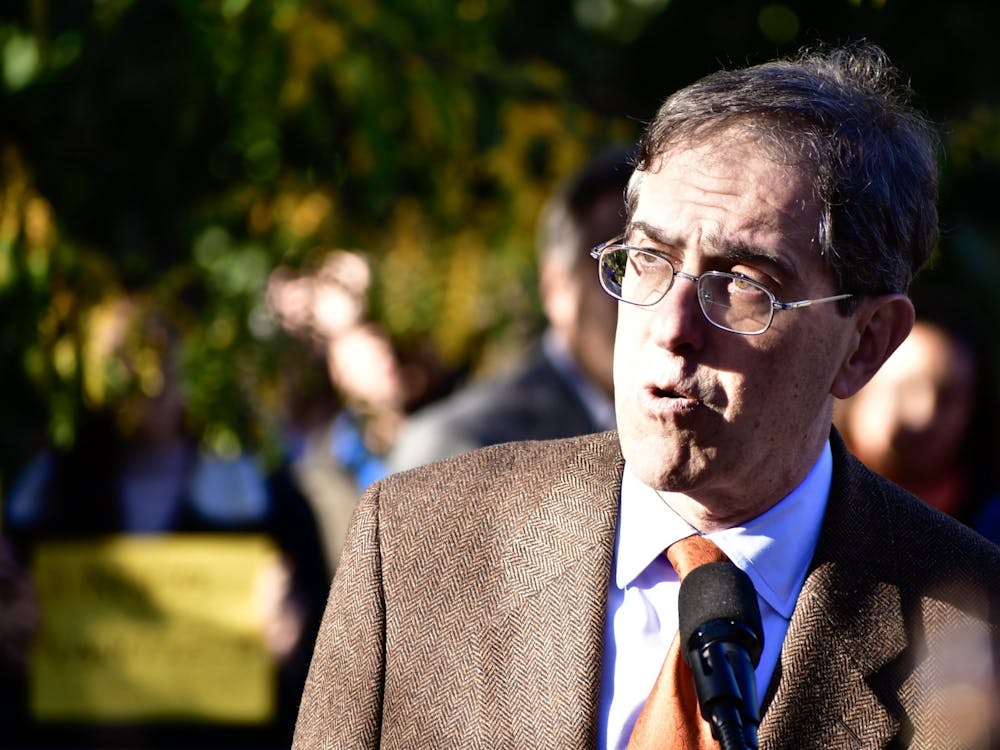
When asked whether the University will be able to function normally by Fall 2020, University President Eisgruber said he is optimistic.
Decisions to move individual classes to PDF-only will be made on a course-by-course basis.
Some students and professors expressed concern with the lack of an overarching University policy.
Classes will move online for the rest of the semester. Students who do not meet specific criteria will lose prox access by March 19.
In two separate instances, one in-class and one in a Blackboard announcement, two faculty members canceled classes and claimed they received an order to self-isolate. Students in those classes have independently confirmed to The Daily Princetonian that these cancellations took place.
At 9:02 a.m. Monday morning, University President Christopher L. Eisgruber ’83 updated the University about next steps regarding COVID-19 preparations.
“We have been developing a new website to keep the University community informed on policies, guidance, and best practices to ensure everyone’s health and safety during this evolving situation,” University Deputy Spokesperson Michael Hotchkiss wrote in a 1:08 a.m. statement to the ‘Prince.’ “Policy information under development was inadvertently made viewable to the public,” he added. “We will share any and all new policies and guidance as soon as they are finalized.”
Each spring, one member of the graduating class is elected to serve a four-year term on the University’s Board of Trustees — a position created in 1969. This year, 28 students vied for the position.
“It is exciting, and it feels like this wonderful homecoming — the very place where I started my academic career,” Stanton said.
The program would require students to complete one half-term course related to diversity and inclusion from a list pre-authorized by administrators. The proposal takes inspiration from the newly announced Culture and Difference distribution requirement for undergraduate students, which will commence with the Class of 2024 this fall.
“We strongly believe that this abhorrent omission fosters a non-inclusive and isolating environment on campus that makes me and many others feel out of place,” the digital petition reads. “It is ironic that the Center for ‘International’ Security Studies cannot accurately represent the global world and omits over 700 million people’s homes from their logo.”