Departmental disparities pervade Phi Beta Kappa
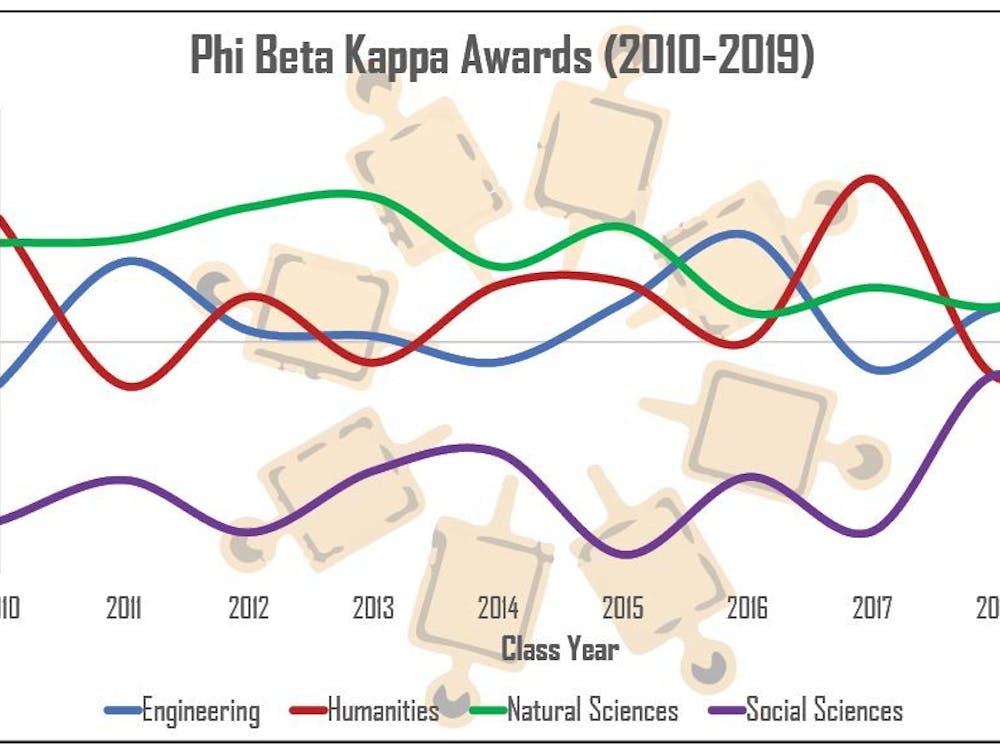
Liam O'ConnorWhile its motto is “love of learning is the guide of life,” a cheeky Princeton parody of it could be “love of science is the guide to Phi Beta Kappa.”
While its motto is “love of learning is the guide of life,” a cheeky Princeton parody of it could be “love of science is the guide to Phi Beta Kappa.”
The ultimate goal of all of these initiatives should not be alienation of our planet. Rather, it should be to promote a culture and global worldview that sees humans and nature as inextricably linked and that recognizes the need to preserve one, nature, in order to keep the other, human, healthy.
No one is too old — or too queer, or too poor, or too black, or too disabled, or too incarcerated, or too undocumented — to be worthy of life, or worthy of grief.
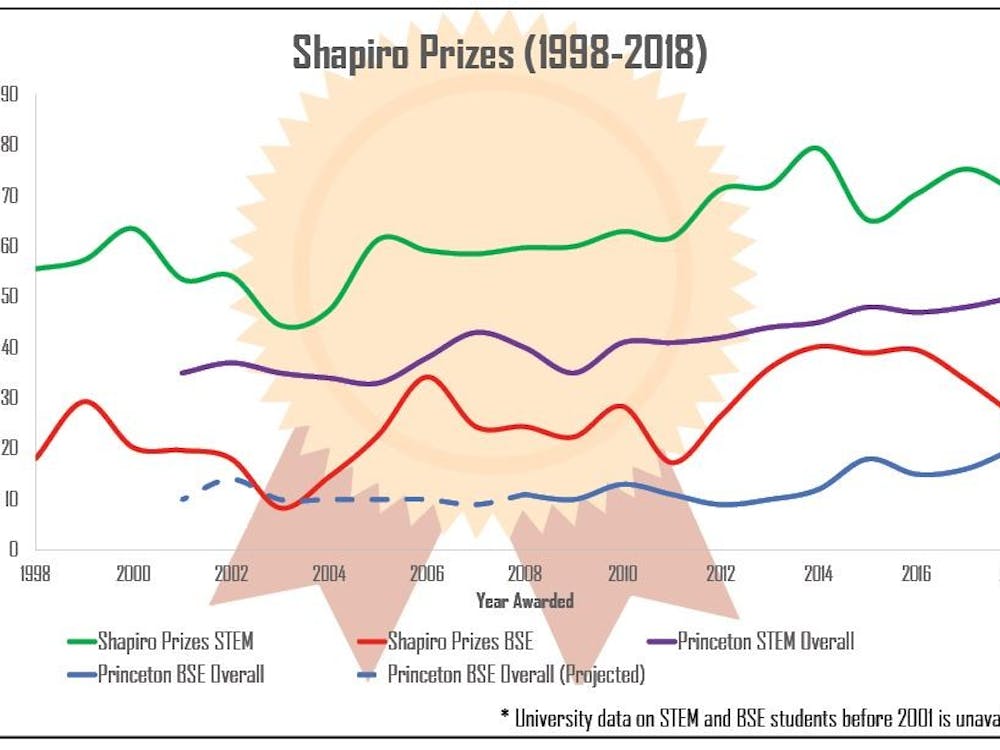
Records show that STEM concentrators have won the majority of Shapiro Prizes every year since they were established, despite comprising half or less of the student body.
We applaud Princeton’s previous decisions to revise policy when confronted with the realities of the pandemic and encourage similar action before the disparate effects of the current grading policy become even more self-evident.
The repercussions of this repulsive xenophobia will only result in the loss of American lives and shattering of unity.
While most of us have returned to our respective homes, school work isn’t the only thing we should be worrying about.
The Editorial Board calls on the University to impose a blanket P/D/F policy for all students.
Casually timing your consumption of news is doable, and it stops you from sacrificing chunks of your day to get over-read instead of well-read.
Our “belief” that this year’s room draw process “will run smoothly” isn’t based on pure optimism, but rather the culmination of several months of work and advocacy.
Whatever my political preferences are, I should be given the same opportunity as any other American to choose from the wide array of candidates.
How we navigate those far-reaching implications is a story worth telling. In the coming weeks, our staff will seek to render visible students’ experiences, from the consequential to the lighthearted.
The Editorial Board supports this petition and enjoins the University to act on its demands.
Year after year, we must identify and confront the inherent prejudice and inflexibility of our political process. As each groundbreaking candidate pushes the possibilities further and further, it’s in our hands to ensure their equal access to success.
This is an unprecedented time in Princeton’s history, and we trust that the University is working to promote the safety of our community.
We stand by the decision of the Class Day Co-Chairs and throw our unwavering support behind Marshawn Lynch.
The few voices which were upset at the decision to bring Marshawn Lynch to speak for Class Day are not representative of all of Princeton campus, but they do succeed in reinforcing elitist stereotypes and cynical exclusivism.
To argue that Mr. Lynch does not represent the student body is to argue that the backgrounds of people like myself are not valuable. The background of Mr. Lynch not being that of a “typical” Princeton student is in fact one of the strongest reasons for my excitement at his acceptance of this role.
Those few students, no matter how vocal, did not truly speak for “us,” the University community, nor the approximately 1,300 members of the senior class.
I can’t cure whatever it is that’s making me feel sick today. Awareness of that forces me to step back for a moment and wonder: if I can’t fix this, should I spend my time and energy getting upset about it?