A word on accountability
Guest ContributorThe categorical prohibition of all relations between faculty and graduate students whose academic enterprises are unrelated is, at best, misguided.
The categorical prohibition of all relations between faculty and graduate students whose academic enterprises are unrelated is, at best, misguided.
On his website, Alex Jones claims his “truth-bringing” company has been repeatedly targeted over the years. He also said Infowars is “merely the canary in the coal mine when it comes to the leftist authoritarian censorship coming our way if good people stand idly by and do nothing.” Except he’s wrong about one thing, if not many: it’s not censorship.
It is only through a dependence on our public institutions, and through faith in our democratic system and its ability to right wrongs that we can hope to make real improvements through political action.
While referenda may not immediately modify administrative actions, they do a fantastic job at sparking and accelerating conversation among their topics of interest.
Not only do “Street holidays” exacerbate issues of social exclusivity, they further propel the belief that a “great” college experience revolves around partying.
Instead of being able utilize their talents where they see fit, students currently face situations where they feel like they are simply rubber stamping a requirement.
In solidarity with the National Freedom Campus Day of Action, SPEAR joins students across the country to call on the University to fully divest its endowment and operating contracts from the Prison-Industrial Complex and actively reinvest in the communities harmed by a racist and classist criminal punishment system.
I urge conservatives and liberals alike to break the little shell of their echo chambers.
It would be marvelous if we realize that our votes affect the honor system. This issue would become a wedge that divides the campus because of the strong, conflicting opinions on it.
Now 50 years from the beginning of coeducation, we must realize that coeducation was not an opportunity joyously offered to women by higher institutions like Princeton. It was an opportunity seized by women to better the world for themselves.
As Chimamanda Ngozi Adichie has written, “language can illuminate truth as much as it can obfuscate it.” Such is the case in Princeton’s response to the “ban the box” movement, wherein administrative language continues to disguise racism and conceal meaning.
In hosting Israel Shabbat, we take no communal stance on the Israeli government's policies or actions in regards to the Israeli-Palestinian conflict. We appreciate that members of our community have a wide range of opinions regarding those policies, and encourage everyone to attend this event and respectfully engage with their peers about Israel.
Though this happened at PHS, it’s still important for us as University students living in our “Orange Bubble” to pay attention to the surrounding community of which we are inevitably a part. We do not live in a vacuum, and this is a valuable lesson to learn. It is too easy, even at the University, to solely embrace to ideas of inclusion and cultural sensitivity without actually putting in real effort to attain them.
Even if you cannot get excited about Kentucky, Louisiana, or Mississippi, our adopted home state of New Jersey is holding State Assembly elections for all 80 seats. These elections matter and will impact the daily lives of millions of Americans long before any hypothetical presidential inauguration in 2021.
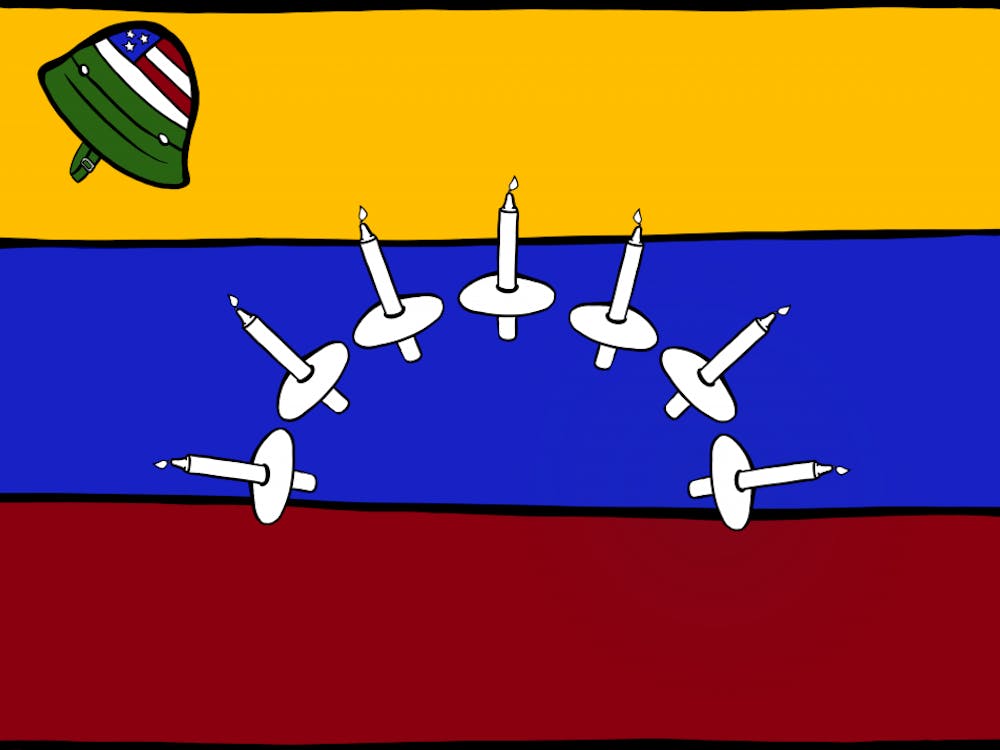
Even in the context of natural disasters and situations completely separate of the political situation between the two countries, the United States carries forward this air of hostility and dehumanization.
What Professor Horn taught me, which I think we all can benefit from, is that life isn’t always about reaching the next deadline — if we don’t stop to smell the roses, we miss out on all of life’s little intricacies, the beauty present in our ordinary, everyday surroundings.
How can we hope to have any impact on the world if the knowledge we acquire on how to solve some of the most pressing issues, such as infectious diseases and global warming, is routinely ignored?