The missing perpetrator: An open letter to President Eisgruber
Guest ContributorReforming Princeton's Title IX process will take more than oversight and town hall meetings.
Reforming Princeton's Title IX process will take more than oversight and town hall meetings.
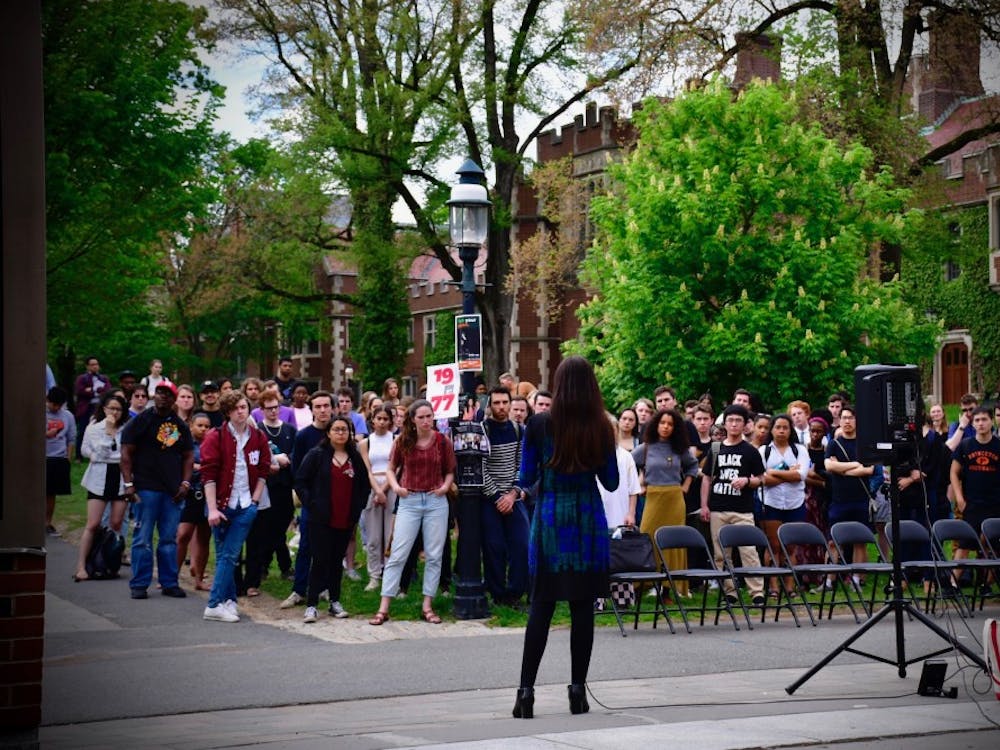
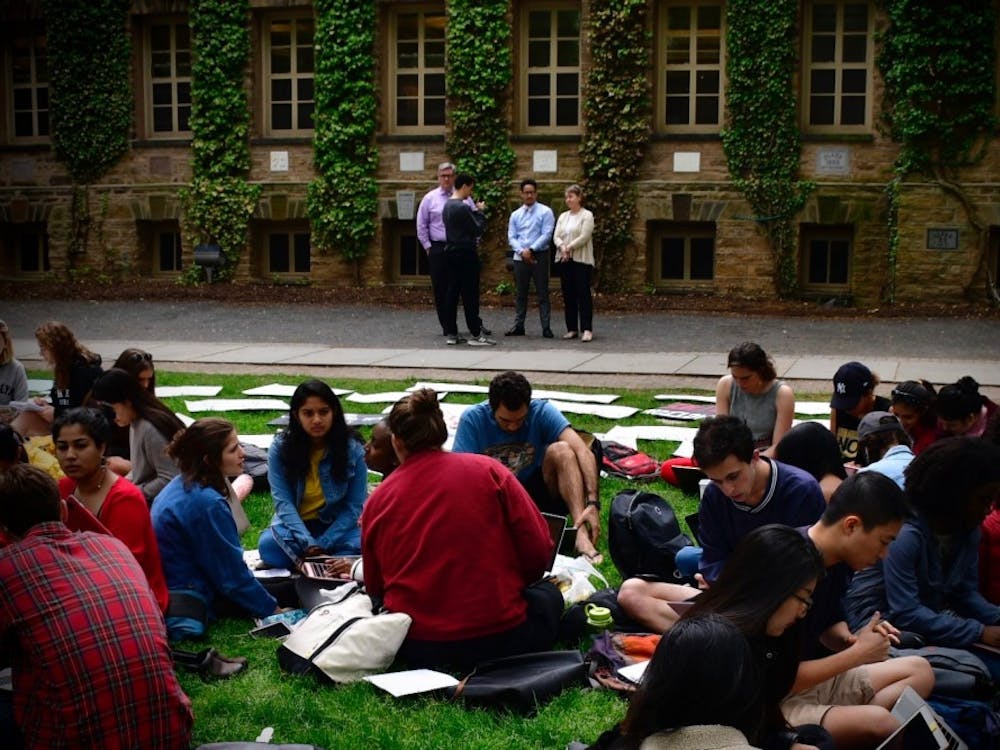
By positioning administrators, who are not tasked to listen to protesters’ 2019 demands, but rather to monitor and restrict their lawful behavior, in close physical proximity to demonstrators, the University stifles the type of unfettered, unsettling free speech it claims to champion.
Under the new system, essentially only music majors, certificate students, and members of faculty-led ensembles are guaranteed financial aid.
I do not object to the general idea of incorporating undergraduate feedback into the redesign of McCosh. But we clearly need a more insightful and productive methodology.
It is essential to push back and appeal for our government to respond to the more serious national security threat: white nationalism. But how can we do so if we ourselves know little about this danger?
May there not be, as Michaela Daniel ’21 says, “one more moment of peace” until these grievances are meaningfully redressed in a manner that treats students as the centrality of campus life, and expands justice outward from our university, constituting the “service of humanity.”
What is the use of spending years contributing to an ever-growing mountain of scholarly work if it will never be read or used in actual policy? Perhaps one step would be to include more experts in policy-making and in the decision-making of government officials.
What makes athletics so special — more than any other extracurricular activity — that it deserves special admissions procedures?
To minimize this reckless disposal and waste, Princeton needs to stop giving out free shirts or at least place severe limits and regulations on the trade.
But independent of the differing levels of impacts of our orientations — which are, arguably, still difficult to articulate — it does not change the fact that we are still attributing hateful, arbitrary stereotypes on an entire group of people.
The benefits that the school gives to its students in admissions — whether they be athletic recruitment, legacy status, or development applicants — perpetuates social hierarchies.
The scope of systematic unfairness in both the 2018 and 2019 Room Draws — although inadvertent — is nevertheless extremely concerning.
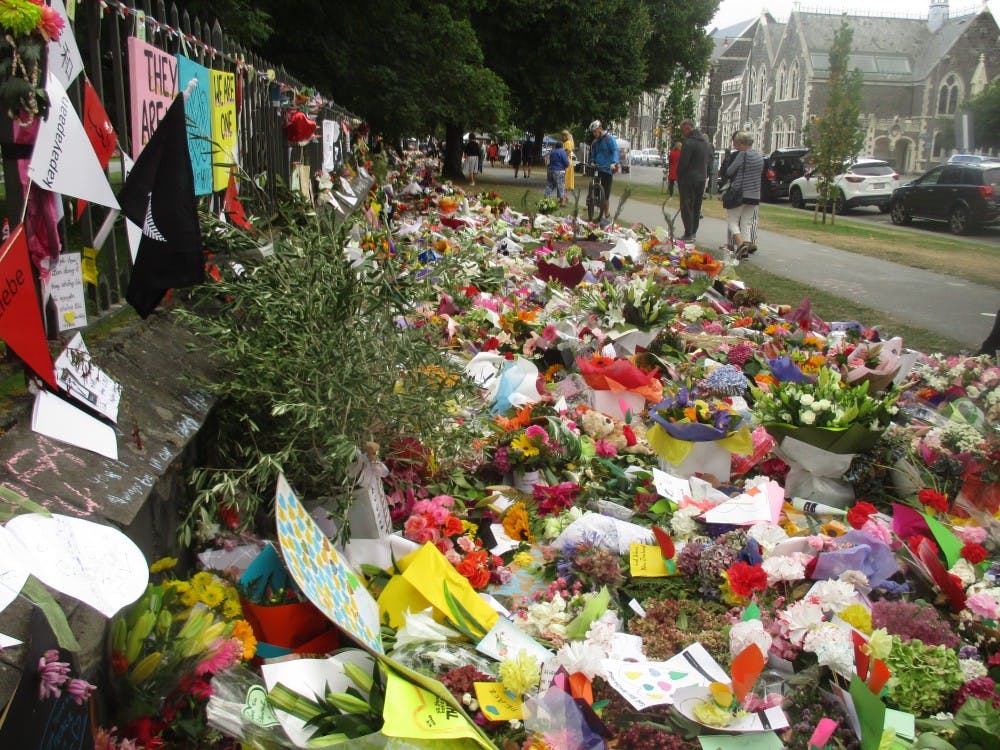
Within the last three weeks, two events shocked society. In Sri Lanka, bombings killed hundreds of innocent citizens on Easter Sunday; in France, a fire destroyed part of the Notre-Dame Cathedral. To me, one of these events is clearly more devastating than the other.
Ultimately, if we want there to be any kind of change to conduct in our bathrooms, we will have to speak to either the rambunctious defilers of our common spacers themselves, or we will need to be willing to pick up the phone and contact University administrators who can act.
Often in the movement for criminal justice reform the question is, “How do we reduce mass incarceration?” What if we asked, “How do we eliminate incarceration altogether?”
When our facilities workers are intensely disrespected, and when innocent students are put in harm’s way by people so inconsiderate that they cannot pick up their own trash, there have to be consequences.
The administration should strongly encourage, and professors should make efforts to, bring in at least one guest speaker per semester.
By visually celebrating, rather than hiding, its cogeneration plant, Princeton could express to the world its commitment to sustainability, highlighting and more effectively communicating its already impressive sustainability numbers.
A far better method than fines is to have violators do a certain number of community service hours helping facilities workers around campus. Of course, this would be after receiving a warning or two.
We can’t expect USG to make strides in changing things about campus if students take no interest in changing things about campus.