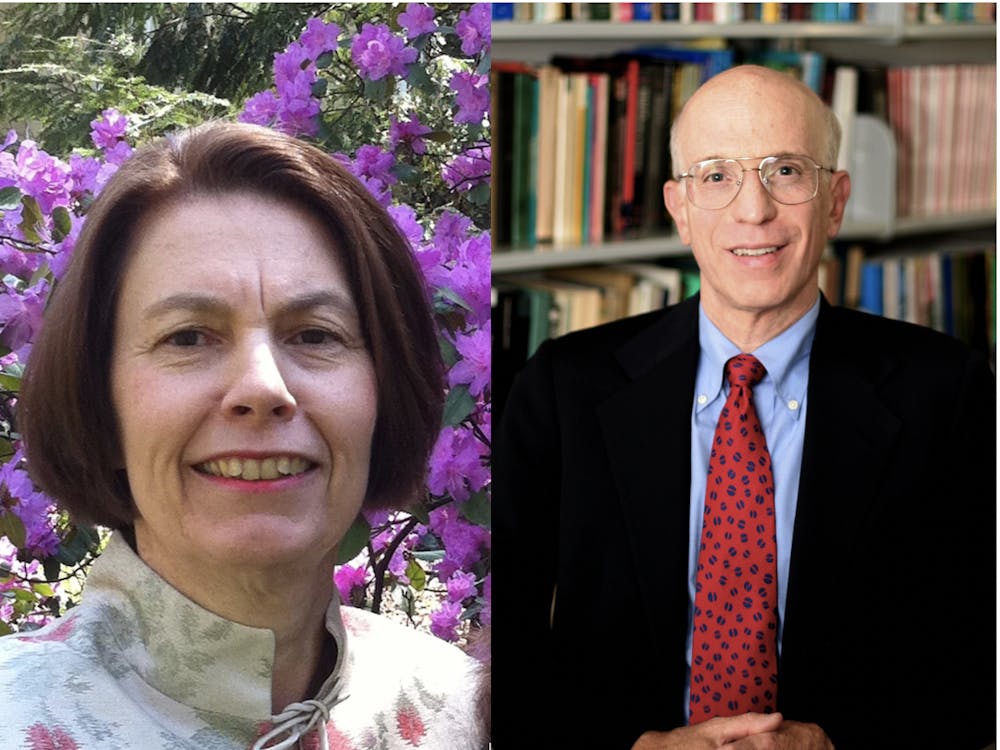
Divestment duels: Rob Nixon
Rachel Sturley“Divestment is going to happen,” said Nixon. “It’s not if, it’s when, and it would be fantastic to see Princeton on the vanguard.”
“Divestment is going to happen,” said Nixon. “It’s not if, it’s when, and it would be fantastic to see Princeton on the vanguard.”
“Both investing and buying products puts money in the hands of the people I don’t like,” Pacala said. “So ethically, I cannot find a consistent reason why I would divest and not boycott, or boycott and not divest.”
Ellen DeVoe ’86 is one of women’s basketball’s most decorated athletes. Now she watches her son, sophomore guard Ethan Wright, play her game — his own way.
“I have seen some of the best spokespeople in my years consist of individuals who are great leaders,” said Anthony Clark Arend, a former professor of Chang’s at Georgetown. “Ben is one.”
Scarlet is precocious. At just 12 years old, she’s four months into her first year at the University. She has curly, sandy-colored hair, loves her roommate, K Stiefel ’20, and lives in the Pink House at 99 Alexander Street. Scarlet also has four legs, loves playing catch, and serves as Stiefel’s emotional support animal (ESA).
In 1969, a group of female undergraduates arrived on Princeton’s campus. In 1973, they became the first women to graduate from the University. This is the first installation in a series commemorating 50 years of women at Princeton; each article will chronicle the experience of one woman from the Class of 1973 and one from the Class of 2023.
The Daily Princetonian spoke with members of 10 varsity athletic teams about their music selection during games, warmups, practices, and in the locker room. Whether for a sport played on a field, on a court, on the ice, or in the water, each team follows its own unique traditions and must-play songs.
“Honestly,“ said Audrey Pang ’05, “I never thought it would take 15 years for there to be another girl wrestling for Princeton.”
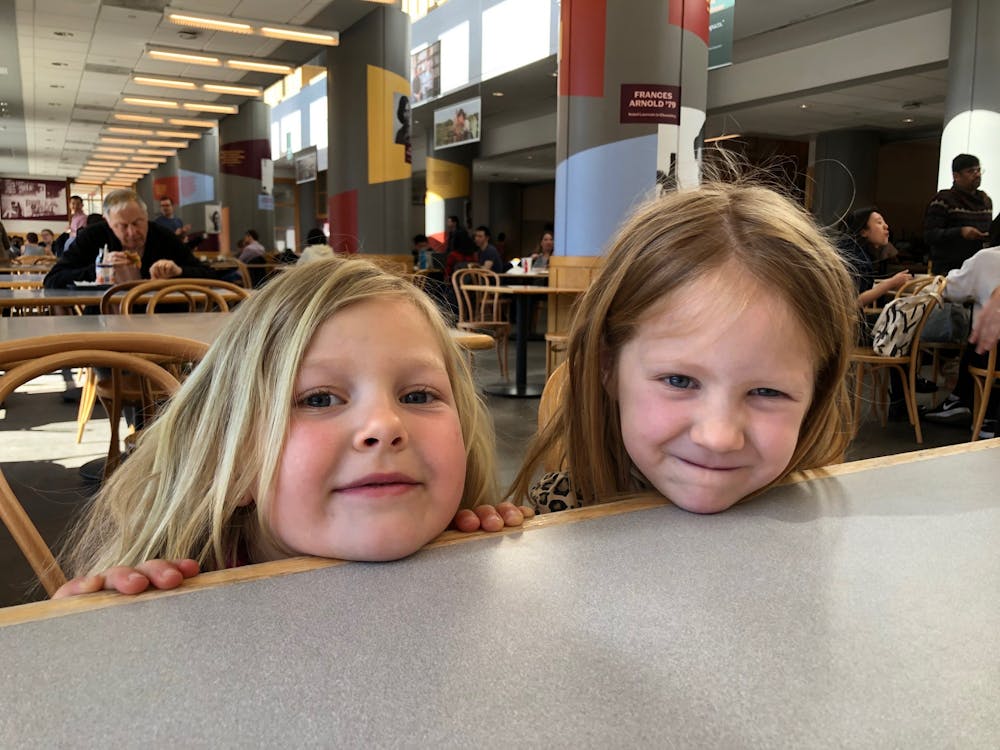
In the first installment of Tiger Tots, the Daily Princetonian interviews Annabel and Rosemarie Luijendijk, the six-year-old twin daughters of Professor of Religion and Head of Wilson College, AnneMarie Luijendijk.
On Princeton’s biggest eaters sweatshirts, sweatpants, backpacks, and hats are emblazoned two words: Princeton Football. Football players commit themselves to the team’s grueling practice and game schedule; they are expected as well to change their bodies for the good of the game. How do Princeton’s football players manage to pack on the pounds without sacrificing the fitness and dexterity that allowed them to play at the University in the first place?
Though many students may know Community Relations Sergeant Sean Ryder by his trademark cape and sparkly pants, he sat down with The Daily Princetonian in full police uniform.
Walk two feet in any direction and you'll see it: Art. Scattered across Princeton's six-hundred acre campus are hundreds of works of all varieties; statues, sculptures, and portraits, a diverse collection spanning centuries and continents. And among the plethora of works, one stands out: George Segal’s Abraham and Isaac.
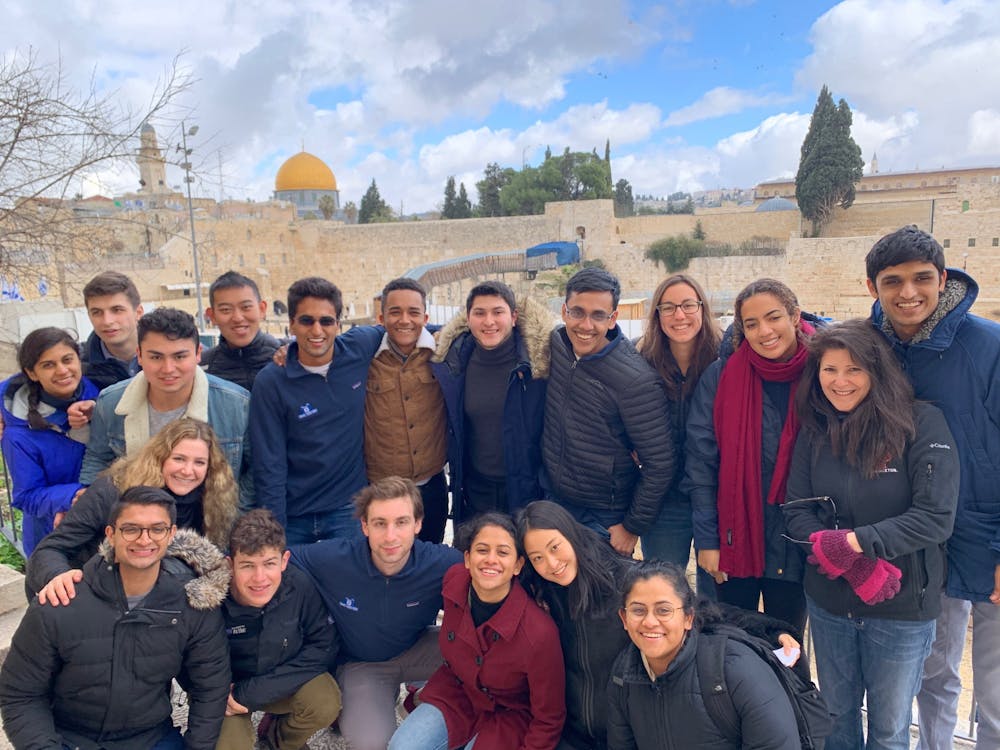
What is it like to be one of the most well-liked employees on Princeton’s campus? Our reporter met with Edith Murray at the Center for Jewish Life at 8 a.m. one Tuesday morning to find out.
They woke up as first-years and seniors, history majors and engineers, Oklahomans and Connecticut natives. They pulled on standard-issue shirts, shorts, socks, strapped on their running watches. Some of them double-checked to make sure their shaves were clean. And somewhere in the walk from each of their dorms to Jadwin Gym, that group of individual students became something else entirely: a platoon of Army cadets.
“I think the combination of Princeton and the army uniquely qualifies you to serve the nation and humanity to a greater extent than at another place.”
Cadet Sergeant Jack Bound ’22 is a sophomore and prospective history major enrolled in the Army ROTC program. His younger brother, Alex Bound ’23, is a Midshipman Fourth Ensign enrolled in the BSE program and the Navy ROTC program.
The Daily Princetonian sat down with three brothers: Atlanta-born Second Lieutenant Paul Spiegl ’19, and twins cadet Sterling Spiegl ’21 and cadet Staff Sergeant Jarrett Spiegl ’21, who are both members of the University’s ROTC program.
If the hundreds of students who flocked to Saturday’s game at Yankee Stadium did so to escape the routine of campus life, the hundreds of former football players who made the trip did so to relive it. They brought with them wives, husbands, children, grandchildren, friends — all of whom spent the day celebrating what former captain and nose guard Jeff Urbany ’84 called the “unbelievable brotherhood” that is Princeton football.
When I called Ginny Beams ’90 for our first interview, I thanked her for taking the time to talk. “I hope you aren’t disappointed,” she said. “I’m not one of those superstar athletes.” Rob Beams ’90 might disagree.
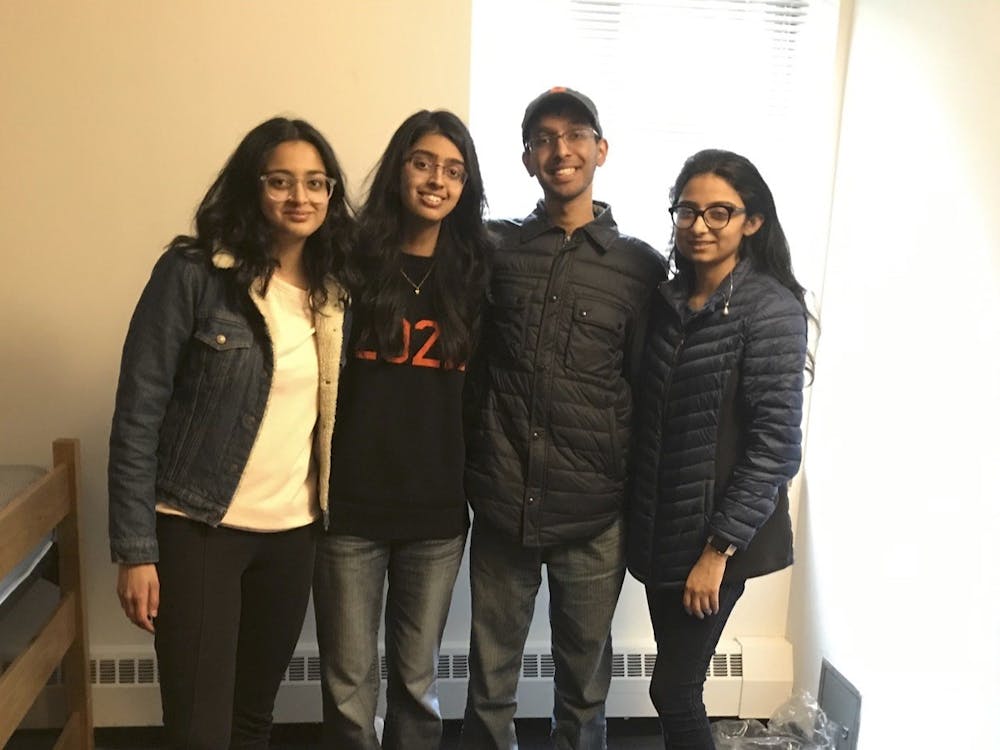
Twenty undergraduates are working with the Carl A. Fields Center for Equality and Cultural Understanding to engage the University’s student body in critical conversations about equity and inclusion on campus.