



Since Princeton discontinued its grade deflation policy in 2014, grades have steadily been rising, leading many to worry about the potential negative effects of grade inflation. In this very paper, multiple columns have been written about the dangers of allowing grade inflation to run rampant — and we’ve seen problems arise at peer institutions as a result of inflation.
I personally have no issue with grade inflation — my grades aren’t terrible, but I wouldn’t complain if they were a bit higher — but I’ve also realized that it presents a legitimate concern to students’ GPA, counterintuitive as it may seem. Specifically, in an inflated grading system, receiving a single, lower-than-usual grade will decrease a student’s relative academic standing more significantly than it otherwise would. A straight-A student who receives a single C- may still have a comparatively high GPA under a deflated system, but may fall closer to the median under an inflated system.
Luckily, recourse to this problem already exists in Princeton’s academic structure: Students are allowed to take four classes under the elective pass/D/fail (PDF) option. The problem, however, is that this system is arbitrarily restrictive as it is currently set up — students must choose to take a course as PDF before the end of the ninth week or remain stuck with the final grade that they earn in the course. As GPAs continue to trend higher, the consequences of not PDFing a course in which a student unknowingly underperformed — whether because of midterm grades being returned late or simply due to someone misjudging their own performance — become more severe.
To fix this, Princeton should implement a retroactive PDF option, which would still permit students to PDF up to four courses but would extend the decision-making period and allow students to PDF courses they have already completed as well as those in which they are currently enrolled. This is not an unprecedented idea. At Davidson College, students may elect up to three classes as Pass/Fail, after they’ve received their final grades in these courses, until the last semester of their senior year.
Under the current system, the deadline to PDF a course is far too soon in the semester for many students to have a good understanding of their performance in a class. They may underperform on finals, or an emergency may come up in the final few weeks, or the grading of a class may simply have been too opaque for them to gauge how they were doing. It’s difficult for someone to accurately predict their grade when there’s still a quarter of the semester remaining.
In short, the choice to PDF a class comes down to students’ ability to speculate about their performance thus far and anticipate their potential to succeed in the coming three weeks, forcing students to gamify their own and their classmates’ ability in a way that is entirely unnecessary and that detracts from their ability to simply enjoy the material and challenge of a class.
If the University has no problem allowing us to elect to PDF in the ninth week of a class, what’s wrong with allowing us to do so retroactively with the same quota of four courses? If anything, delaying the PDF deadline to senior spring — when students can look back at their overall academic record and make a more informed decision — might inspire more sustained engagement throughout the semester.
It’s certainly not the case that students universally slack off after electing to PDF a class, but it’s unlikely that students who choose to PDF will exert the same effort as they would if anticipating a grade. Meanwhile, a student struggling in the ninth week who has the option to PDF after completing the course may choose to try harder. The fact that they can wait to make the choice until later on might keep them from rushing into a decision and surrendering to a lack of confidence or anxiety — and they might surpass their own expectations for themselves as a result.

The urgency around the PDF deadline is reductive to the experience of learning itself. During our time at Princeton, we take a wide variety of classes that challenge us in many ways. That’s the point of a liberal arts education — to figure out what excites us most by exploring diverse disciplines and ways of thinking, some of which will feel natural and comfortable and others which will prove intimidating or frustrating. Implementing a retroactive PDF would allow students to embrace the breadth of that experience without constant strategizing and speculation about their performance, which only distracts from their learning.
Meanwhile, maintaining the maximum of four elected PDF courses ensures that students won’t simply use the PDF to neglect their class work and reduce the overall quality of their academic experience. A retroactive PDF system still requires students to stay engaged and make smart decisions about the courses which they choose to PDF, but it also allows them to make more informed decisions on the matter. At the very least, it would give professors slightly more freedom in how they grade their students, as they would know that their students may have a fallback if they don’t get an A in the class.
Academic exploration is always going to have risks, but an environment that seeks to promote such exploration should do its best to make these risks as minimally harmful as possible. No matter what, students will learn a lesson from a course that goes poorly, whether retroactively PDFed or not. But they cannot remove poor grades from their transcript, and that is a shame.
Raf Basas ’28 (he/him/his) is an assistant Opinion editor from Elk Grove, Calif, whose grades are very good — this article was written on behalf of other students and totally not because he’d benefit highly from a retroactive PDF option. You can reach him at raf.basas[at]princeton.edu or @raf.basas on Instagram.
Read More
Bring back Communiversity
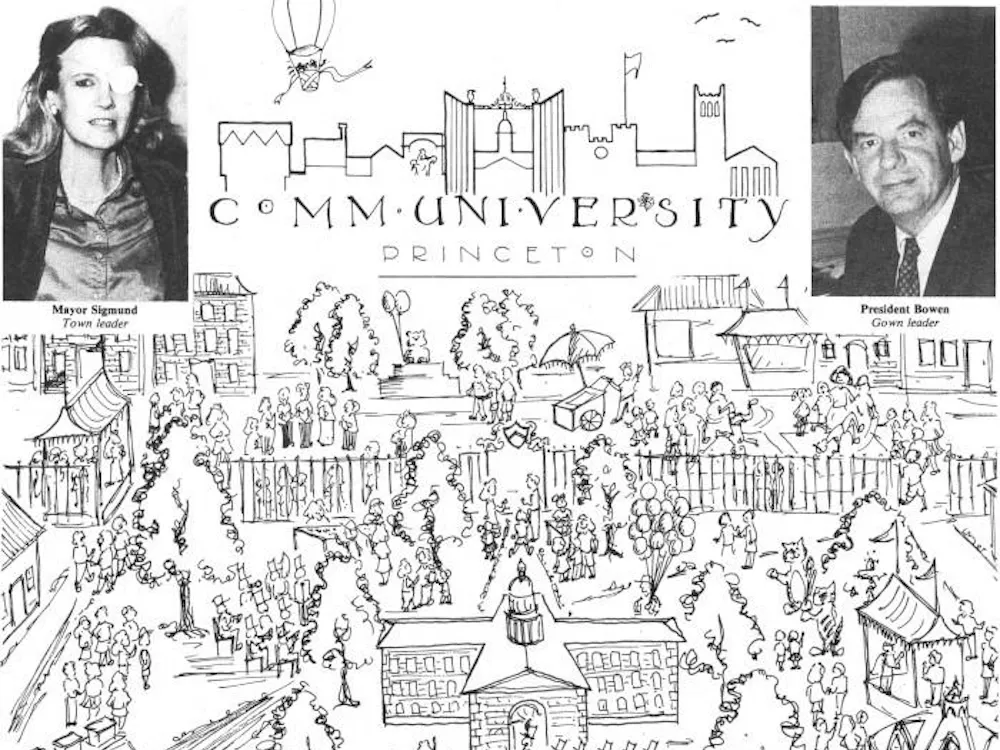
Isaac BarsoumFrom its inception in 1985, when it subsumed the Arts People Party — the Arts Council’s pre-existing festival — Communiversity always aimed to be more than just an arts festival. It was both a physical and symbolic coming-together of the University and the town in a celebration of all that we have in common and all that makes us different.
From its inception in 1985, when it subsumed the Arts People Party — the Arts Council’s pre-existing festival — Communiversity always aimed to be more than just an arts festival. It was both a physical and symbolic coming-together of the University and the town in a celebration of all that we have in common and all that makes us different.

Who rights our rules?
Charlie YaleWith fairness for students in mind, the University must require that all changes to RRR go through the Committee on Rights and Rules.
With fairness for students in mind, the University must require that all changes to RRR go through the Committee on Rights and Rules.
Freedom of speech is a right, not an excuse
Lily Halbert-AlexanderFreedom of speech should function to hold us to a high standard of honesty and transparency, not to excuse abuses of power and influence in the country’s most influential institutions.
Freedom of speech should function to hold us to a high standard of honesty and transparency, not to excuse abuses of power and influence in the country’s most influential institutions.