



The following is a guest contribution and reflects the author’s views alone. For information on how to submit a piece to the Opinion section, click here.
When was the last time you found yourself craving a petite bonsai tree Lego set or a giant bear plushie? You could have gotten either at the “Mini or Mega” event hosted by the Princeton Student Events Committee (PSEC) this past February. It was a frigid month and snow was still coating a sleepy campus. How better to spend your evening than cozying up in Campus Club to obtain some “tiny and jumbo sized” items — right?
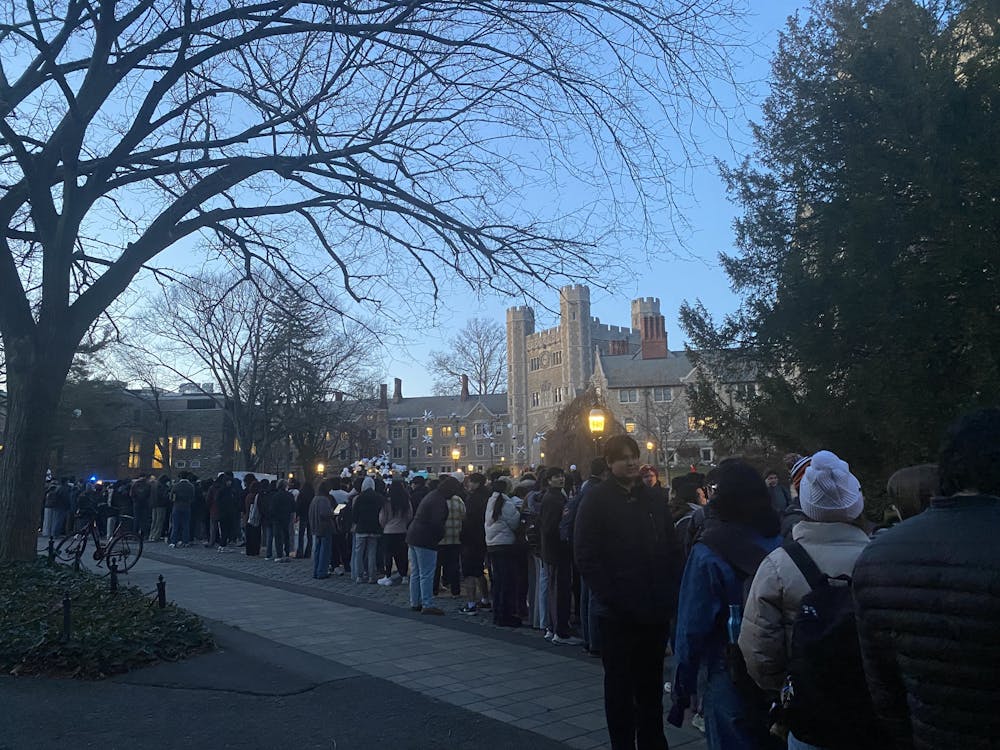
Though this may seem like an innocuous pastime, it is a symptom of Princeton’s broader consumerism problem. We spend so much of our time together waiting in long lines for material goods, from Nomad Pizza to unicorn pillow pets. While there is nothing inherently wrong with enjoying treats, it’s time to acknowledge that this is not the most effective way to build community and promote wellness on campus.
From PSEC events to RCA and CLA study breaks to public lectures and club meetings you attend only for the boba, a typical Princeton day is full of opportunities to accumulate freebies. Like Alice tumbling into Wonderland, Princetonians can discover a veritable smorgasbord of sweets and beverages practically screaming “eat me” and “drink me” without looking too hard. Pins and stickers, umbrellas and socks, slinkies and fidget spinners abound, all for free.
This seems like a pretty good deal: Opportunities to acquire freebies are often framed as study breaks or self-care. In an email advertising its Slime & Smoothies event this past spring, for example, PSEC presented the event as an opportunity to “step back and recharge.” On Community Care Day, a day packed with wellness-oriented events but notably not a day off of classes, students swing through Campus Club to snag a make-your-own terrarium and a pastry before continuing with their busy days as usual.
But this is not as good a deal as you think it is. The immediate dopamine rushes that these events feed are not the best breaks for our bodies and brains. Experts recommend intentional breaks focused on building healthy habits, like walking outside and meditating — and avoiding quick fixes, like scrolling social media and consuming junk food.
In other words, the best study breaks are usually non-materialistic in nature. Researchers James Burroughs and Aric Rindfleisch have shown that materialist lifestyles — ones that place value on the acquisition of material objects — are associated with “long-term negative consequences for both society in general and the individual consumer in particular,” reducing levels of happiness and satisfaction. Using survey responses from adults and a study of college students, the researchers conclude that a materialist orientation is at odds with more collective-oriented values, creating psychological tension and a diminished sense of wellbeing. At Princeton, we face this conflict daily, conflating chances to acquire goods with community-building. That plushie might seem free, but it comes at the cost of truly connecting with our peers.
The influx of freebies also creates unrealistic expectations for how we ought to build community after college. In the “real world,” free matcha and truckloads of cheesecake-on-a-stick are not so easy to come by. Gathering beyond campus will take far more effort and creativity on our parts without Princeton’s infrastructure and funding to lean on, and we should start practicing now.

It is only natural to appreciate objects, especially in a society that places such high value on material goods. Two Februaries ago at PSEC’s leap year event, I made a stuffed frog I cherish to this day and took polaroids with friends that are still hanging on my walls. Still, it’s one thing to occasionally seek out things that bring us joy, and another to build our entire culture around the expectation that trivia comes with matcha whisks and speaker panels come with Tacoria.
A common adage among students who plan events at Princeton is that people won’t come if there isn’t something material associated with it — and that college students love free food. But the consumerism problem is only perpetuated when our day is peppered with opportunities to stop by this meeting for the Junbi or wait in line at that Princeton merchandise giveaway. While it might be hard to conceptualize a campus where you can’t find a free boba at all hours, the campus community needs to work together to find the right balance of events rather than let the status quo continue unchecked.
Critically, there is no dearth of non-materialistic events at Princeton, but far more students line up to collect swag than for weekly meditations. Events like Murray Dodge’s tree-blessing ceremony, the public library’s poetry readings, or even TigerMag and WPRB’s performative male competition are the sorts of social events we could use more of in our event-diet.
The problem here is not PSEC, a group of well-meaning students who want to bring joy and whimsy to the Princeton community, RCAs who want to make their zees’ day, or the students who attend their events. It is that we believe that getting more stuff will make us happier and reinforce this belief through our behavior, collectively fomenting a material-oriented culture. And PSEC in particular, which has an ODUS advisor and more secure funding sources than many other student groups, has an opportunity to set the tone by resisting the urge to give away tchotchkes just for the sake of it.
At Princeton, we have the opportunity to make wiser choices that build toward a genuinely care-centric culture. Organizers, plan events with less waiting and getting and more doing and being. Students, select events because of the people you will see there, the way you will feel there, and what you might learn there — make boba a perk, not a motivator. And administrators, know that Princeton’s mental health crisis remains unresolved, and don’t be fooled that students will be happier the more things they have.
Raphaela Gold ’26 is an English major from New York who loves cookies and frog-related objects but still thinks we could do with less consumerism. She can be reached at rg3581[at]princeton.edu.

Please send any corrections to corrections[at]dailyprincetonian.com.
Read More

Make the Pre-read a work of fiction
EmmaRose ZillaA story that’s intellectually ambitious and philosophically provocative doesn’t necessarily have to be nonfiction. A fictional text can help us understand political tensions or erosion of autonomy just as much as an explanatory novel can.
A story that’s intellectually ambitious and philosophically provocative doesn’t necessarily have to be nonfiction. A fictional text can help us understand political tensions or erosion of autonomy just as much as an explanatory novel can.
Bring back Communiversity
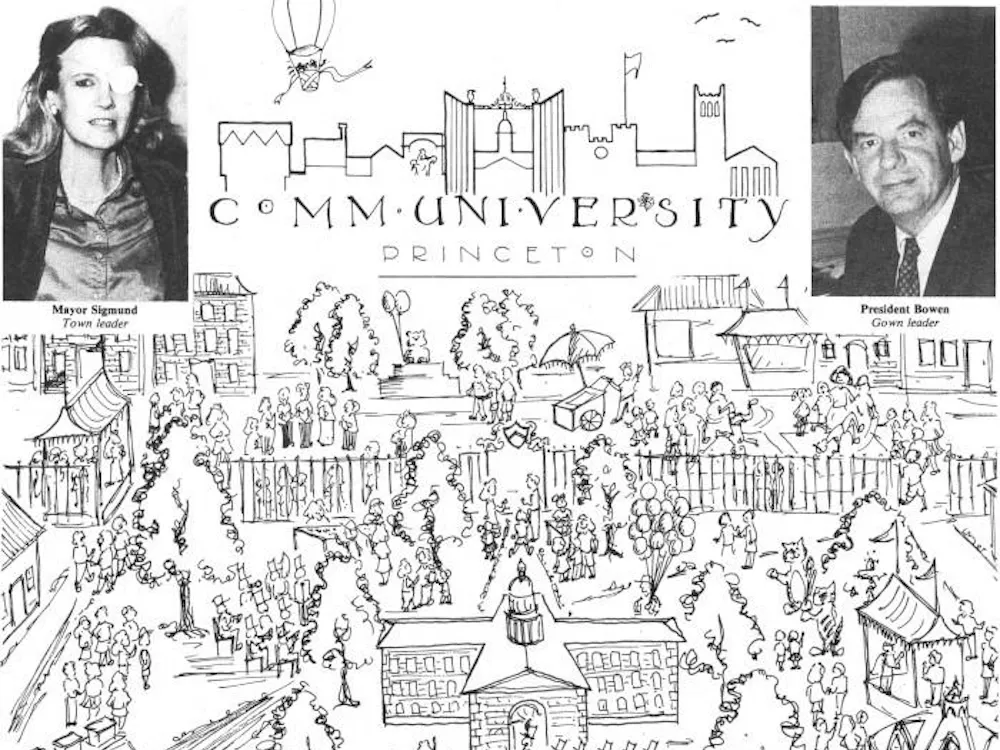
Isaac BarsoumFrom its inception in 1985, when it subsumed the Arts People Party — the Arts Council’s pre-existing festival — Communiversity always aimed to be more than just an arts festival. It was both a physical and symbolic coming-together of the University and the town in a celebration of all that we have in common and all that makes us different.
From its inception in 1985, when it subsumed the Arts People Party — the Arts Council’s pre-existing festival — Communiversity always aimed to be more than just an arts festival. It was both a physical and symbolic coming-together of the University and the town in a celebration of all that we have in common and all that makes us different.

Who rights our rules?
Charlie YaleWith fairness for students in mind, the University must require that all changes to RRR go through the Committee on Rights and Rules.
With fairness for students in mind, the University must require that all changes to RRR go through the Committee on Rights and Rules.