



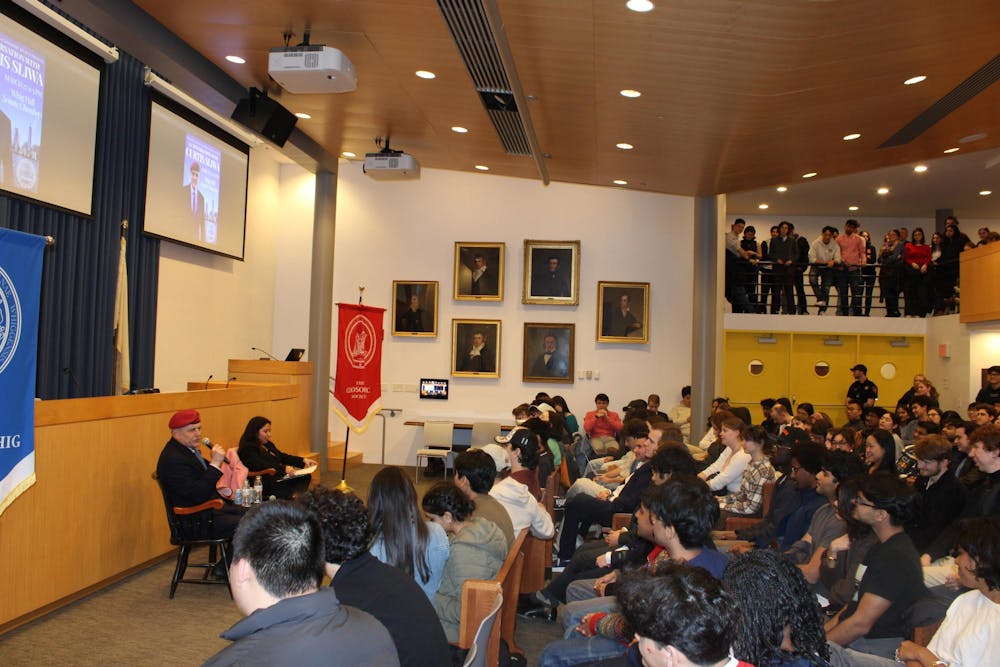
Last week, around 200 students packed into Whig Hall to see Curtis Sliwa speak. Fluctuating between a comedy show, an influencer’s soundbite-laden Instagram feed, and a patchwork quilt of disparate policy positions, the event garnered by far the highest attendance of any of the American Whig-Cliosophic Society’s events this school year.
This turnout should not be surprising. Sliwa’s celebrity reached new heights last fall as his viral debate moments and irreverent storytelling flooded social media, where many college-aged Americans receive their news. But while Sliwa’s internet persona is largely based in memes, some students seemed to gain serious respect on Friday for the former mayoral candidate’s political posture and identity. Such a development is, simultaneously, a valuable sentiment and a potentially dangerous folly that could devolve into cynical populism and a misguided idea of what it means to build bipartisan unity.
I must admit that, early in his talk, I found Sliwa quite inspiring. He railed against polarization and division, he spoke about the importance of truth, transparency, and accountability, and he was genuinely funny. But as Sliwa continued to answer questions, I began to find his statements inconsistent and his political platform incoherent. He extolled the virtues of public service and the value of helping others — including, specifically, people in developing countries. But he also sharply criticized the Trump administration, not for cutting funding to the U.S. Agency for International Development but for departing from its promise of “America First” policies.
Sliwa simultaneously seemed like an isolationist and a philanthropic globalist. The only consistent message was that whatever those in power are doing, Curtis Sliwa does the opposite — and through opposing that government power, Sliwa suggests the American public can unite.
Evidently, Sliwa knows how to read a room: his inconsistent positions seemed to work in his favor. After the talk, I overheard two students discussing their seemingly newfound understanding that “not all Republicans are MAGA” and they’re “not all bad.” This realization is exactly what Sliwa, who repeatedly called for unity and bemoaned polarization, would have wanted to hear. And if Sliwa has simply inspired some students to keep an open mind the next time they hear a conservative viewpoint expressed, then the event, and Sliwa’s messaging, have done important work toward building unity in divided times.
As important as the sentiment of unity is, we must be cautious of achieving the seemingly noble end of bipartisan acceptance through the tactics and advocacy advanced by Sliwa. Two flaws accompany an embrace of unity through Sliwa’s messaging, characterized by the nature of Sliwa’s Republicanism and the dangers of populism.
Sliwa embraces a “Republican In Name Only” (RINO) identity. But unlike some of the traditional conservatives to whom Trump has afforded the RINO label, like Dick Cheney, Colin Powell, and Kevin Stitt, Sliwa is not representative of the more traditional anti-Trump wing of the Republican Party. His policies are largely inconsistent with even pre-Trump Republicanism; for example, he expressed support for universal health care, and he even declared that the recently deceased Cheney was “in hell.”
If it is only an embrace of policies like socialized medicine and a criticism of neoconservative foreign policy — alongside promotion of the “America First” policy that many Democrats criticize — that made attendees realize that Sliwa is “one of the good ones,” then any increased tolerance for “non-MAGA Republicans” expressed by the students I overheard was misplaced and ingenuine. Newfound respect for pre-Trump Republicanism is a positive; unfortunately, tolerating Sliwa, whose positions are far from traditional Republicanism, is not equivalent to tolerating Republicans.

In fact, rather than representing anti-MAGA Republicanism, Sliwa’s ideology matches many of the hallmarks of populism. Populists are most successful when speaking to a public disillusioned by the inefficiencies and dishonesties of their established government and calling for accountability.
Princetonians must be wary of the danger of falling into this populist, anti-establishment trap in the name of unity, mistakenly believing they are righteous bipartisan warriors without truly understanding the more traditional anti-Trump Republican. There is a big difference between the call for unity expressed by Joe Manchin last fall and Curtis Sliwa last Friday.
While Manchin emphasized bipartisan consensus and legislative compromise — unity between lawmakers and citizens alike — Sliwa called for unity of the people against the government. He repeatedly emphasized that his background is in the counter-culture, noting that he has always chosen to do the opposite of what authority — from his parents to his school principals to the Republican Party establishment — told him to do.
In some cases, populist rhetoric advocates for an important check on government power. But in other cases, excessive distrust can sow instability and undermine democracy through the weakening of political institutions.
The type of unity that Sliwa calls for is a transition from the us-versus-them mentality of the partisan binary to the us-versus-them of disillusioned citizens and a corrupt government. It’s a classic populist message — one that Sliwa seems to have carried since the Vietnam War. But it’s the kind of call that will replace deep-seated partisan distrust and hatred with deep-seated anti-establishmentarian distrust and hatred, not with harmony.
If you heard Curtis Sliwa speak last week, I hope you learned as much as I did. I hope you laughed as much as I did. And I hope that, on some level, you’ll carry whatever open-mindedness Sliwa may have inspired to the next event at which a political other speaks. And if Sliwa is the spokesman for unity who actually has an impact, maybe his message is the one we should heed.

But we must not conflate Sliwa’s politics with anti-Trump Republicanism, and we must not conflate populism with bipartisanship. If nothing else, drawing these distinctions is important for clarity and a greater understanding of the forces acting on the Princeton community and the nation writ large. I implore you not to allow Sliwa’s incoherent politics to shape your understanding of bipartisanship or political unity. Perhaps the unity for which he advocates is better than nothing, but it’s certainly not ideal.
Ian Rosenzweig ’29 is a prospective SPIA major from Bryn Mawr, Pa. He greatly enjoyed Curtis Sliwa’s stand-up routine last Friday. You can reach him at ir2411[at]princeton.edu.
Read More
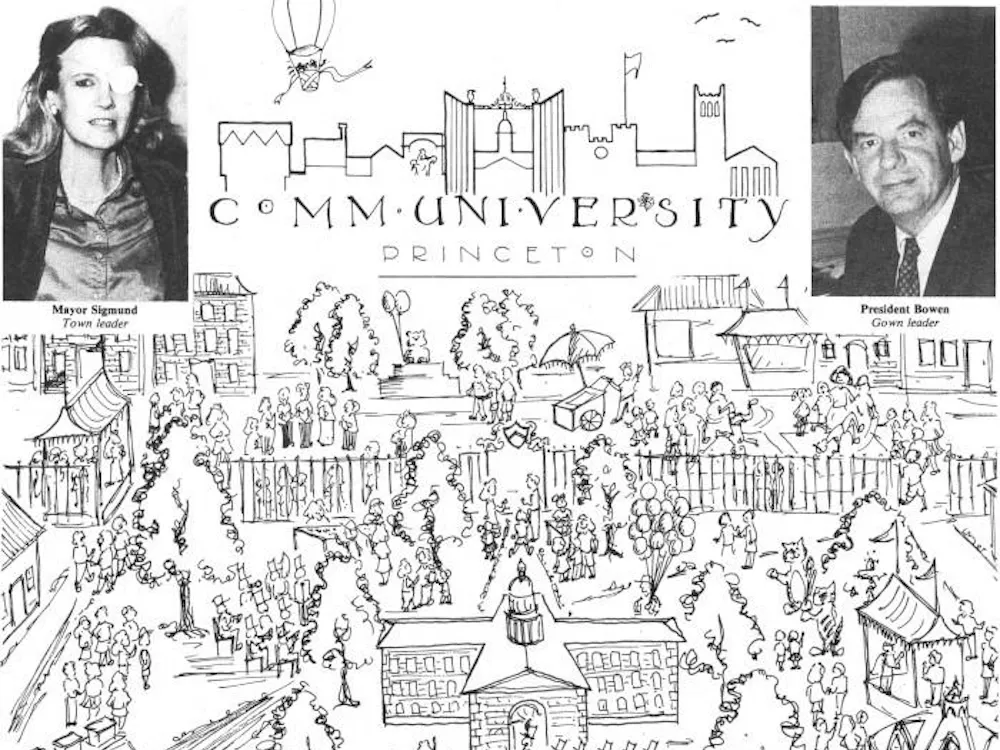
Bring back Communiversity
Isaac BarsoumFrom its inception in 1985, when it subsumed the Arts People Party — the Arts Council’s pre-existing festival — Communiversity always aimed to be more than just an arts festival. It was both a physical and symbolic coming-together of the University and the town in a celebration of all that we have in common and all that makes us different.
From its inception in 1985, when it subsumed the Arts People Party — the Arts Council’s pre-existing festival — Communiversity always aimed to be more than just an arts festival. It was both a physical and symbolic coming-together of the University and the town in a celebration of all that we have in common and all that makes us different.

Who rights our rules?
Charlie YaleWith fairness for students in mind, the University must require that all changes to RRR go through the Committee on Rights and Rules.
With fairness for students in mind, the University must require that all changes to RRR go through the Committee on Rights and Rules.
Freedom of speech is a right, not an excuse
Lily Halbert-AlexanderFreedom of speech should function to hold us to a high standard of honesty and transparency, not to excuse abuses of power and influence in the country’s most influential institutions.
Freedom of speech should function to hold us to a high standard of honesty and transparency, not to excuse abuses of power and influence in the country’s most influential institutions.