Six U. students named Schwarzman Scholars
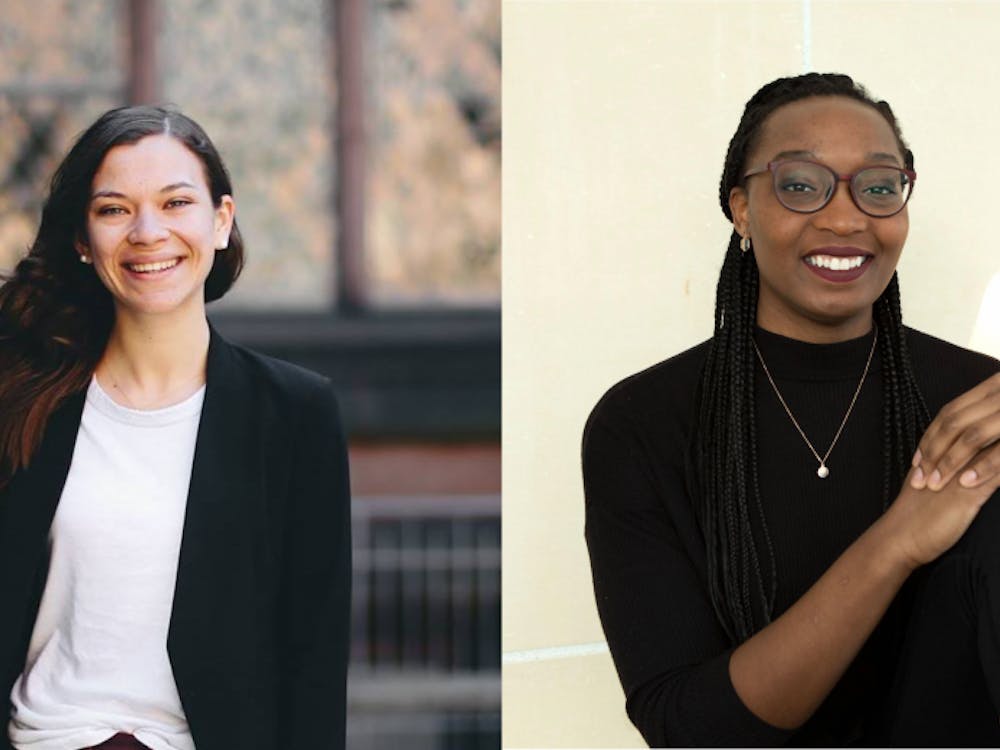
Kristin QianThe Schwarzman Scholars, founded by Blackstone co-founder Steven A. Schwarzman, announced six sophomores as part of 129 men and women chosen to represent the Class of 2018.
The Schwarzman Scholars, founded by Blackstone co-founder Steven A. Schwarzman, announced six sophomores as part of 129 men and women chosen to represent the Class of 2018.
As a step towards establishing an undergraduate concentration in American Studies with tracks in Asian American and Latinx Studies, President Eigsruber ’83 and Dean of College Jill Dolan expressed support for increasing faculty appointments and other recommendations placed forward by the taskforce on American Studies in a statement released on November 22nd. According to the statement, effective immediately, the University will phase in faculty appointments in American Studies.
Elizabeth Sell ‘17 was selected as one of the twelve George J. Mitchell Scholars nationwide in the 2018 class for the program, according to the US-Ireland Alliance. The goal of the scholarship “is to provide tomorrow's leaders with an understanding about, an interest in, and an affinity for the island of Ireland,” according to its website.
Aaron Robertson ’17 was named one of the thirty-two 2017 Rhodes Scholarship recipients selected from a pool of 2500 applicants in an announcement released by the Rhodes Trust. With the scholarship, Robertson will pursue an M.Phil.
In a report issued Thursday morning, the Task Force on General Education made six recommendations pertaining to undergraduate teaching that span from mandating foreign language studies regardless of prior proficiency to changes in the academic calendar.According to the report, the task force is recommending that the fall term start earlier and conclude in December.
The Spanish and Portuguese department experienced a significant increase with 16 new concentrators this year compared to three sign-ins last year, according to Spanish and Portuguese department representative Germán Labrador Méndez said. He said that this year’s increase in Spanish and Portuguese majors could be explained by the ongoing internationalization of the University campus, noting that many of the concentrators the department received this year speak multiple languages or have international backgrounds. He also explained that the increase in enrollment reflects the growing importance of the Spanish language in the United States. “Spanish is really getting important in the States,” Méndez said,"especially in real life and in future jobs in the field of medicine, in the field of law, in the field of international relations or in the field of business." The department’s interdisciplinary nature suits many students, whether they are interested in the sciences, humanities, arts or politics,Méndez added. Mary Hui ’17, an aspiring foreign correspondent, explained that the Spanish and Portuguese department’s small size and flexibility, as well as her love for Spanish language, convinced her to join. “Originally, I was thinking about [being a] politics major with a Spanish certificate, but I realized it wouldn’t be enough [for me to master the language],” Hui said.
The Princeton Neuroscience Institute has drafted a proposal outlining a program of study for a new neuroscience concentration, according to a document obtained by The Daily Princetonian and dated June 24. The proposal will be discussed and presumably voted upon at a faculty meeting on Monday afternoon, Deputy Dean of the College Clayton Marsh confirmed in an email on Saturday. The change comes nine years after the founding of the Princeton Neuroscience Institute, an initiative of then-University President Shirley Tilghman, and less than a year after the opening of the new psychology and neuroscience building.
The University will begin attaching a letter detailing the policy of grade deflation and the fact that it was repealed at the beginning of this academic year to the transcripts of sophomores, juniors and seniors, University spokesperson Martin Mbugua said Tuesday. This measure is similar to what had been in practice for the past decade while the old grading policy was still in effect.
Qatar is a nation committed to facilitating international peace and self-determination for all peoples in our uncertain world, Minister of Foreign Affairs of the State of Qatar His Excellency Dr. Khalid Bin Mohammed AlAttiyah argued in a lecture Monday. “We are once again living in a time of profound instability and change, but also a time of great opportunity,” AlAttiyah said. AlAttiyah, who was appointed minister of foreign affairs in 2013, holds a bachelor’s in aviation science from King Faisal Air Academy, a law degree from Beirut Arab University and a master’s and a Ph.D.
Recommendations from the grading policy report released on Tuesday could go into place as early as the upcoming fall term, said University President Christopher Eisgruber ’83, who is supportive of bringing end to grade deflation. “I think it’s really important that Princeton be known for the quality of its teaching rather than for the severity of its curve,” Eisgruber said. Thereport, written by an ad hoc committee commissioned by Eisgruber to examine the grading policy implemented in 2005, urged that the quota for A-range grades of 35 percent be dropped and that emphasis be placed on providing meaningful feedback to students. Eisgruber explained that he will ask the Faculty Committee on Examinations and Standing to discuss the report at its first meeting in September.
Following decades of rampant grade inflation, the average GPA and fraction of A-grades given dropped dramatically from 2003-05 — the years right before the current grading policy was implemented — according to a report released by the University on Tuesday morning. The report, which was prepared at the request of University President Christopher Eisgruber ’83 after only a few months in office, suggests that the controversial grade deflation policy has had little direct effect on grading.
While B.S.E.
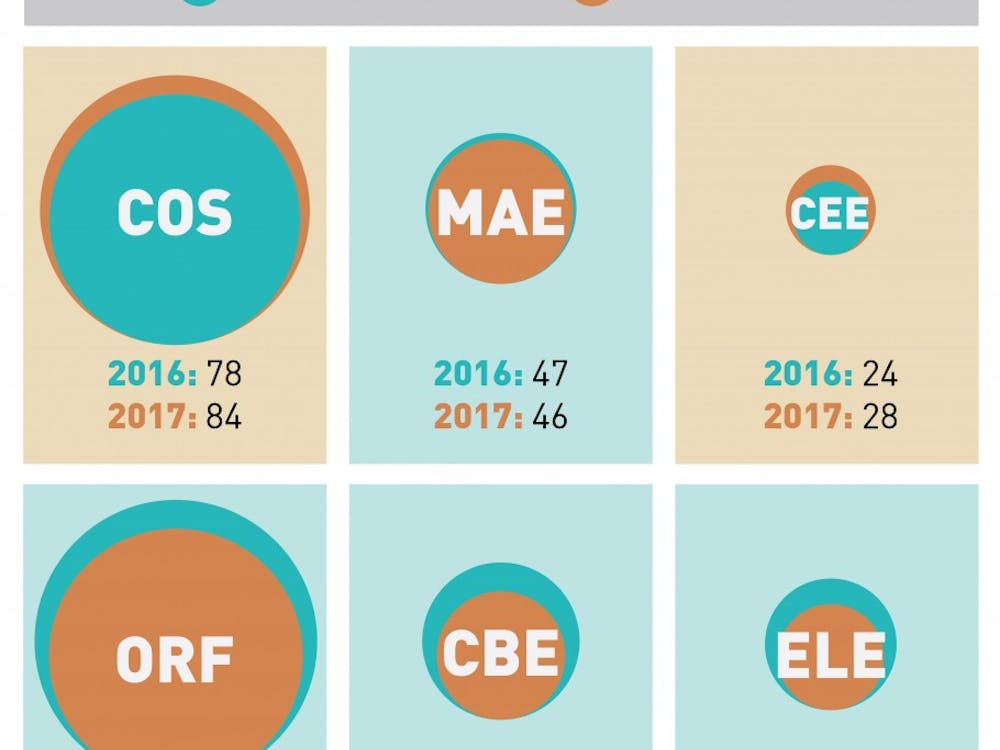
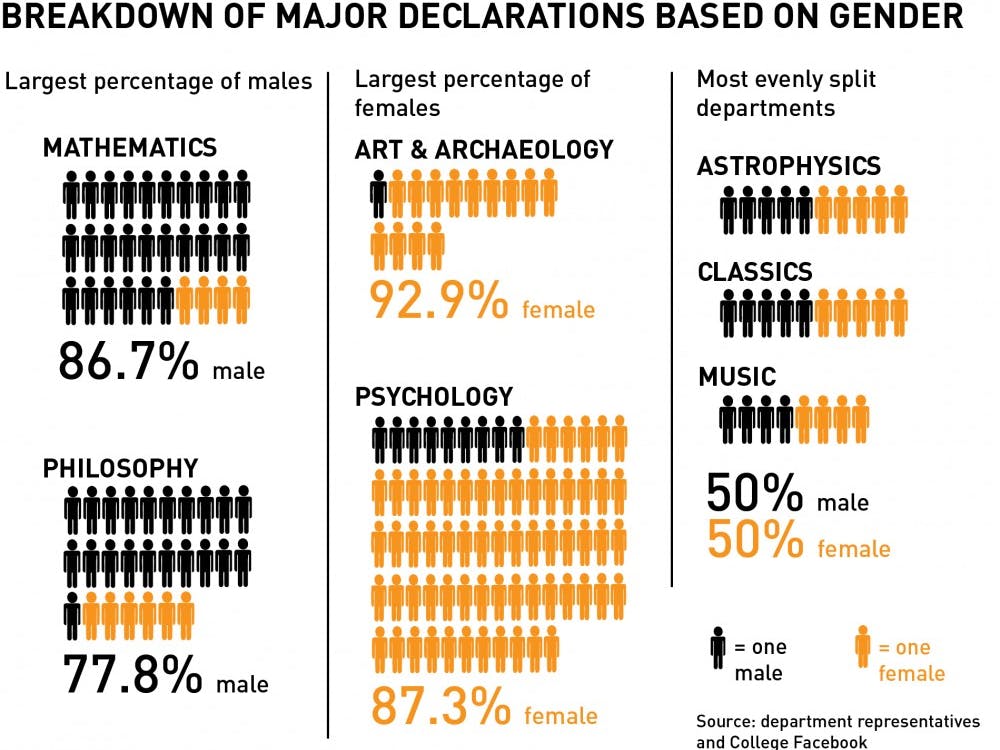
While bachelor's degree concentration declarations for the Class of 2016 were predominantly male in the science, technology, engineering and math fields, the gender distribution was roughly even in the social sciences and the humanities. Female A.B.
Assistant psychology professor Alin I. Coman has published a one-year studyinPsychological Science,a journal of the Association for Psychological Science, assessing the effects of wartime atrocities on people of different social groups.
Although economics professor Paul Krugman announced his decision to join the City University of New York faculty on Feb.
Evan Thomas, former editor-at-large at Newsweek who has taught journalism at the University for seven consecutive years, will be leaving Princeton at the end of the academic year.
Beth Lew-Williams, who will join the University next year, will become the first professor in Asian-American history.
With 155 new members in the Class of 2016, the Wilson School has seen an increase of 76 percent in its student body in two years.
Two hundred sixty-nine members of the Class of 2016 declared concentrations in the humanities by the end of the sophomore major declaration period on Tuesday.The same number of students declared a humanities concentration in the Class of 2015, whereas 286 did in the Class of 2016.The humanities majors with the largest number of concentrators remain history, with 90, and English, with 48.
While new financial regulation has focused on bank oversight and risk management, economics and Wilson School professor Atif Mian and professor of finance at the University of Chicago Booth School of BusinessAmir Sufi argue in an upcoming book that not enough attention has been paid to the role of high levels of private, household debt in the Great Recession. “The profession at-large and also the policy side have severely underestimated the importance of debt for the whole of the economy,” Mian explained. Their book, called "House of Debt," is complemented by anew blogthat bears the same title and debuted inMarch.