



Upon dining at Princeton, I have noticed some consistencies: Forbes Sunday brunch will have a chocolate fountain, and there will always be a tray of scrambled eggs available for breakfast at just about any dining hall. I’ve had the scrambled eggs almost every day, but I couldn’t help but notice that they were different from the scrambled eggs I make at home — in taste and in texture.
This got me thinking: where does Princeton’s food come from?
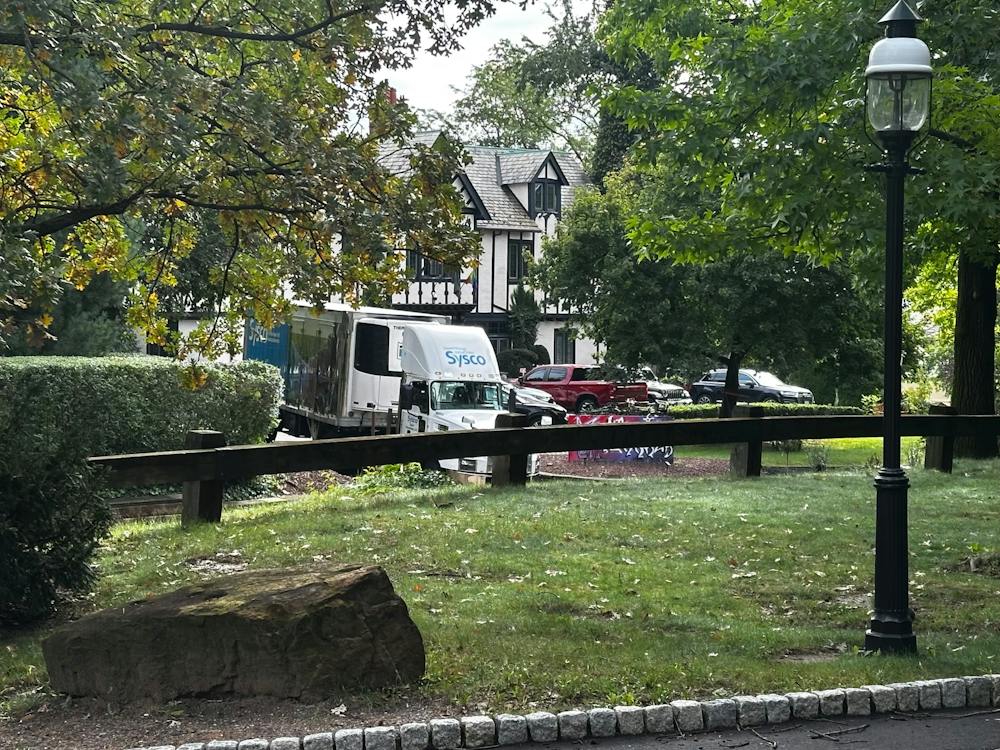
One press release might have the answer. Two years ago, the world’s largest broadline food distributor, Sysco, opened a state-of-the-art facility in Northampton, Pa. Among the customers named in the press release was Princeton University.
Yet on Princeton’s Campus Dining website, Sysco is nowhere to be seen on its sampled list of sources. In fact, it only mentions nine food producers — brands that almost seem cherry-picked for their sustainable- or local-sounding names, like “Blueberry Bill’s Blueberries.”
To clarify, I’m grateful that Princeton takes the initiative to make local products available. I love grabbing Tico’s to go with Late Meal, or scooping a new flavor of Arctic Ice Cream from Trenton for dessert. However, if Princeton wishes to take pride in where their food is sourced from, then it cannot pick and choose which names to disclose. Transparency about Princeton’s full list of food distributors is needed so we know what we are putting into our bodies and whether it’s produced in line with ethical standards.
Sysco is a broadline distributor. These are key players in the food service industry that “handle larger volumes of different types of food products.” Essentially, they are food supply warehouses that ship frozen or prepackaged food in bulk.
For example, you can order a 22-pound case of a product labeled “Egg Scrambled Butter Flavored Refrigerated” straight from Sysco. The convenience of these distributors makes them especially attractive to restaurant owners and institutions like Princeton.
Of the broadline distributors out there, three dominate the market: Sysco, followed by U.S. Foods and Performance Food group, resulting in a mass-homogenization across restaurants in America. During an antitrust case preventing Sysco from buying U.S. Foods, the Federal Trade Commission concluded that a merger of Sysco and U.S. Foods would occupy 75 percent of the broadline distributor market. Last year, TedEd host and journalist Alec Opperman ordered the same type of food items at restaurants in Alaska, Nebraska, and New Jersey only to discover the food was scarily consistent. More importantly, each similar menu item could also be ordered off of Sysco or U.S. Foods’ website in bulk frozen.

This control of the market has likely contributed to the food quality and nutrition decline over the last few decades. When cheap prices and mass production are prioritized above all, nutritional quality inevitably suffers. More specifically, cheap ingredients substitute whole foods. An example is how Sysco adds seven additional ingredients to its pre-packaged scrambled eggs mix.
There are a variety of ethical issues when it comes to sourcing from Sysco too, like the documented unfair treatment of their truck drivers in the U.S. and their partnership with transnational corporations that engage in human rights abuses. With stakes so high, it’s vital we at least know where our food is coming from.
The sad reality is that you could be sitting in a restaurant or a dining hall surrounded by rich farmland without any of the food on your plate coming from it. Worse, it could come at the cost of another’s freedom. The problem is that, when dining at Princeton, we don’t know. The information needs to be made available.
If Princeton publicly posted a comprehensive report about food sourcing, we can identify where to start. Such a report would ideally include a complete list of distributors, with statistics about how much each one contributes to campus dining offerings. Princeton’s website already claims it wants to “understand precisely where our ingredients come from, and share that information.” It’s time to fulfill this statement.
From getting to know the lovely dining hall staff to meeting new students and sharing our stories, I’ve discovered that eating at Princeton centers on community. But cultivating this value of community also involves making sure our food is as ethically- and locally-sourced as possible. As a first step toward this goal, Princeton must tell us where our meals come from.
Angela Bahna is a first-year contributing Opinion writer from Alaska. She can be reached at bahna[at]dailyprincetonian.com.
Read More

Make the Pre-read a work of fiction
EmmaRose ZillaA story that’s intellectually ambitious and philosophically provocative doesn’t necessarily have to be nonfiction. A fictional text can help us understand political tensions or erosion of autonomy just as much as an explanatory novel can.
A story that’s intellectually ambitious and philosophically provocative doesn’t necessarily have to be nonfiction. A fictional text can help us understand political tensions or erosion of autonomy just as much as an explanatory novel can.
Bring back Communiversity
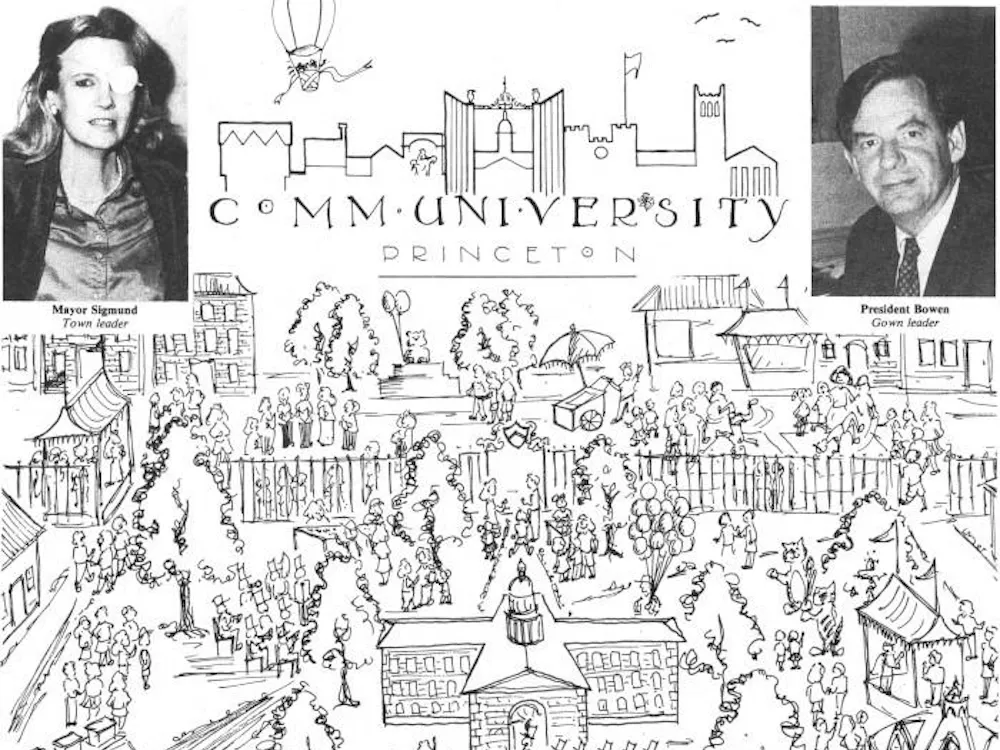
Isaac BarsoumFrom its inception in 1985, when it subsumed the Arts People Party — the Arts Council’s pre-existing festival — Communiversity always aimed to be more than just an arts festival. It was both a physical and symbolic coming-together of the University and the town in a celebration of all that we have in common and all that makes us different.
From its inception in 1985, when it subsumed the Arts People Party — the Arts Council’s pre-existing festival — Communiversity always aimed to be more than just an arts festival. It was both a physical and symbolic coming-together of the University and the town in a celebration of all that we have in common and all that makes us different.

Who rights our rules?
Charlie YaleWith fairness for students in mind, the University must require that all changes to RRR go through the Committee on Rights and Rules.
With fairness for students in mind, the University must require that all changes to RRR go through the Committee on Rights and Rules.