



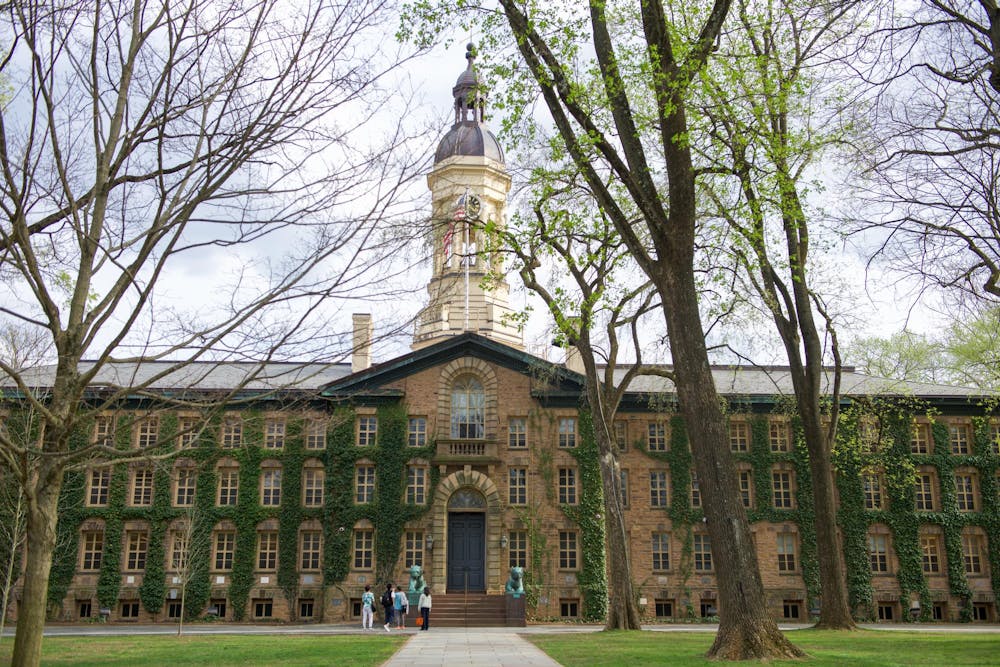
The University has implemented a new limit on the number of Undergraduate Student Government (USG), Graduate Student Government, and Council of the Princeton University Committee (CPUC) student representatives allowed to attend faculty meetings.
In an email to student leaders obtained by The Daily Princetonian, Associate Dean of Undergraduate Students Ian Deas wrote that the new changes will go into effect at the Sept. 14 faculty meeting and each constituency will be able to send a maximum of two observers to a meeting. The Rules and Procedures of the Faculty do not specify the number of observers permitted from the student governments or CPUC.
Furthermore, student representatives who wish to attend faculty meetings must register by noon on the Friday before the meeting and receive credentials on the day of. The students are also not permitted to record or photograph any part of the meeting.
According to Deas’ email, “This is to ensure adequate seats for faculty.” Photos taken by the ‘Prince’ at multiple faculty meetings over the past year show empty seats during the proceedings, though past meetings with high-profile votes or issues have garnered large attendances. Though faculty meetings are typically held in the Faculty Room in Nassau Hall, the location of the meeting has been changed to McCosh 50 or Richardson Auditorium when larger audiences were anticipated.
The change follows a prohibition on reporters recording, photographing, or filming faculty meetings and a two-reporter limit per campus outlet, which took effect in May.
In a statement to the ‘Prince’, University spokesperson Michael Hotchkiss quoted comments made by Dean of the Faculty Gene Jarrett ’97 after last spring’s change. Jarrett wrote at the time, “Faculty Meetings are occasions for the faculty to gather as a deliberative body, to discuss proposals from faculty and faculty committees, and to vote on matters which are the purview of the faculty. These are not public meetings or meetings of the broader University community.”
In his earlier comments, Jarrett cited provisions in the Rules and Procedures of the Faculty which allow student observers, including those from student government and the press, to attend meetings. “Those provisions remain in place and will be honored,” he concluded.
Despite the limitation on the number of observers, leaders of the Undergraduate Student Government expressed confidence that student representation will be uninterrupted.

In a statement to the ‘Prince,’ USG Vice President Anuj Krishnan ’27 wrote, “This does not change USG’s previous practices or access to the faculty meetings. We will continue to send representatives and observe faculty meetings to inform our advocacy and share updates with the student body.”
Krishnan said that USG did not have a consistent presence at previous faculty meetings. Reporters for the ‘Prince’ who have attended previous faculty meetings in February and April did not see members of USG at the meetings.
“The important part for us is having representation at faculty meetings, and so long as that is preserved, we can work with it,” wrote Arjun Menon ’27, a U-Councilor.
Menon clarified that while he is aware of the fact that student representatives, as observers, can “not attempt by word or deed to influence the proceedings,” U-Councilors will aim to “represent” their efforts by actively listening to and preemptively planning for faculty meetings.
Menon was optimistic about the ability of USG representatives to still effectively stand up for student perspectives at meetings involving University professors and administrators. “The U-Councilors are very aligned with our goals in supporting and advocating for the student body, so I have no doubt that the two CPUC undergrad members that attend each faculty meeting will represent our collective efforts well and communicate to the broader team effectively,” he continued.
Faculty meetings usually convene faculty on the first Monday of every month during the academic year, excluding holidays. Meetings typically include votes on academic policies, curriculum changes, and other University matters.

The faculty have voted on significant matters affecting the University community in recent meetings. Last May, the faculty voted almost unanimously to mandate proctoring for in-person examinations, a change which overturned over a century of precedent of unproctored exams under Princeton’s Honor Code.
USG Treasurer Marvel Jem Roth ’28 attended the May meeting as an undergraduate representative. “It was enlightening to see how little time it took on their agenda and how there was an almost unanimous agreement on instating it, which significantly varied from student polling USG conducted that demonstrated a very split view,” she wrote in a statement to the ‘Prince.’
U-Council Chair Isaac Barsoum ’28 was the only U-Councilor who explicitly denounced the new changes. “This policy is a curtailing of the ability of representatives of the student body to understand what goes on at faculty meetings, including when those faculty meetings discuss issues that pertain to students, like the proctoring change that was implemented last spring,” Barsoum told the ‘Prince.’
Barsoum is an associate Opinion editor for the ‘Prince.’
U-Councilor Ian Mann ’28 declined to comment on the change, citing that there has yet to be a faculty meeting convened during his term. The rest of the U-Councilors did not respond to a request for comment.
USG has previously come under fire for staying silent during last year’s key vote to prohibit recordings of meetings and conversations at the University. However, unlike at CPUC meetings, student representatives and other observers do not have voting rights and must “not attempt by word or deed to influence the proceedings,” according to the Rules and Procedures of the Faculty.
Faculty meetings take place on one Monday each month and are not open to students beyond credentialed members of the press and the aforementioned student leaders. The next meeting is scheduled for Monday.
Gray Collins is the assistant News editor for the ‘Prince’ leading University administration coverage. He is from outside of Philadelphia and can be reached at gray[at]dailyprincetonian.com.
Please send any corrections to corrections[at]dailyprincetonian.com.
Read More

Thieves steal $250,000 in designer bags from Princeton luxury boutique in overnight break-in
Elizabeth HuFour masked people broke into a luxury boutique store in Princeton on Sept. 1, stealing over $250,000 worth of handbags.
Four masked people broke into a luxury boutique store in Princeton on Sept. 1, stealing over $250,000 worth of handbags.

Princeton students ‘Blossom Together’: A student club takes on global humanitarian efforts
Elma CesicThis past winter break, students from Blossom Together travelled to Benin, having raised around $17,000 for food packages, water wells, and cataract surgeries.
This past winter break, students from Blossom Together travelled to Benin, having raised around $17,000 for food packages, water wells, and cataract surgeries.
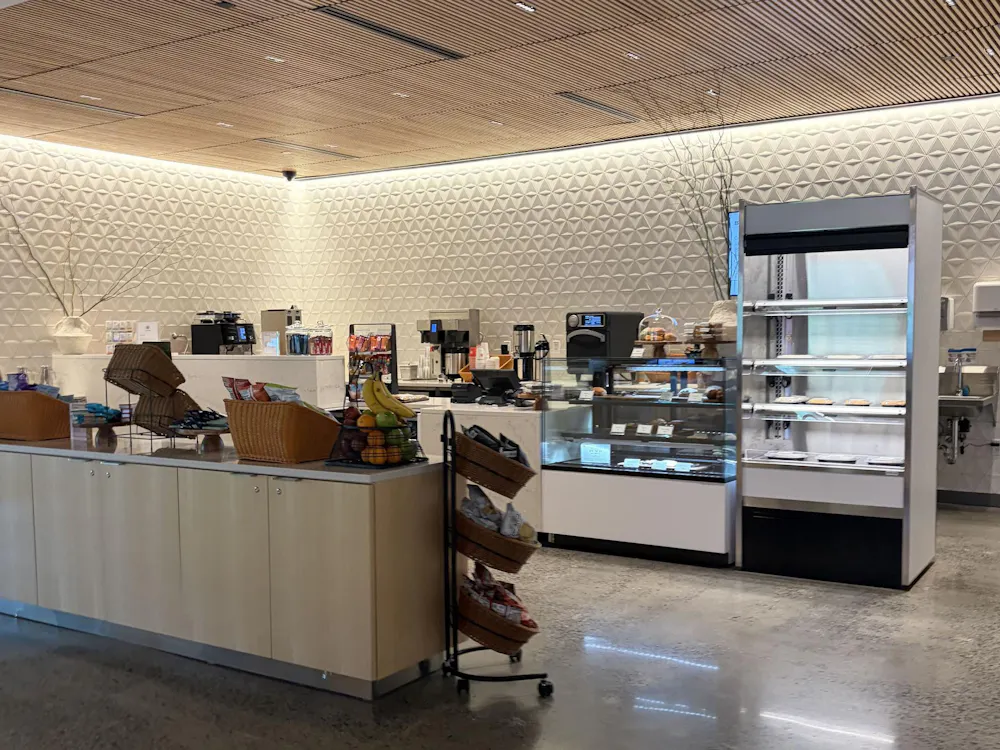
New Commons Cafe opens following cafe closures in previous years
Hifza KaleemFollowing multiple cafe closures across campus in the last two years, a new cafe opened in the SEAS Complex.
Following multiple cafe closures across campus in the last two years, a new cafe opened in the SEAS Complex.