



Student course reviews have assigned a clear epithet to the classes offered in Princeton’s creative writing department: “easy.” While most comments address the low workload and time commitment, even the occasional praise for the discussion environment and readings are mostly niceties plastered over the foundational mission of the review: assuring future students that they won’t have to work very hard.
This tension is amplified by the pressure of high demand and limited seats for the classes, which raises considerations on how to balance inclusivity with an engaging class environment. But the politics of enrollment are the organizational symptom of a larger concern: The normalization of labeling these courses as “easy” is an indicator of a diminishing perceived value for the intellectual and social impact of the personal voice.
Two years ago, Sarah Park published a column in support of reinstating the application process — the norm for creative writing classes until Fall 2022 — as a solution for the undervaluing of creative writing courses. The applications would function as a weed-out mechanism for students who dismiss the classes as easy credit fulfillment and fail to take advantage of the opportunities which might better serve a more engaged or, at minimum, more interested student.
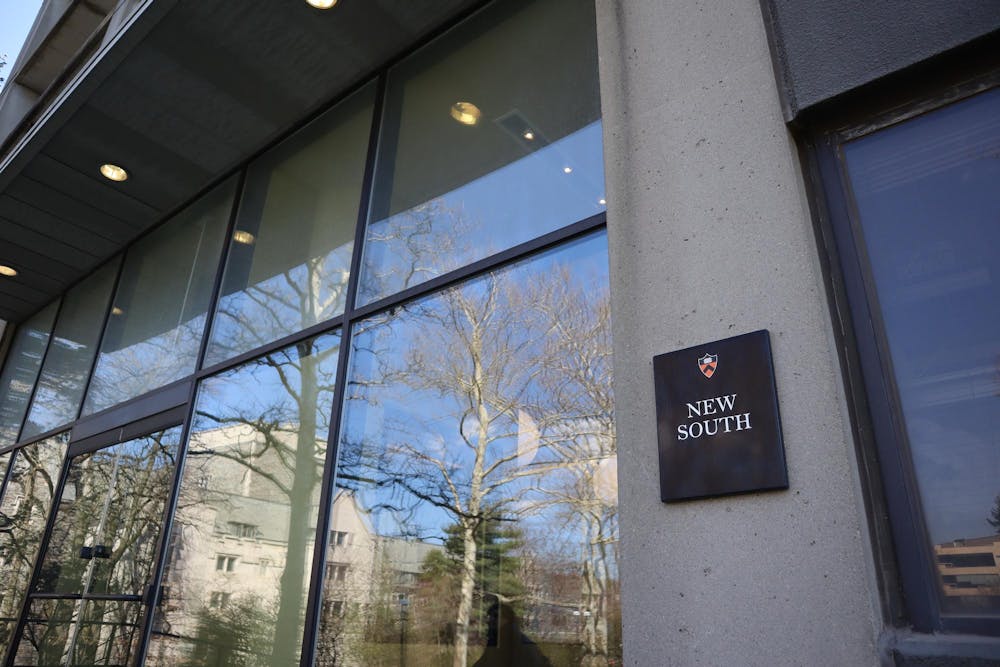
If the issue of the dismissal of Creative Writing courses as “easy” is defined as or consolidated into the fact that the wrong students are ending up with seats, applications would present a very neat solution. But the problem is not the possibility that some students sit in New South, enrolled in CWR 204: Creative Writing (Fiction) as their “easy fifth,” while a future James Joyce is roaming uneducated around campus, disadvantaged and lost to history as a result of the randomized admission process. Rather, what should concern us is how the deliberate and meaningful process of creative writing — the work of close attention and response to the world outside us, as well as the exploration of the sensations and experiences that make us human — is dismissed as “easy.”
The Princeton Courses website is a forum for candid evaluations of course demands, and Creative Writing is by no means the only department whose reviews advise students to enroll to meet a distribution requirement with minimal pain. It’s not unusual — nor is it surprising — for Princeton students, inundated with responsibilities, to seek out less demanding courses in order to balance their schedules.
But the degree to which introductory Creative Writing classes as a collective are branded as “easy fifths,” “easy sixths,” and “easy LAs” — or, more eloquently, “so chill” — is unique. It’s indicative of more than a resigned student attitude toward distribution requirements. It’s especially problematic to distill the experience of a Creative Writing class into an easy passing grade when these courses are concerned with deepening the emotional and intellectual human experience, beyond just conveying knowledge. Learning to develop a creative consciousness is a way of learning to be present — more intelligent and more caring about our own lives and the lives of those around us. This isn’t just a theoretical practice: It informs our daily life and capacity to exist in meaningful community.
Part of the challenge of creative writing is the process of negotiating the complexities of our experience in language: That is an inherently human challenge, which is why the dismissal of these classes as easy is all the more concerning in the age of artificial intelligence. The New York Times published an article a few months ago quizzing readers on their ability to distinguish samples of creative writing written by artificial intelligence from those written by humans.The justified uncertainty this piece raises indicates a rising instability about how to define real writing, how to define good writing, and ultimately why we should bother writing at all.
Leading yet another discussion of the creative and humanistic fields back to an anti-AI soapbox feels almost clichéd. But the preoccupation with product over process that arises in this NYT article suggests that personal, human creative labor and the experience that informs it are increasingly devalued, or are at minimum misunderstood as easy or mechanical, so long as its product can be adequately and impressively mimicked.

Meaningful creative writing is a process of discovering what interests, upsets, and moves us, not just in writing itself but in our individual lives and the world we share. Writing and translating are not only about what you create but how you create it. The notion that this work is “easy” is the notion that it’s no big deal to be a thinking, feeling human individual.
As such, in a time when there appears a growing devaluation of the intellectual and emotional significance of creation, it would be remiss to simply attribute the undermining of creative writing courses to the fact that too many spots are going to the ungrateful students over the engaged ones.
You could also make the case that creative writing classes are deemed “easy” simply because they are P/D/F-only, and not because of a larger social and existential undervaluation of the development of the self. It would be nice if all this started and ended with the P/D/F.
But it’s worth noting that the very things we’re dismissing en masse as “easy” — self-reflection, individual voice, personal insight, and close sensory observation — are exactly what we’re doing less and less of. The widespread miscomprehension of these classes as easy is, at its most basic, annoying. But more fundamentally it’s a sign that our value of individual identity and experience — and their capacity to inform our intellectual and human existence — is deteriorating.
This problem isn’t going to be solved by increased exclusivity. But it might be remedied by a greater recognition of the challenge and subsequent reward of sharp observation and close analysis of our own and others’ experience. None of us have to be Joyce: we just have to be — in the spirit of another cliché — our own thinking, feeling human selves.
Head Opinion Editor Lily Halbert-Alexander is a sophomore in the English department from San Francisco. Reach her by email at lh1157[at]princeton.edu.
Read More

Make the Pre-read a work of fiction
EmmaRose ZillaA story that’s intellectually ambitious and philosophically provocative doesn’t necessarily have to be nonfiction. A fictional text can help us understand political tensions or erosion of autonomy just as much as an explanatory novel can.
A story that’s intellectually ambitious and philosophically provocative doesn’t necessarily have to be nonfiction. A fictional text can help us understand political tensions or erosion of autonomy just as much as an explanatory novel can.
Bring back Communiversity
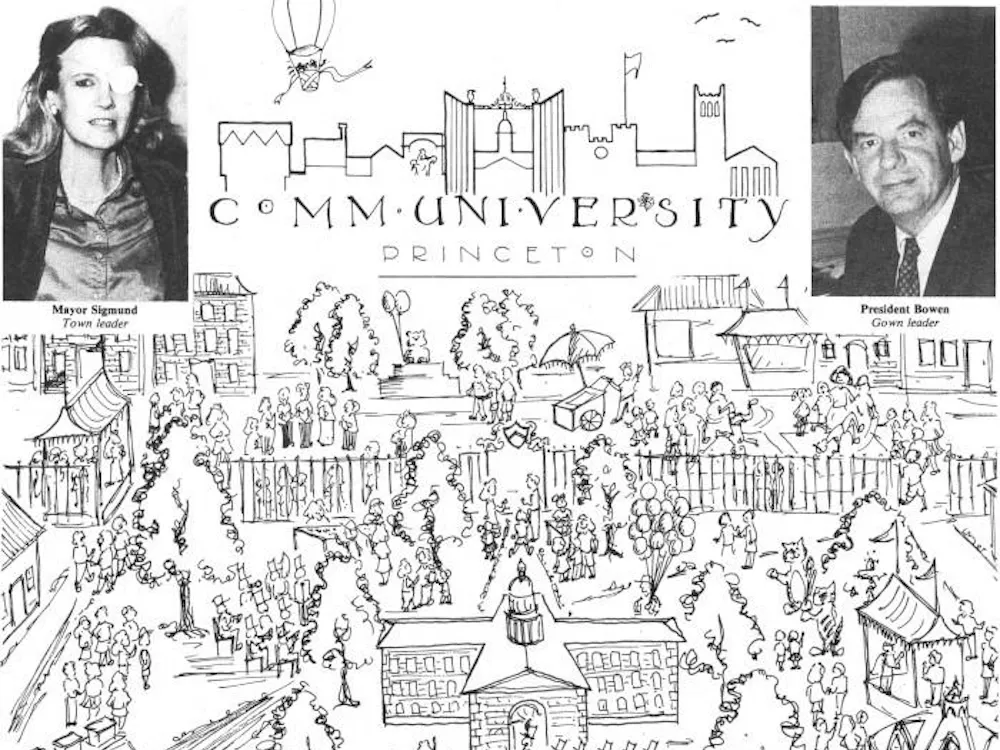
Isaac BarsoumFrom its inception in 1985, when it subsumed the Arts People Party — the Arts Council’s pre-existing festival — Communiversity always aimed to be more than just an arts festival. It was both a physical and symbolic coming-together of the University and the town in a celebration of all that we have in common and all that makes us different.
From its inception in 1985, when it subsumed the Arts People Party — the Arts Council’s pre-existing festival — Communiversity always aimed to be more than just an arts festival. It was both a physical and symbolic coming-together of the University and the town in a celebration of all that we have in common and all that makes us different.

Who rights our rules?
Charlie YaleWith fairness for students in mind, the University must require that all changes to RRR go through the Committee on Rights and Rules.
With fairness for students in mind, the University must require that all changes to RRR go through the Committee on Rights and Rules.