



Congress has dealt Internet music exchange another blow with new regulations on webcasting, and college radio stations across the United States are feeling the strain.
The University's student run station WPRB 103.3 FM has chosen to maintain its webcast despite significant fees, while other stations across the country have ceased webcasting altogether.
The U.S. Copyright Office gave new teeth to the Digital Millenium Copyright Act over the summer by issuing rates for royalties that webcasters are responsible for paying should they choose to broadcast over the Internet.
Passed in 1998, the act placed new regulations on digital media and organized a committee to decide how to manage webcasting. The committee released its latest report in June, announcing a series of regulations, many of which directly affect college radio stations.
According to the U.S. Copyright Office's new rules, college stations will have to pay .02 cents per listener per song, and a $500 flat rate. They are also responsible for retroactive fees dating back four years, when the act was first passed. For some college stations, these fees can amount to more than $5,000. That is far over the budget of smaller stations, many of which have already ceased webcasting.
Among schools whose stations have stopped webcasting are New York University, Georgetown University and the University of California-Los Angeles.
WPRB, however, has decided to continue its webcast to reach people outside its limited broadcasting range, station manager Courtney Lockemer '03 said.
"WPRB is about getting the music we play to people who wouldn't have any other way to get it, so we decided that even in the face of significant costs that webcasting was something we wanted to continue," she said.

WPRB's online listenership is fairly small. No more than 18 to 20 listeners generally tune in at a given time, Lockemer said.
The copyright act breaks radio stations into three categories: licensed, noncommercial stations that are not qualified to join the Corporation for Public Broadcasting, who will pay the .02-cent rate; unlicensed stations and commercial stations, who will pay the .07-cent rate, and member stations, whose fee is paid for by the corporation.
WPRB, a commercial and nonprofit station, falls into the second category. The station has not paid anything yet because of changing stipulations of the legislation but plans to pay its back fees shortly.
The legislation will force WPRB to make changes to accommodate the new fees, Lockemer said.
"The costs," she said, "are a significant portion of our yearly operating budget and, as a result, we are being forced to seriously evaluate how we are going to come up with the extra funding — something that is never easy for an entirely student-run organization."
WPRB's entire budget consists of advertising revenue. Lockemer said the station has considered various means of fund-raising but has not decided on a final course of action.

Recording Industry Association of America representatives, who are collecting the fee, have said in numerous press releases that their intent is to foster growth of the music industry, not to stifle it. The fees are intended to pay artists and record labels, spokespeople said.
Financial burdens are not the only potential consequence of the copyright act for college stations. It also prohibits stations from playing more than three songs off a single recording within an hour and two consecutive songs from the same recording.
The rule prevents stations from having theme nights dedicated to a particular style or artist as less conventional stations often do.
"For every station that stops webcasting, it's damaging for the station, but also for the artists," said Will Robedee, vice chairman of Collegiate Broadcasters, Inc., a trade group for campus radio stations.
Both Robedee and Lockemer said the argument that webcasting harms record sales is not entirely accurate. Copying MP3s onto tapes, the only possibility for replication, creates a product of "lower quality, smaller audiences and is very hard to record," Robedee said. He attributed some of the recent drop in the record sales to the weak economy and other external forces.
But Robedee was optimistic for webcasting's future.
"If I had my crystal ball, I'd say that college stations will end up with rate and recording requirements that they can live with," he said. "Most radio stations will have webcasting."
Read More
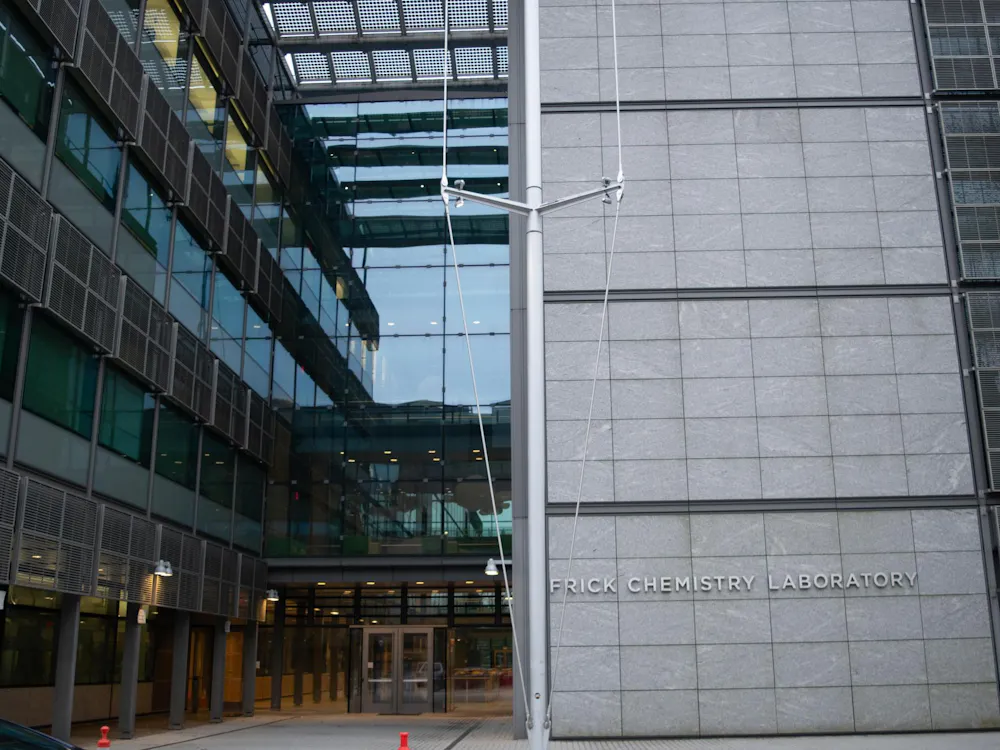
Two Princeton professors win 2027 American Chemical Society awards
Kimberly HutchinsonPrinceton chemistry professors David MacMillan and Paul Chirik were named 2027 American Chemical Society national award winners for their contributions to the field of chemistry.
Princeton chemistry professors David MacMillan and Paul Chirik were named 2027 American Chemical Society national award winners for their contributions to the field of chemistry.

Federal court blocks elimination of duration of status for international students
Luke GrippoA federal court has temporarily stopped the Department of Homeland Security from implementing its new final rule that would limit how long international students and exchange visitors can stay in the country. The next update on the case is set for Oct. 2.
A federal court has temporarily stopped the Department of Homeland Security (DHS) from implementing its new final rule that would limit how long international students and exchange visitors can stay in the country. The next update on the case is set for Oct. 2.

Forbes renovation scope still undecided as Hobson prepares to open
Gus Vogel and Daphne LewisAs Forbes students prepare to become the first cohort to live in Hobson College next year, specifics on Forbes' own renovation remains unsettled by the University nearly six months after the University announced it was accepting consultant bids for a campus-wide dorm renovation plan.
As Forbes students prepare to become the first cohort to live in Hobson College next year, specifics on Forbes' own renovation remains unsettled by the University nearly six months after the University announced it was accepting consultant bids for a campus-wide dorm renovation plan.