



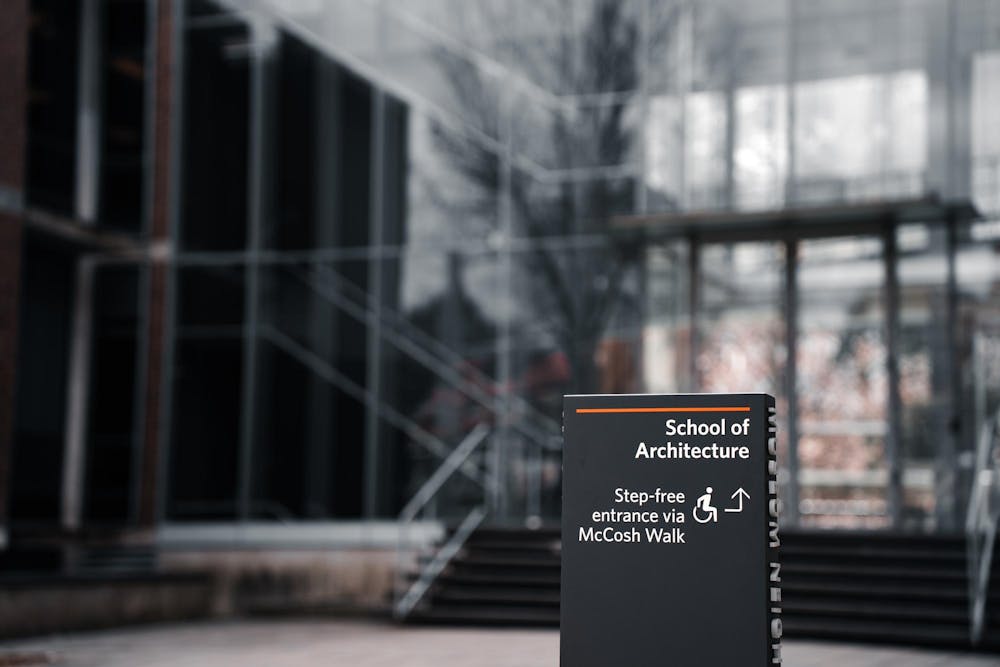
This spring, the Princeton Initiative in Architecture, Urbanism, and the Humanities is hosting a forum on the urban environment, titled “Cities Made & Unmade.” The series brings together scholars from across disciplines to examine how cities are constructed and reshaped by residents.
Originally founded in 2014 with support from the Mellon Foundation, the Princeton Initiative was created to connect architecture and urban design with the humanities. Funding from the Mellon Foundation ended in 2025. However, the program continues at Princeton, encouraging interdisciplinary conversations.
“The idea was to connect [architects and urban planners] with humanities scholars — historians, ethnographers, artists — anyone who can kind of help understand the broader history, culture, [and] politics of cities,” said Aaron Shkuda, project manager of the Initiative.
The series opened on Feb. 4 with a discussion on Black homeownership and failed gentrification in Detroit, followed by a conversation about arson and urban transformation in American cities on Feb. 11.
Babak Manouchehrifar, associate research scholar and Stewart Fellow in the Department of Religion, coined the title “Cities Made & Unmade.”
“Rather than seeing cities as mere background … we can see how they are actually sites of active power, imagination, and inequality,” Manouchehrifar said.
The goal of the forum is to extend common understandings of cities beyond personal experience and extending into complex contexts — to see cities as “not objects of analysis or mere sites of intervention, but as where people live their lives,” according to Manoucherifar.
“The idea is to bring attention not only to actors involved in urban change, but also to the processes … through which cities undergo major economic or spatial or social changes,” Manouchehrifar said.

The forum challenges existing preconceptions about cities, offering new perspectives to add to the existing scholarship.
The featured discussion on Feb. 11, titled “Born In Flames: The Business of Arson and the Remaking of the American City,” focused on a recent book by Bench Ansfield examining the fires that devastated the South Bronx in the 1970s.
“What happened was that states began to offer a subsidized insurance program … It was very, very easy to get an insurance policy for a building that was far beyond the market exchange value of that building,” Shkuda said. “It created this economic incentive for landlords to essentially burn down their own buildings.”
On Feb. 24, a special 4:30 p.m. session in Dickinson Hall will examine the rise of the biotechnology industry in Cambridge. A co-hosted event in Aaron Burr Hall on Feb. 26 will focus on exploring the history of modern cities. In March, the forum will turn to questions of resistance and agency in South Asian cities, concluding with a discussion on grassroots budgeting and political solidarity on April 1.
Making the case for why students of all disciplines should attend an event in the forum, Shkuda said: “[Students] want to be in the service of humanity and in the nation’s service, but they also need to live someplace eventually, right?”
Aitana Camponovo is a staff News writer for the ‘Prince.’ She is from Washington, D.C. and can be reached at ac9353[at]princeton.edu.

Please send any corrections to corrections[at]dailyprincetonian.com.
Read More

While other schools weigh grading reforms, Princeton remains silent
Luke GrippoDespite most of Princeton’s peer institutions taking action to combat grade inflation, Princeton has remained silent. The ‘Prince’ analyzed how the state of grade inflation discourse currently stands in the higher education realm.
Despite most of Princeton’s peer institutions taking action to combat grade inflation, Princeton has remained silent. The ‘Prince’ analyzed how the state of grade inflation discourse currently stands in the higher education realm.
Princeton sues drug companies, pharmacy intermediaries over ‘artificially inflating’ insulin prices
Keira Wolk, Andrew Zhu, and Nilufer BektasIn June, Princeton sued major insulin manufacturers and pharmacy benefit managers, alleging they conspired to artificially inflate insulin prices and caused the University to overpay for employee healthcare costs.
In June, Princeton sued major insulin manufacturers and pharmacy benefit managers, alleging they conspired to artificially inflate insulin prices and caused the University to overpay for employee healthcare costs.

VP for Campus Life Calhoun to retire, leaving behind mixed legacy
Luke GrippoVice President of Campus Life W. Rochelle Calhoun will retire at the end of the 2026–2027 academic year. She entered the position in 2015 and has worked to expand mental health resources on campus, though she was criticized for her response to a sit-in at Clio Hall during the “Gaza Solidarity Encampment.”
Vice President of Campus Life W. Rochelle Calhoun will retire at the end of the 2026–2027 academic year. She entered the position in 2015 and has worked to expand mental health resources on campus, though she was criticized for her response to a sit-in at Clio Hall during the “Gaza Solidarity Encampment.”