




Princeton researchers aim to create new catalysts with cheaper, cleaner materials
Professor Paul Chirik leads a lab researching potential new catalysts for pharmaceutical and commercial applications.
Professor Paul Chirik leads a lab researching potential new catalysts for pharmaceutical and commercial applications.

A small change to a powerful molecular tool — using the CRISPR-Cas13 enzyme, which can detect RNA from viruses and cells — developed by Princeton researchers could help scientists detect disease faster and with greater accuracy.
A small change to a powerful molecular tool — using the CRISPR-Cas13 enzyme, which can detect RNA from viruses and cells — developed by Princeton researchers could help scientists detect disease faster and with greater accuracy.

Chemistry professor Chris Chang’s lab studies the chemical biology of the elements, specifically examining the roles that copper, iron, and zinc play in biology across all kingdoms of life.
Chemistry professor Chris Chang’s lab studies the chemical biology of the elements, specifically examining the roles that copper, iron, and zinc play in biology across all kingdoms of life.
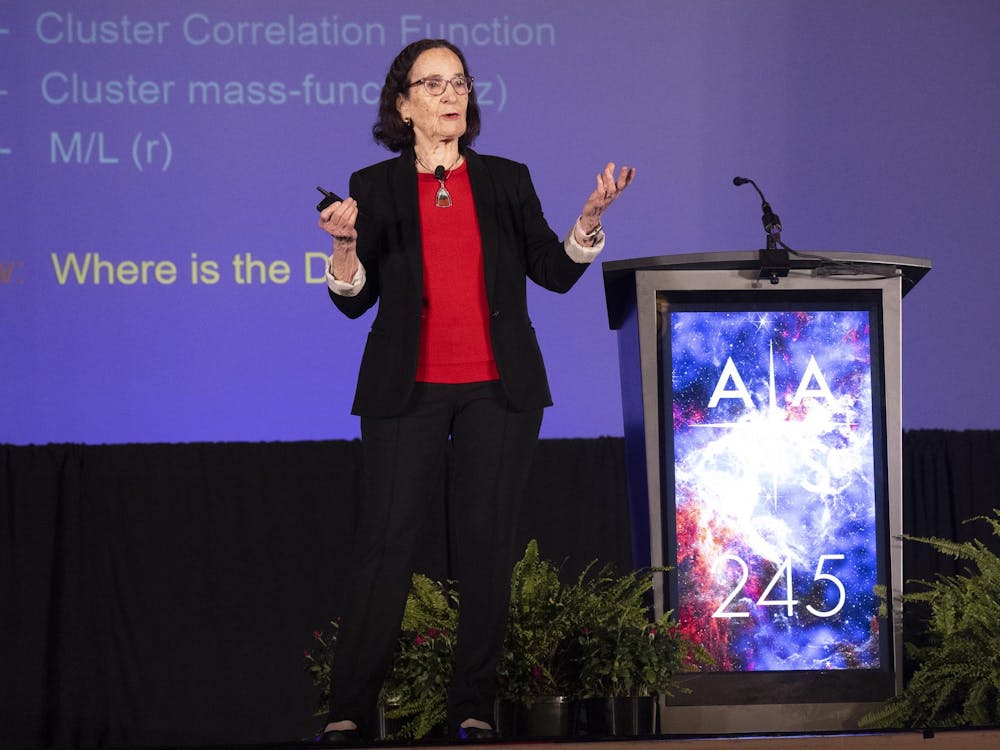
Astrophysics Professor Neta Bahcall discusses her research on dark matter and its effects on the expansion of the universe.
Astrophysics Professor Neta Bahcall discusses her research on dark matter and its effects on the expansion of the universe.
Yibin Kang, a professor in the Department of Molecular Biology, discussed new breast cancer research in his lab.
Yibin Kang, a professor in the Department of Molecular Biology, discussed new breast cancer research in his lab.
In this episode of Brains, Black Holes, and Beyond, Aanya Kasera sits down with Dr. Leslie and Dr. Lombrozo, professors and researchers who are part of heading the brand new interdisciplinary research initiative, Natural and Artificial Minds (NAM).
How do computational processes help us understand mental health disorders and precisely tailor treatments to each individual? In this episode of Brains, Black Holes, and Beyond, Aanya Kasera sits down with Dr. Yael Niv, a professor and researcher in the Princeton Neuroscience Institute to learn more about computational neuropsychiatry and mental health on campus. Dr. Niv discusses her research in quantifying psychological disorders and her advice for the campus community on improving mental well-being.
How do computational processes help us understand mental health disorders and precisely tailor treatments to each individual? In this episode of Brains, Black Holes, and Beyond, Aanya Kasera sits down with Dr. Yael Niv, a professor and researcher in the Princeton Neuroscience Institute to learn more about computational neuropsychiatry and mental health on campus. Dr. Niv discusses her research in quantifying psychological disorders and her advice for the campus community on improving mental well-being.

