




A small change to a powerful molecular tool developed by Princeton researchers could help scientists detect disease faster and with greater accuracy.
Researchers at Princeton University are developing a new diagnostic approach using CRISPR-Cas13, an enzyme that can detect RNA from viruses and cells. Their recent work shows that adding a short piece of DNA, called an occluder, improves Cas13’s ability to identify extremely small genetic mutations. These single-letter mutations in genetic code can play a role in diseases such as cancer or determine how dangerous a virus can become.
The research was led by Ofer Kimchi, Branco Weiss Fellow and Assistant Professor of Mathematics at NYU, and Ben Larsen GS in the Department of Molecular Biology. The testing was conducted while Kimchi was a postdoctoral researcher at Princeton.
The team’s innovation tackles a key challenge with Cas13: It works extremely quickly, but it sacrifices some precision in its ability to detect small mutations. Specifically, the speed with which the Cas enzyme cuts DNA limits its ability to distinguish tiny mutations, known as single nucleotide changes, inducing major effects on virus behavior or disease development.
To solve this problem, the researchers added a short DNA sequence that acts as a physical barrier — tiny DNA speed bump — that slightly slows Cas13 down. This brief pause gives the enzyme time to check whether it has found the exact target sequence rather than a near match, dramatically improving accuracy.
“[The DNA sequence] slows down Cas13 just enough that it can take an extra beat and check, ‘Is this the exact thing that I’m supposed to bind to, or is it just pretty close?’” said Kimchi in an interview with The Daily Princetonian. “And that tiny pause makes a huge difference in specificity.”
The team sees broad potential for the technology. During the COVID-19 pandemic, they focused on viral diagnostics, and the tweak could now allow researchers to track virus mutations in real time and give healthcare workers more time to respond. Beyond infectious disease, the method could improve access to cancer mutation screening and testing for genetic disorders, many of which are caused by single-letter changes in DNA or RNA.
“Before now, the only way to test for them involved very expensive and time-consuming methods like sequencing,” Larsen told the ‘Prince.’ “So practically speaking, it means that many people around the world haven’t had access to diagnostics.”

The work grew out of curiosity-driven research rather than a direct attempt to build a medical tool. Kimchi highlighted the benefit of the team’s diverse expertise, combining biology, math, physics, and bioengineering, which helped turn a fundamental question about RNA behavior into a practical innovation.
The project also included field testing beyond Princeton. Larsen described traveling to Cambodia to collaborate with scientists at the Pasteur Institute in Phnom Penh, where the team tested the diagnostic tool on patient samples of avian influenza.
Looking ahead, Kimchi said the most exciting part of the project is the unknown.
“Beyond all the things that [Larsen] talked about, the thing that I’m most excited by is the possibility of discovering things we haven’t even imagined yet,” he said.
For readers interested in hearing more about the science and the stories behind the research, the full interview with Kimchi and Larsen is available through The Daily Princetonian.
Aanya Kasera is a News contributor for the ‘Prince.’ She may be reached at aanya[at]princeton.edu.

Please send any corrections to corrections[at]dailyprincetonian.com.
Read More

Thieves steal $250,000 in designer bags from Princeton luxury boutique in overnight break-in
Elizabeth HuFour masked people broke into a luxury boutique store in Princeton on Sept. 1, stealing over $250,000 worth of handbags.
Four masked people broke into a luxury boutique store in Princeton on Sept. 1, stealing over $250,000 worth of handbags.

Princeton students ‘Blossom Together’: A student club takes on global humanitarian efforts
Elma CesicThis past winter break, students from Blossom Together travelled to Benin, having raised around $17,000 for food packages, water wells, and cataract surgeries.
This past winter break, students from Blossom Together travelled to Benin, having raised around $17,000 for food packages, water wells, and cataract surgeries.
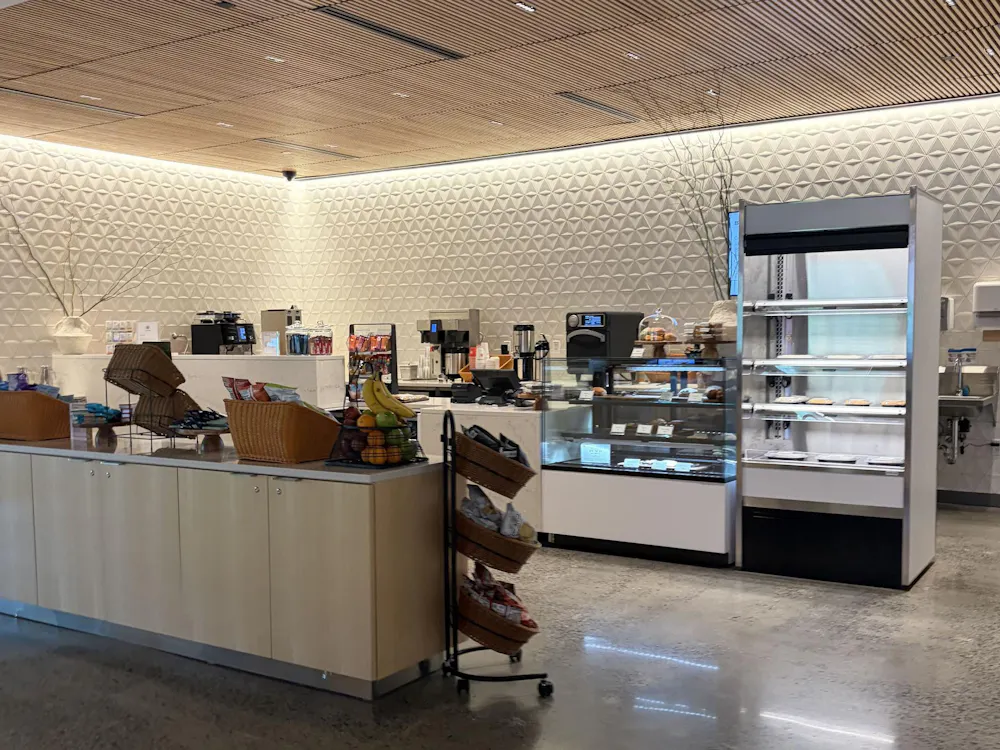
New Commons Cafe opens following cafe closures in previous years
Hifza KaleemFollowing multiple cafe closures across campus in the last two years, a new cafe opened in the SEAS Complex.
Following multiple cafe closures across campus in the last two years, a new cafe opened in the SEAS Complex.