



Last weekend, I joined a group of Princeton, Columbia, and NYU students in a “youth dialogue” at the United Arab Emirates’ Permanent Mission to the United Nations, which houses the country’s ambassador and his team. I traveled to New York expecting a chance to converse across a cultural divide and ask probing questions about the UAE’s subpar record on disinformation and its ongoing commitment to the “Board of Peace.” But I found myself disappointed. The event was light on the dialogue; despite the UAE’s press release, there was no time allotted for students to ask questions, and the UAE leaders offered few remarks. Instead, the leaders were apparently focused on directing their media team to capture the best photographs and angles for future publicity.
If the experience had lived up to its stated purpose as a “youth dialogue,” the format could actually have been quite meaningful. My colleague Charlie Yale has argued that it is rare for students to actually be allowed to ask incisive questions of speakers. But it is even more rare for speakers to ask their own questions. While they may be a departure from the norm, at least some speaker events at Princeton, especially those hosting national or world leaders, should feature such a two-way dialogue, with both students and speakers learning from each other.
Granted, Princeton’s primary interest is in facilitating students’ growth, not the education of congresspeople or ambassadors. The focus of academic events must remain the dissemination of knowledge by speakers and subsequent opportunities for students to pose questions. As I’ve argued before, Q&A sessions are invaluable, especially when students disagree with speakers and their questions engender learning opportunities for both parties. Entirely inverting the relationship between student and speaker is neither mission-aligned nor necessary.
However, the sheer rarity of youth voices reaching global leadership in the modern political climate is noteworthy. It seems ridiculous to imagine, for example, Secretary of State Marco Rubio visiting a group of students in Dubai and soliciting their advice on the war in Iran. Sadly, it is just as unlikely that Rubio would hold such a discussion with American college students — and not just because of the Trump administration’s hostility toward higher education. World leaders love to talk about themselves; if Rubio or similarly ranked leaders considered a visit to Princeton, they would probably be turned off by the prospect of listening rather than speaking.
But Princeton’s public affairs-related academic units should look to hold such events anyway when possible. It’s no secret that the United States is, functionally, a gerontocracy. Young people are underrepresented in Congress, and the last decade has featured presidents as old as our grandparents (or older). You or I probably know more about AI policy, for example, than Democratic U.S. Representative and former majority whip Jim Clyburn, who first learned about ChatGPT two months ago. Ten minutes in a room with Princeton students could fundamentally change leaders’ understandings and perspectives on major issues. Or, at the very least, such an experience could catch them up to speed on the modern world and the challenges facing our generation.
To truly be “in the nation’s service and the service of humanity,” the knowledge that we generate and disseminate to students should not remain inside FitzRandolph Gate. We must look to prepare alumni to serve after graduation. But Princeton should also promote opportunities for burgeoning scholars and leaders — and, more importantly, young voices — to reach beyond the confines of campus. Extending academic knowledge to the average American (or global) citizen is one challenge that higher education needs to take on; reaching world leaders may actually be a more surmountable summit.
The concept of students informing global leaders is not new. Many campus initiatives, like the Lichtenstein Institute on Self Determination’s Ethics of Policy Fellowship or lecturer in the School of Public and International Affairs Udi Ofer’s Policy Advocacy Clinic, already aim to bring student research to practitioners. But these programs require networks, connections, and relationships with experts who may be willing to read extensive research. So why not also take a simpler route and provide more informal opportunities for youth advocacy through two-way dialogues accompanying speaker events?
Two-way dialogue events need not become the rule. But by facilitating the occasional opportunity for national or international leaders to truly listen to young people’s concerns, Princeton will make a more immediate impact in the service of humanity than most other campus initiatives can claim.

Ian Rosenzweig ’29 is an assistant Opinion editor from Bryn Mawr, Pa. He likes dialogue a lot. You can reach him at rosenzweig[at]dailyprincetonian.com
Read More

Students need to know where their food comes from
Angela BahnaThe sad reality is that you could be sitting in a restaurant or a dining hall surrounded by rich farmland without any of the food on your plate coming from it.
The sad reality is that you could be sitting in a restaurant or a dining hall surrounded by rich farmland without any of the food on your plate coming from it.

Make the Pre-read a work of fiction
EmmaRose ZillaA story that’s intellectually ambitious and philosophically provocative doesn’t necessarily have to be nonfiction. A fictional text can help us understand political tensions or erosion of autonomy just as much as an explanatory novel can.
A story that’s intellectually ambitious and philosophically provocative doesn’t necessarily have to be nonfiction. A fictional text can help us understand political tensions or erosion of autonomy just as much as an explanatory novel can.
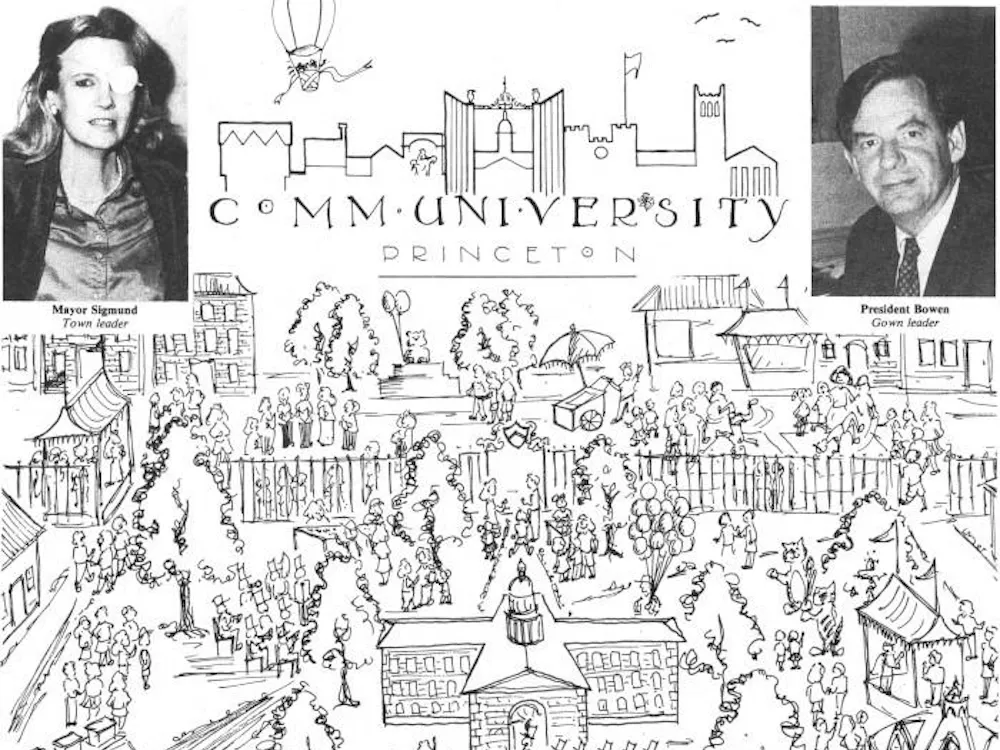
Bring back Communiversity
Isaac BarsoumFrom its inception in 1985, when it subsumed the Arts People Party — the Arts Council’s pre-existing festival — Communiversity always aimed to be more than just an arts festival. It was both a physical and symbolic coming-together of the University and the town in a celebration of all that we have in common and all that makes us different.
From its inception in 1985, when it subsumed the Arts People Party — the Arts Council’s pre-existing festival — Communiversity always aimed to be more than just an arts festival. It was both a physical and symbolic coming-together of the University and the town in a celebration of all that we have in common and all that makes us different.