



The following is a guest contribution and reflects the author’s views alone. For information on how to submit a piece to the Opinion section, click here.
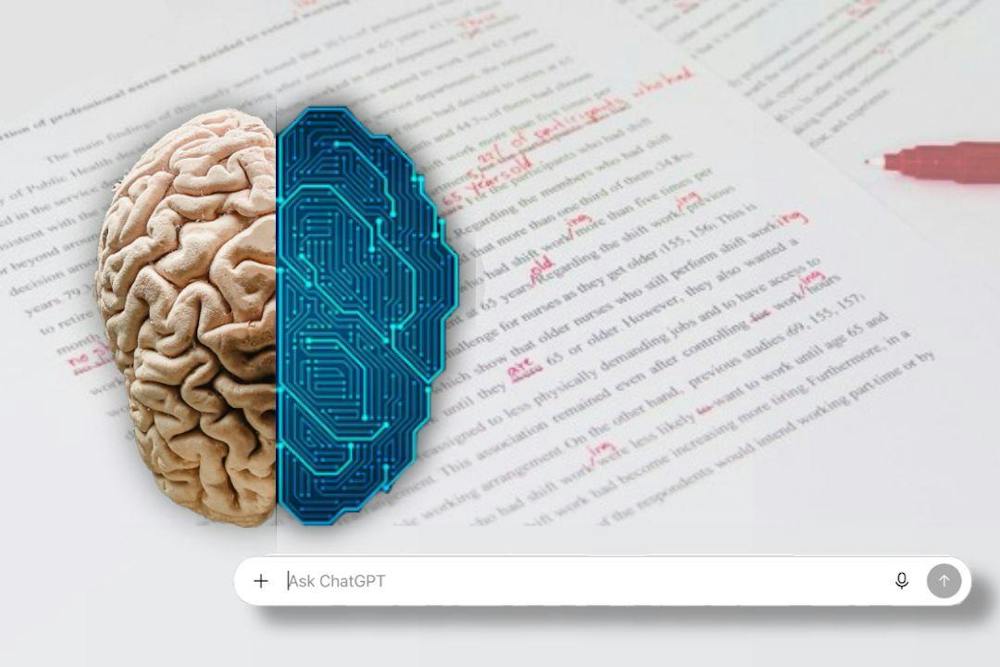
There is exactly one kind of institution in the world whose product is “thinking” — the university. This is an existential challenge for every university, Princeton most definitely included, now that nearly all artificial intelligence is purpose-built to offload the hard work of thinking.
Yet at this instant, universities — including Princeton — are more focused on securing assessment than on augmenting learning. Indeed, more than a century after the introduction of the Honor Code, Princeton has begun mandating the presence of proctors in exam halls, an acknowledgement that the temptation of AI is too great for students to resist. The Daily Princetonian’s 2026 Senior Survey revealed a self-reported cheating rate of around 25 percent. It’s hardly surprising public trust in the value of a degree continues to erode.
Universities need to return to the foundations of learning with trust — and verification — at the heart of their relationship with students. They also need to be far more prescriptive about what learning looks like so that students who arrive with limited capacity for deep reading have the time and space to develop their critical thinking skills.
What skills will Princeton grads need to navigate the job market? The phrase “AI literacy” — the capacity to use generative AI to augment human productivity — has been normalized by employers as an expectation for new hires. There is near universal agreement that the one thing every graduate does need is “critical thinking.” How else will they interpret, critique, and direct AI-generated outputs? What does “critical thinking” mean? How is it learned, and can it be measured?
A sub-field of neuroscience answers these questions. Dr. Maryanne Wolf, a professor in cognitive neuroscience at UCLA, has dedicated her research to understanding how humans learned to read six millennia ago, and what happens to the connections inside the brain during the literacy journey from infancy through schooling and beyond. That process is essential to the development of deep thinking skills, including analytical and analogical thinking.
Being able to independently process the layers of meaning in sentences and stories, and drawing connections across disparate ideas, is the essence of “critical thinking.”
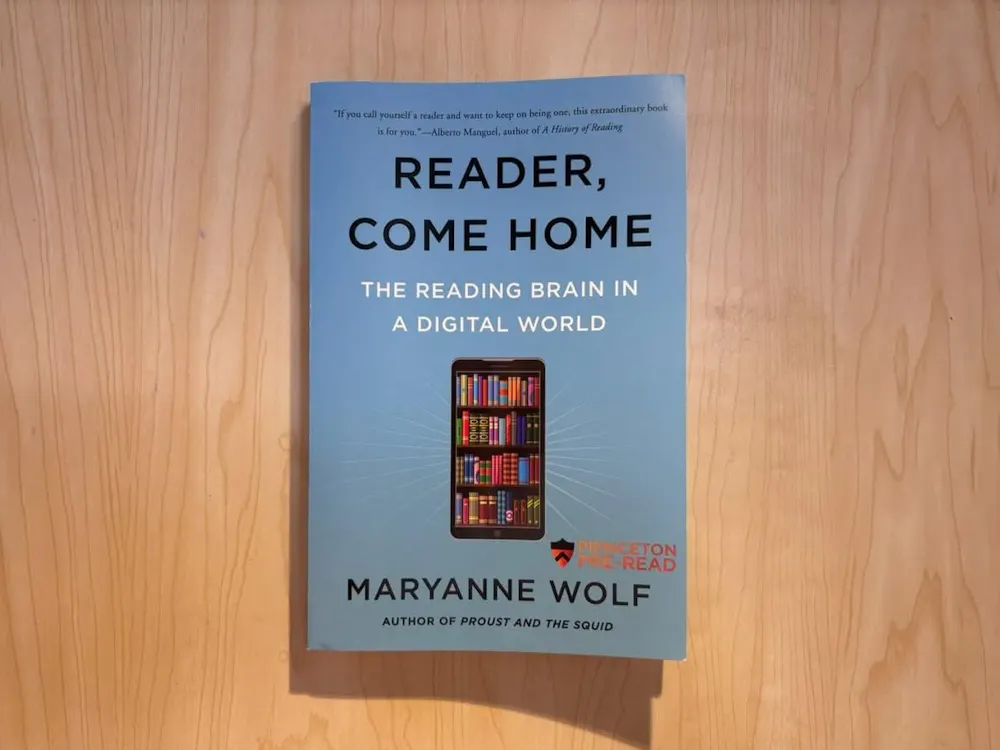
As Wolf makes clear in her book “Reader, Come Home: The Reading Brain in a Digital World” — and as every Princeton first-year should now know since it was assigned as the 2026 Pre-read — the dramatic shift of attention from paper texts to digital platforms over the last 25 years has altered reading patterns. Young people’s brains have less-developed neural pathways for deep reading, and adults whose reading patterns have shifted experience atrophy in their capacity for critical thinking.

The arrival of generative AI has accelerated these trends, while also giving students the capacity to create the veneer of deep learning without the associated cognitive effort. Further, a growing body of research confirms that use of generative AI undermines the cognitive effort that is essential to the development of the human brain. As AI use increases, learning, recalling, and critical thinking skills decline.
And that’s where this becomes a societal problem.
A degree is an indicator of trust. Employers hire based on it, and families go into debt for it. But when thinking is hollowed out, trust at universities is too. All the work to secure assessments does nothing to protect trust in the learning process. Even a degree with “Dei Sub Numine Viget” on it won’t carry the weight it once did, and employers will quickly figure that out.
There is a way out of this dead-end.
First, Princeton and other universities need to separate the idea of “AI literacy” from the provision of access to AI models that offload thinking. Already there are universities restricting access to generative AI for first year students. Others are also doing away with grades for first-years to reduce the obsession with a high GPA and encourage more exploratory learning.
Second, universities need to acknowledge their own authority in deciding which technologies belong in learning settings and how and when they should be deployed. Princeton — or its professors, on a course-specific basis — could provide students with a list of approved technology appropriate and sufficient for the completion of coursework.

Some may argue that, because AI models are free and ubiquitous, there is no way to stop students from misusing the tools. There’s also no way to definitively stop a teen who has recently received their driving permit from breaking the law and driving dangerously. But that doesn’t mean we don’t have laws and that there are never consequences.
Third, Princeton and other universities should establish two-way AI honor codes. This is a commitment by students to use technology as permitted by professors and by the University — faculty and administration — to pledge to not use AI to evaluate students and to step away from the practice of surveilling students’ internet usage.
Breaching the code must carry real consequences, including suspension for current students or an invalidation of the degree for graduates. We saw a serious cheating scandal earlier this year at Brown University, and it’s highly likely that this type of event has been happening across the Ivy League increasingly since 2023. And obviously, students will need to be prepared to demonstrate their effort by validating their authentic learning.
Finally, the United States needs to protect its universities and schools with a federal academic integrity law like other countries do, including Australia. These laws fine companies whose business models include contract cheating services, text humanizers, and typing simulators — anything that is marketed to students with the intention to cheat.
In this age when machines can simulate human intelligence — and also hallucinate, dissemble, and cheat — we need to raise our expectations for honesty amongst everyone involved in the mission of higher learning. Princeton will survive the AI era by going back to its purpose: teaching students how to think, giving them the tools to do so, and trusting them to do the hard work of learning.
Jack Goodman ’89 was co-editor of the Daily Princetonian’s editorial page. In 2003 he founded Studiosity, a platform used by universities to grow thinking and validate learning. For more than 20 years, he also chaired the Princeton Alumni Association of Australia where he oversaw the alumni interviewing process of thousands of applicants. He can be reached at jackaroo2000[at]gmail.com.
Please send any corrections to corrections[at]dailyprincetonian.com.
Read More

Trust in academia is at a low. Can Writing Seminar help?
Ian RosenzweigAcademia has a PR problem, and no amount of insular critical inquiry is going to solve it. Writing Seminars should live up to their name and teach us not just to solve thorny research problems but also to effectively communicate our solutions through clear and — perhaps more importantly — stylistically compelling prose.
Academia has a PR problem, and no amount of insular critical inquiry is going to solve it. Writing Seminars should live up to their name and teach us not just to solve thorny research problems but also to effectively communicate our solutions through clear and — perhaps more importantly — stylistically compelling prose.

Why is the recording policy being kept secret?
Isaac BarsoumIn denying new students — and faculty and staff, for that matter — the right to know what regulations they are subject to, Princeton makes violations likely and will end up unfairly investigating or disciplining community members who were unaware of the policy’s existence in the first place.
In denying new students — and faculty and staff, for that matter — the right to know what regulations they are subject to, Princeton makes violations likely and will end up unfairly investigating or disciplining community members who were unaware of the policy’s existence in the first place.
For readers to ‘come home,’ talk with us — not at us — about tech
Olivina YangI and other students in my year have heard endlessly from parents, teachers, and sensationalized headlines about the dangers of these technologies for as long as we’ve had them. But this often-narrow conversation leaves much to be desired.