



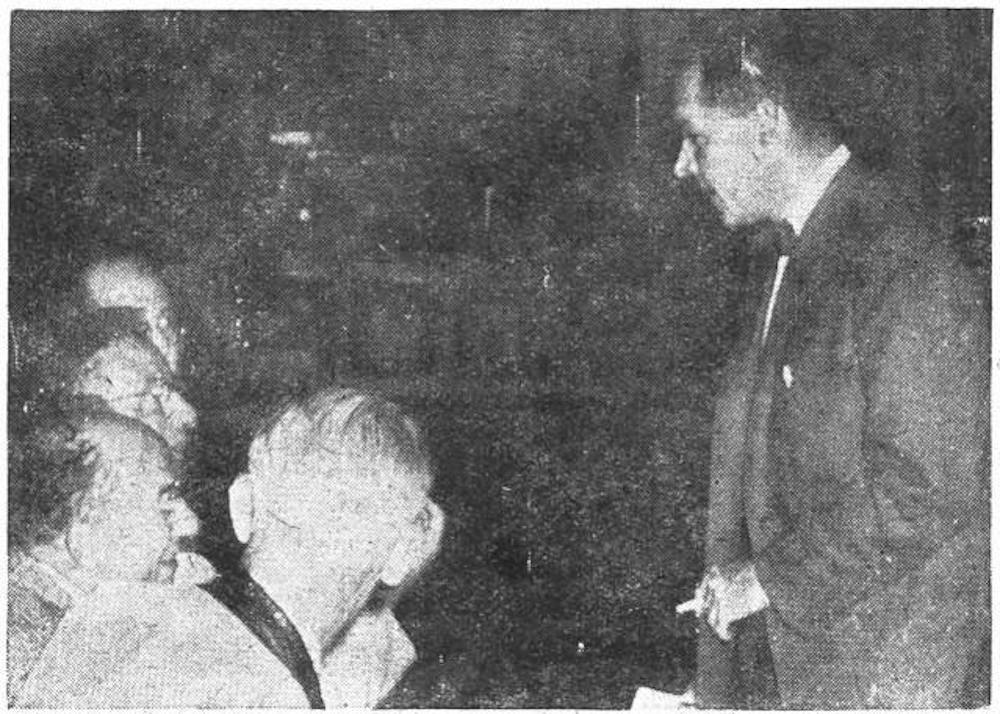
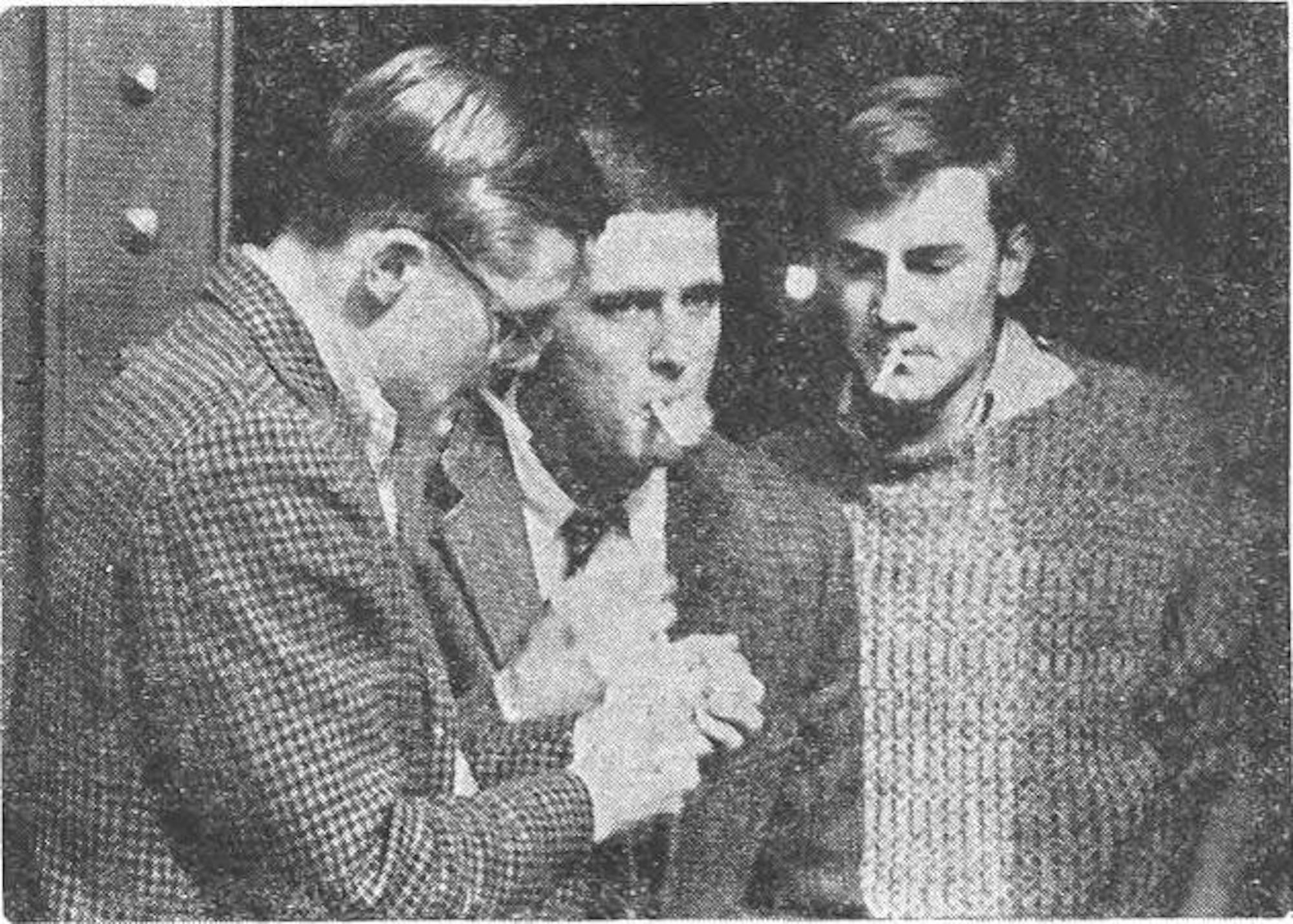
Today, with widespread smoking regulations, it’s hard to imagine Princeton students pulling out a lighter in the middle of class and lighting a cigarette, but until October 3, 1960, students in lecture halls and classrooms could freely smoke as professors taught.
The administration’s 1960 ban on smoking preceded a long lineage of bans on student activity over the years, including first years rushing Greek life (2012), electric scooters (2024), and the latest controversial ban on e-bikes (2026).
The Daily Princetonian reported that the faculty voted to create the ban following a recommendation from President Robert F. Goheen ’40, who pointed out that smoking in classrooms left classrooms in poor condition from smoke damage and burn marks, creating significant costs for the University.
President Goheen advised, “Princeton’s practice of permitting smoking in lecture halls and classrooms involves substantial cost to the university as well as leaving most of these rooms in an unsightly condition during the greater part of each day.”
Not everyone supported the resolution. Professor and clerk of the faculty Wilbur S. Howell shared that the faculty passed it favorably but “not unanimously.”
The cost concerns around smoking which fueled the decision came from damage approximations from the previous year. President Goheen explained that around $16,700 could be saved annually through the ban by removing $7,700 for cleaning costs and $9,000 in sanding and refinishing costs.
The new ban pertained to all persons — students, faculty, and staff alike — who used the lecture halls in the interest of protecting the rooms themselves, but did not apply to faculty offices. Goheen commented that, in said spaces, “there is at least the hope that ash trays will be used.”
The administration anticipated difficulty in enforcing the ban and posted “No Smoking” signs, but acknowledged that enforcement was ineffective unless the community embraced the ban itself.

However, some students found the ban controversial.
Two days after the ban, on October 5, the ‘Prince’ published “Smoking Rule Provokes Verbal Defiance” detailing students’ frustrations and declarations that the decision was “totally unenforceable.”
“They can’t do that to us, can they?” one student commented after the ruling.
About a week later, the Undergraduate Council protested the lack of liaison between the administration and student body in deciding the ruling. While they accepted the economic rationale behind the decision, the council believed the ban was “picayunish.”
Ultimately, the protest led President Goheen to apologize for the lack of student involvement in the decision. Nonetheless, Princeton’s smoking ban remains in place and still holds today.
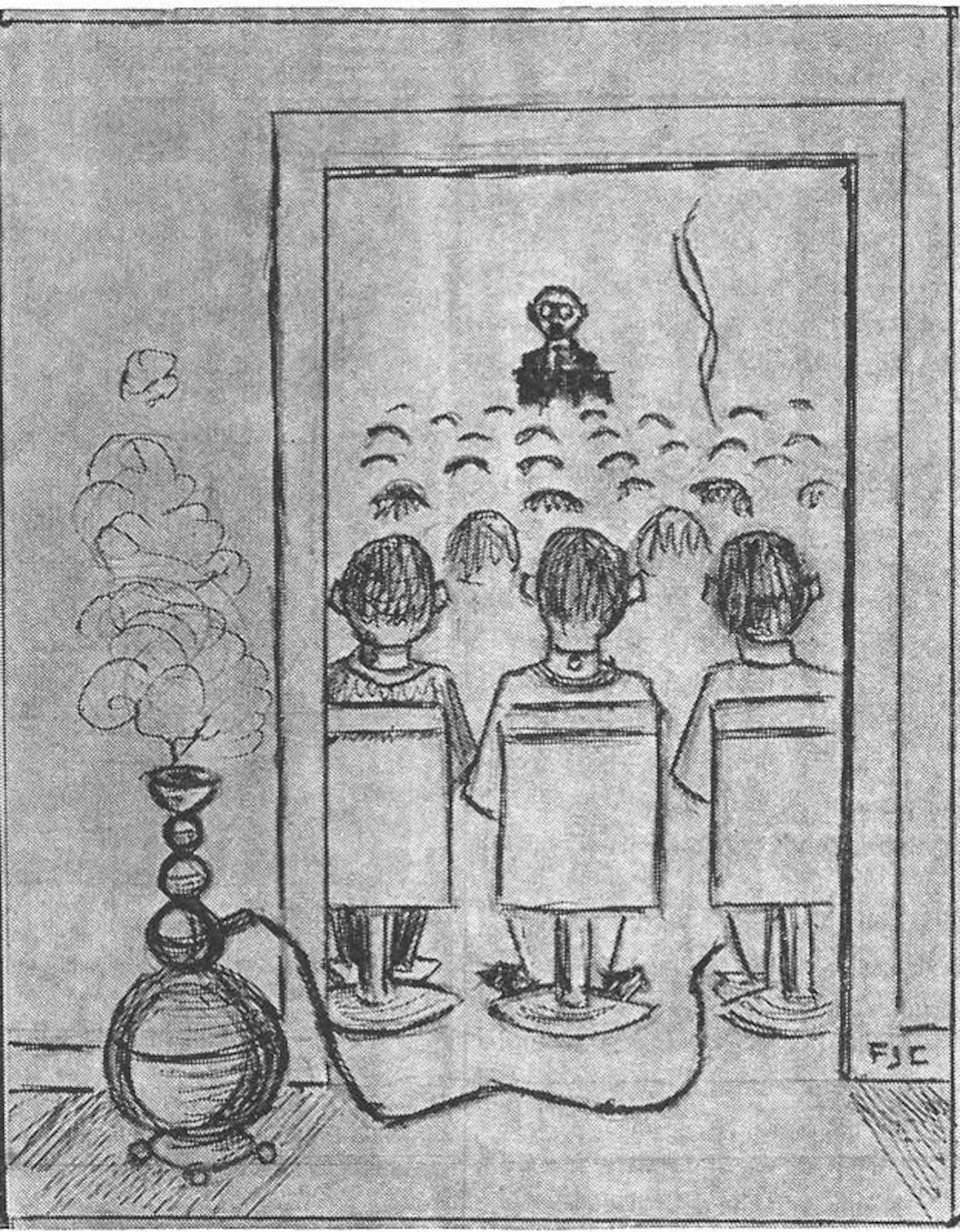

In the decades since the smoking ban, the administration has continued to carry out several bans regulating student behavior, the most recent of which — the e-bike ban — remains controversial.
In April of 2026, the administration alerted students to a ban on all electric bikes taking effect on June 1, 2026, via a campus-wide message. The Environmental, Safety, and Risk Management Committee made the decision to ban e-bikes over growing concerns over pedestrian safety.
The official message explained the University’s rationale: “E-bike users have increasingly been observed violating safety rules, including riding on sidewalks and pedestrian pathways, failing to yield to pedestrians, and carrying multiple riders on a single device.”
This decision updated the 2024 personal electric vehicle policy which had previously banned the use of electric scooters, hoverboards, and skateboards. By adding electric bicycles to that list, the administration has banned all PEVs.
Student reactions to the e-bike ban have been mixed. While some are delighted by a quieter, safer campus, others are upset by the ban’s impact on their commute.
One demographic particularly impacted by the ban is student athletes who found e-bikes helpful for cutting lengthy travel time between fields and training facilities on the outskirts of campus, such as the Meadows Fitness Center, Jadwin Gym, dorms, and classes.
Football player Bradley Eaton ’29 told the ‘Prince’ that last year, e-bikes made his commute a lot faster. “It made everything so much easier, especially going up and down the hills on campus,” he said.
Eaton commented that the school could have sought out alternative pathways to fix the problem, rather than a flat-out ban.
“I always said they should make bike lanes on campus,” he told the ‘Prince.’ “I think they could have tried a few other solutions instead of just saying we’re going to ban them.”
With e-bikes costing hundreds of dollars, Eaton had to give up his expensive investment after only one year of use. “I bought it for Princeton and then it got banned … it’s a lot of money,” he said.
Now, Eaton commutes between classes on a regular bicycle, which can be strenuous after sports practices. “My legs are tired from practice and lifting and I’m peddling to class. It’s a lot, it’s like a workout going to class,” he told the ‘Prince.’
Emily Chien ’29 offered the ‘Prince’ insight into how the ban has affected students that are neither athletes nor former e-bike owners. “I understand why athletes have [them], especially because their training is so difficult, and then, afterwards you’re sore all over,” she told the ‘Prince.’ “However, I will say that at night I’ve been walking and then almost hit on multiple occasions … so I do understand the health risk that it poses.”
When asked if Chien felt safer since the ban, she replied, “To be honest, yeah, because there’s only a certain speed that a person peddling can go and I’ve heard more people ringing their bells.”
In both the smoking and e-bike bans, the University administration rendered a decision without student input. However, it did give the Undergraduate Student Government advance notice for the e-bike ban, unlike with the smoking ban.
From smoking to e-bikes, bans continue to stir controversial reactions around campus and leave us wondering … what will be banned next?
Isa Mena is a staff Archivist for the ‘Prince.’
Please send any corrections requests to corrections[at]dailyprincetonian.com.
Read More
USG provides input on VP for Campus Life selection process, continues election reform debate
Claire DingAt its Sunday meeting, USG weighed in on the search for Princeton’s next vice president for campus life, backed an effort to permit campus chalking, and continued debating election reforms.
At its Sunday meeting, USG weighed in on the search for Princeton’s next vice president for campus life, backed an effort to permit campus chalking, and continued debating election reforms.

Amid budget cuts, Princeton Annual Giving campaign raises second-highest amount in history
Benedict HooperPrinceton’s Annual Giving campaign raised $79.6 million in 2025–26, its second-highest total ever, even as alumni participation continued to decline amid broader University budget uncertainty.
Princeton’s Annual Giving campaign raised $79.6 million in 2025–26, its second-highest total ever, even as alumni participation continued to decline amid broader University budget uncertainty.

‘Now Princeton has gone and done it’: The Critical Languages Program and its former students
Lucia ZschocheThe Critical Languages Program, which ran between 1963–1972, gave students — both men and women — from partnering universities the opportunity to attend Princeton. Its students look back on their experiences and the program’s legacy.
The Critical Languages Program, which ran between 1963–1972, gave students — both men and women — from partnering universities the opportunity to attend Princeton. Its students look back on their experiences and the program’s legacy.