



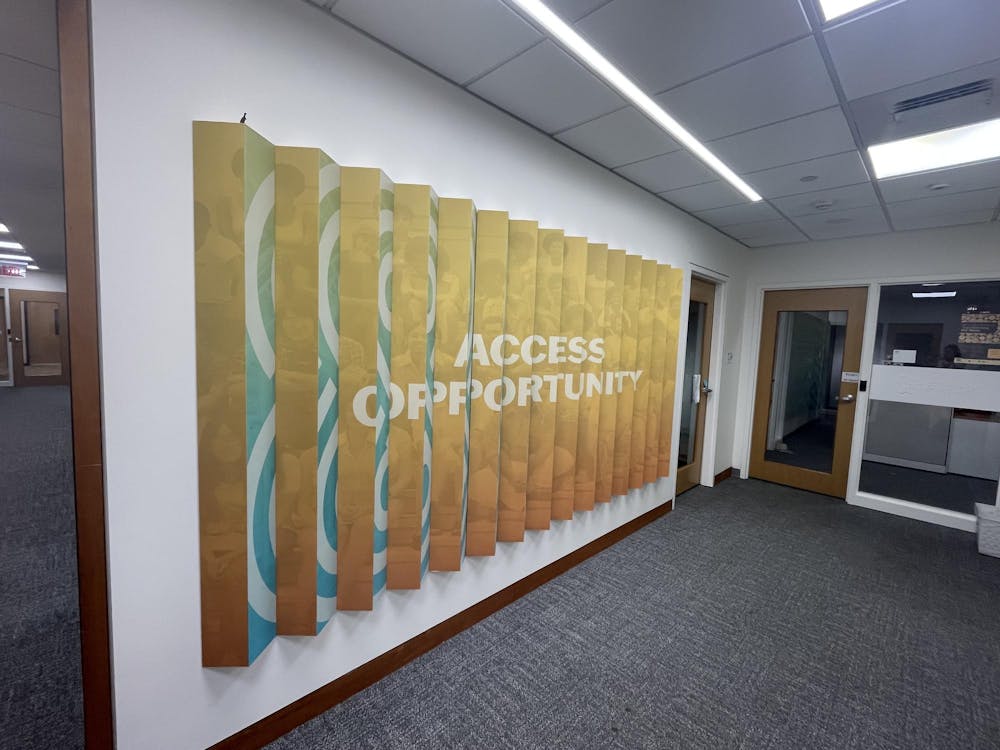
Amidst budget cuts, Princeton recently laid off the entire nine-person staff of the Keller Center for Innovation in Engineering Education. But in the past few months, quieter changes have affected programs that support underrepresented and non-traditional students. This year, the Transfer Scholars Initiative (TSI), a summer program for community-college transfer students hosted by the Emma Bloomberg Center for Access & Opportunity (EBCAO), is shifting to a commuter-only model.
For years, students participating in TSI lived on campus, allowing them to share meals, go on late-night Wawa runs, and play sports after class. These interactions complemented EBCAO’s formal programming and fostered a sense of community. Making TSI commuter-based will make maintaining that sense of community more difficult. But this decision has already been made. Going forward, programs for first-generation, low-income students must be treated as essential: Princeton must stop cutting funding to EBCAO.
EBCAO provides a variety of programs for students, including mentorship pairings, academic workshops, and community-building events designed to help them adjust to Princeton. Beyond TSI, its initiatives also include the Scholars Institute Fellows Program (SIFP) and the Freshman Scholars Institute (FSI).
FSI and TSI run side-by-side, giving Princeton students and transfer students a chance to learn from each other and build community. A critical part of my own FSI residential experience was interacting with TSI students on campus after hours. These informal connections, like eating together, playing volleyball, and attending events late into the evening created a sense of community that was integral to my first experience here at Princeton. With TSI now commuter-based, this interaction will be harder, and future students will lose a foundational aspect of peer mentorship — and friendship — that complemented EBCAO’s formal programming.
Reflecting on the shift from a residential to commuter model, TSI alumnus Victor Gil ’26 told me, “The opportunity to engage with Princeton’s own Freshman Scholars [Institute] becomes limited …which I found vital to navigating my own transfer journey.”
“Coming from community college, having the option to be residential was a transformative experience that made CC students feel ‘normal,’” wrote Gil.
Furthermore, according to Gil, the change to a commuter system “makes the program inaccessible to people coming from distant NJ community colleges.” Now, only some students, by virtue of their location, will be able to access Princeton’s immense resources — resources which previously benefited more prospective transfer students.
As programs like TSI lose their residential component, the community EBCAO creates becomes more fragile. For transfer and non-traditional students, living among peers with shared experiences is foundational. A commuter model risks isolating students who already face barriers.

Budget cuts will force difficult decisions, but this shouldn’t be one of them. Reducing funding for EBCAO, especially alongside layoffs and program restructuring elsewhere, would disproportionately affect students — both Princeton and transfer — who already face systemic barriers. It would limit student success and undermine the diversity Princeton has worked to build.
Cutting EBCAO programs directly impacts students’ ability to succeed. But the funding cuts to TSI are also symbolic of Princeton’s broader commitment — or lack thereof — to access and opportunity.
Programs like EBCAO affirm that access to Princeton is not just about getting in, but about the support to do well once students arrive. While this change isn’t a termination of the program, it shows that when budgets shrink, the University begins to treat programs supporting FGLI, veteran, and transfer students as secondary. In recent years, Princeton has expanded access to students from diverse socioeconomic backgrounds. But access without sustained support is insufficient.
As Princeton prepares for permanent budget cuts of 5 to 10 percent over the next three years, treating EBCAO as expendable would be a mistake. Ultimately, budget decisions are statements of values. When resources are limited, institutions reveal what they are truly committed to protecting. If Princeton is serious about access and opportunity, protecting EBCAO amidst budget cuts cannot be treated as optional.
While no program can be truly “safe,” converting TSI into a commuter program reflects a belief that programs that support underrepresented students are supplementary rather than central to Princeton’s mission.
Vitalia Spatola ’28 is a staff Opinion writer from South River, N.J. She is also an FGLI student. You can reach Vitalia at vs2172[at]princeton.edu.
Read More
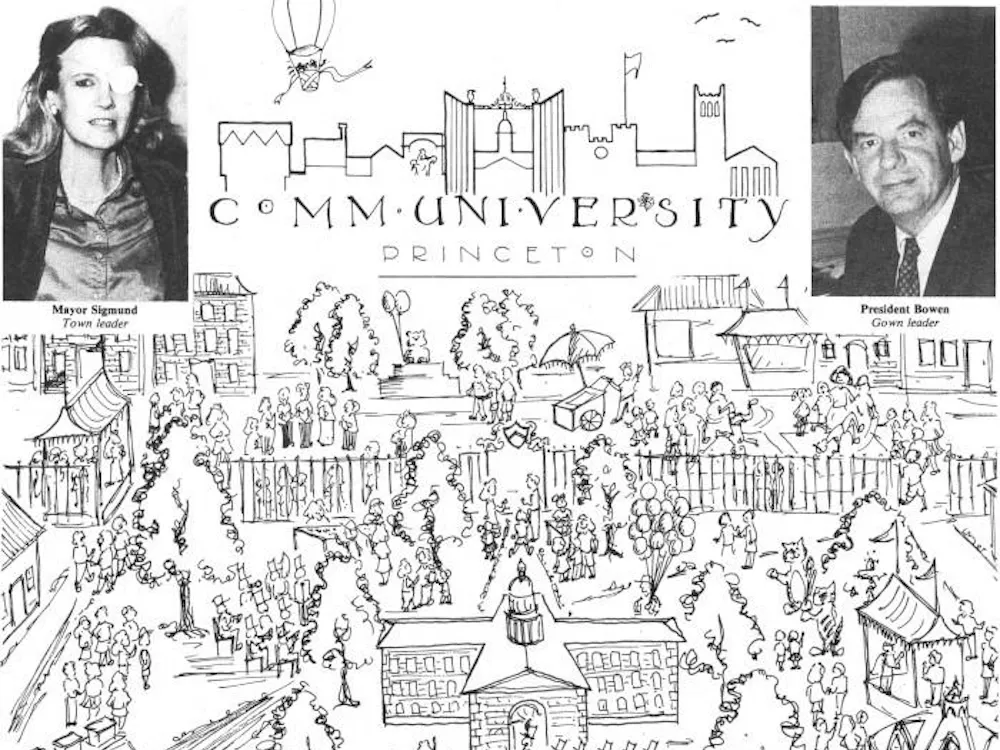
Bring back Communiversity
Isaac BarsoumFrom its inception in 1985, when it subsumed the Arts People Party — the Arts Council’s pre-existing festival — Communiversity always aimed to be more than just an arts festival. It was both a physical and symbolic coming-together of the University and the town in a celebration of all that we have in common and all that makes us different.
From its inception in 1985, when it subsumed the Arts People Party — the Arts Council’s pre-existing festival — Communiversity always aimed to be more than just an arts festival. It was both a physical and symbolic coming-together of the University and the town in a celebration of all that we have in common and all that makes us different.

Who rights our rules?
Charlie YaleWith fairness for students in mind, the University must require that all changes to RRR go through the Committee on Rights and Rules.
With fairness for students in mind, the University must require that all changes to RRR go through the Committee on Rights and Rules.

Freedom of speech is a right, not an excuse
Lily Halbert-AlexanderFreedom of speech should function to hold us to a high standard of honesty and transparency, not to excuse abuses of power and influence in the country’s most influential institutions.
Freedom of speech should function to hold us to a high standard of honesty and transparency, not to excuse abuses of power and influence in the country’s most influential institutions.