



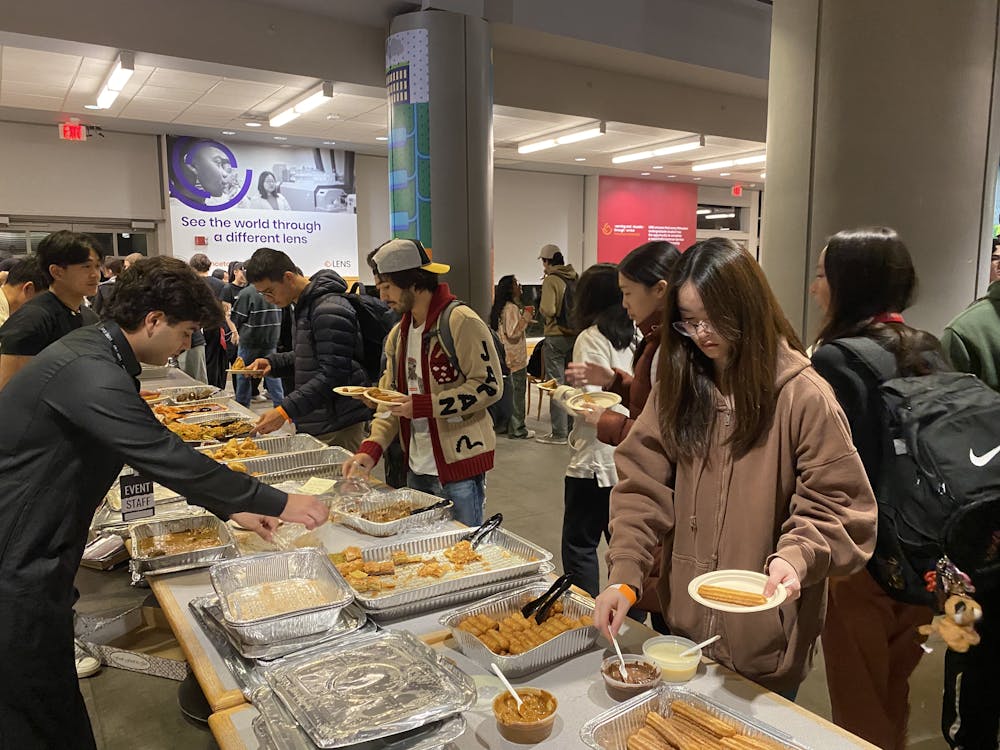
Plastic containers of papaya salad. Rows of bubble tea eyed by the hungry masses. Steamed enchiladas and a speaker blaring Bad Bunny’s “NUEVAYoL.” Cultural festivals have become a familiar sight on Princeton’s campus, from the Taiwanese American Students Association’s (TASA) upcoming Night Market in April to TigerTies, the celebration of global cultures held last November. At TigerTies, students sampled an array of international cuisines and watched performances from around the globe. The festival even featured a cultural fashion show, which showcased students’ heritages and cultures through traditional garments and modern interpretations of cultural dress.
Yet, while parts of Princeton have demonstrated a commitment to cultural exhibits, the University on the whole has not done enough in terms of academic support for underrepresented cultures. Princeton’s engagement with cultural diversity goes as far as fun, celebration-style engagement, but doesn’t extend into academic or political attention for all cultures. Cultural celebration cannot replace cultural scholarship. If Princeton truly wants to support the communities highlighted at events like TigerTies, it must invest in language instruction, regional studies, and institutional resources that bring those cultures into the classroom.
To its credit, TigerTies strives for breadth. It seeks to include all cultures, even those that are normally underrepresented; the Lao and Cambodian communities, for instance, had their own booth. There is something gorgeous about seeing Frist Campus Center transformed into a space where several international identities meet and converge.
Yet cultural celebration at Princeton has often emerged from student initiative rather than institutional priority. Many of the University’s cultural spaces and organizations exist today because students advocated for recognition of their identities and histories on campus. The Carl A. Fields Center for Equality and Cultural Understanding, for instance, was established in 1971 as the Third World Center in response to student activist demands for a space for minority solidarity. The efforts by Jessica Lambert ’22 in helping create the Native American and Indigenous studies Initiative at Princeton would lay the groundwork for the newly created minor program in Native American and Indigenous studies.
Unlike other student-run festivals such as the TASA Night Market, which enjoy their own loyal audience and receive funding through individual organization applications, TigerTies represents an institutional effort co-sponsored by the Undergraduate Student Government (USG) Diversity, Equity, and Inclusion Committee, the USG Social Committee, the Davis International Center, the Fields Center, and the Office of the Dean of Undergraduate Students. The University offices' involvement signals that multicultural celebration matters — why then is it missing from the University’s academic offerings?
While Princeton offers strong academic programs in several geographic areas, many languages — among them Filipino, Vietnamese, Bengali, and Yoruba — remain absent from the curriculum. Princeton’s course offerings are especially slim compared to institutions like Yale, Cornell, or the University of Pennsylvania, which offer courses in Filipino, Vietnamese, and Tamil. Additionally, majors such as Russian and East European Studies, Modern Middle Eastern Studies, and South Asia Studies, available at the University of Pennsylvania, are only offered as minors at Princeton. Southeast Asian Studies, a minor at Cornell, isn’t offered in any capacity at Princeton. As the University’s student body diversifies, this gap between the cultures represented on campus and those represented in the classroom becomes more stark.
These celebrations should be steps, not finales. Cultural festivals provide food and entertainment, but each performance and meal offers only a brief snapshot and glimpse into a potential culture. And if a performance does generate interest, there’s no place for that interest to go. Without corresponding coursework, language study, or institutional investment, students are left unable to pursue a truly complete curriculum.
If Princeton hopes to translate celebration into sustained engagement, it must make concrete investments in its curriculum. Expanding language offerings to globally-spoken languages, such as Vietnamese or Bengali, is imperative. The University might also fund pilot language courses or modules tied to student interest demonstrated at these events. Beyond language instruction, departments can develop courses focused on underrepresented regions such as Southeast Asia or Central Asia. By building partnerships between student organizations and academic departments, Princeton can transform moments of curiosity into inquiry that continues into classrooms and research spaces.

As TigerTies demonstrates, Princeton is capable of gathering its communities into a shared space. Cultural festivals at Princeton are gateways, sparking curiosity that leads students into a deeper study of the histories and languages behind the performances they watch.
Ensuring that this representation extends beyond festivals — and finds its place in University curricula — is a much more difficult task, yet one that the University must prioritize.
Cathleen Balid ’28 is an Opinion columnist and an English major from Queens, New York. She can be reached at cb4649[at]princeton.edu.
A correction was made on April 2, 2026: A previous version of this piece indicated that TigerTies was sponsored and funded by Princeton. In fact, TigerTies is sponsored by the Undergraduate Student Government Social Committee, and funded by activities fees.
Read More
Bring back Communiversity
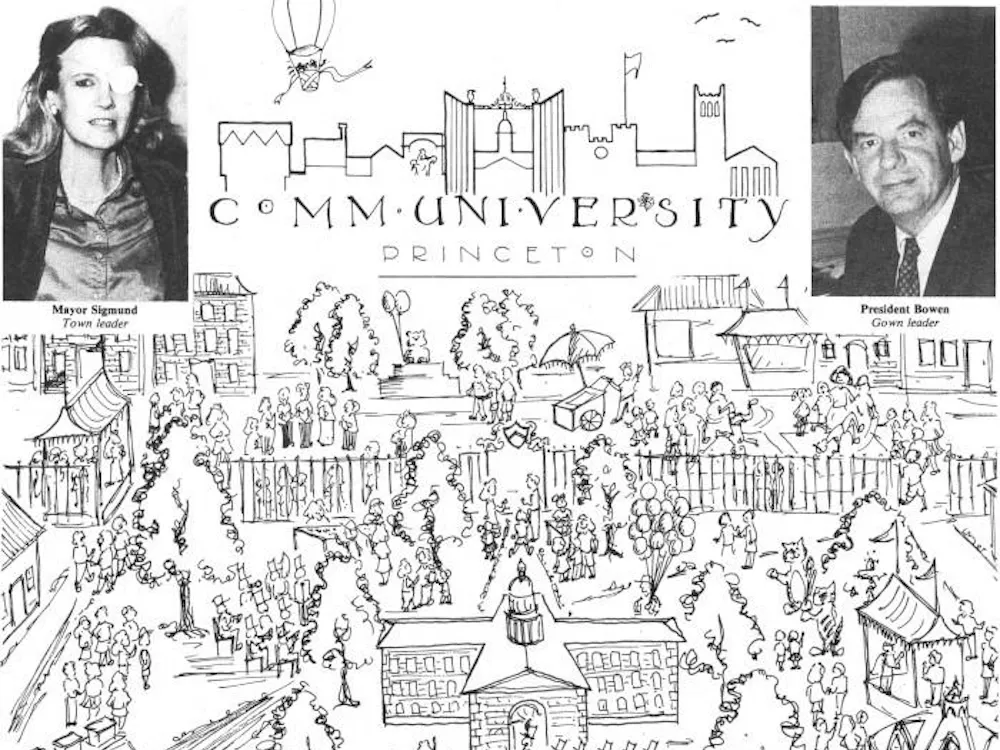
Isaac BarsoumFrom its inception in 1985, when it subsumed the Arts People Party — the Arts Council’s pre-existing festival — Communiversity always aimed to be more than just an arts festival. It was both a physical and symbolic coming-together of the University and the town in a celebration of all that we have in common and all that makes us different.
From its inception in 1985, when it subsumed the Arts People Party — the Arts Council’s pre-existing festival — Communiversity always aimed to be more than just an arts festival. It was both a physical and symbolic coming-together of the University and the town in a celebration of all that we have in common and all that makes us different.

Who rights our rules?
Charlie YaleWith fairness for students in mind, the University must require that all changes to RRR go through the Committee on Rights and Rules.
With fairness for students in mind, the University must require that all changes to RRR go through the Committee on Rights and Rules.
Freedom of speech is a right, not an excuse
Lily Halbert-AlexanderFreedom of speech should function to hold us to a high standard of honesty and transparency, not to excuse abuses of power and influence in the country’s most influential institutions.
Freedom of speech should function to hold us to a high standard of honesty and transparency, not to excuse abuses of power and influence in the country’s most influential institutions.