



After water immersed miles of pristine beach in Wadduwa, Sri Lanka, panicked hotel guests ran up the stairs as the ocean plunged into the first-floor rooms. Ed Rogers '87 found himself surrounded by pandemonium and devastation from the powerful tsunami that has by now claimed nearly 150,000 lives.
When Rogers, a Tokyo resident, decided to take a vacation to Sri Lanka with his wife Betsy and two young sons, he never imagined that he would end up in the midst of the worst natural disaster in recent history.
"The Indian Ocean was filling up the backyard," he said.
The day started for Rogers at about 7:30 a.m. when he decided to watch local fishermen on the beach starting their day of work. About an hour and a half later, Rogers noticed the ocean receded about 30 yards into the seabed. He did not realize what that meant until 9:30, when a British man staying at the hotel mentioned that an earthquake had occurred off the coast of Indonesia that morning.
Prior to his relocation to Tokyo for work, Rogers was required to take a disaster preparedness course that specialized in natural phenomena common to the Pacific Ocean. From this, Rogers knew that the earthquake had caused tidal waves.
Rogers and his wife started packing their bags. "We had no understanding of how bad it might get," he said.
Because they had experience with travel, they knew what to pack in case of an emergency — water, a medical kit, a change of clothes, diapers, passports, money and gin to use as a disinfectant. Once the bags were packed, Rogers watched the chaos that was unfolding in the hotel from his fourth floor balcony.
"The hotel staff, manager and people involved were responding quite well, in spite of the fear and panic," he said.

Eventually, Rogers and his wife realized that they had missed their chance to leave the hotel. Their hotel room was the highest point for two miles, and the roads surrounding were flat enough to pose a danger.
As another wave drew closer, Rogers moved the luggage in his room into the bathroom in case other guests needed to come to the highest floor.
"I told the hotel manager to stop guests from rushing up the stairs to the fourth floor with luggage," he recalled. "We needed to make room for people."
About 20 people took the space in his room.
Rogers said staying focused helped him avoid panicking.
"The fear was channeled into useful energy," he said. "At the time, I was just doing what I could to help."

Throughout the worst of the panic, Rogers watched hotel staff pull fishermen out of the water with hoses and saw others quickly swept away.
Rogers' two children were both safe in their hotel room.
While the other children in the hotel did not know what was going on, they could sense the group's fear.
"Fear is a communicable disease. That was the biggest problem," he said.
Guests watching the children in his hotel room sang songs to abate their uneasiness.
Rogers recalled with irony that they were singing "Row, Row, Row Your Boat."
Once the waves had calmed, Rogers and his family could only wait and hope that the worst was over.
Two architects staying in the hotel told him they doubted the foundation of the building would hold.
For an hour and a half, the hotel lost power, and the guests did not have any idea what the next few hours had in store for them.
In the end, the building stood standing. The first floor of the hotel was destroyed, but everyone staying and working in the hotel survived.
Rogers and his family donated most of their three weeks' worth of clothing, medical kit and personal items to two families on a road near the hotel who had lost everything in the tsunami.
"It was such a moving experience to go around the hotel and see people who had absolutely nothing but the clothes on their backs," he said.
Rogers and his family, who are now home in Tokyo, are counting themselves among the lucky ones.
"It is unfortunate that experiences have to happen like this to realize how lucky we are," he said. "All the clichés are true. I am happy and lucky to be alive."
Read More
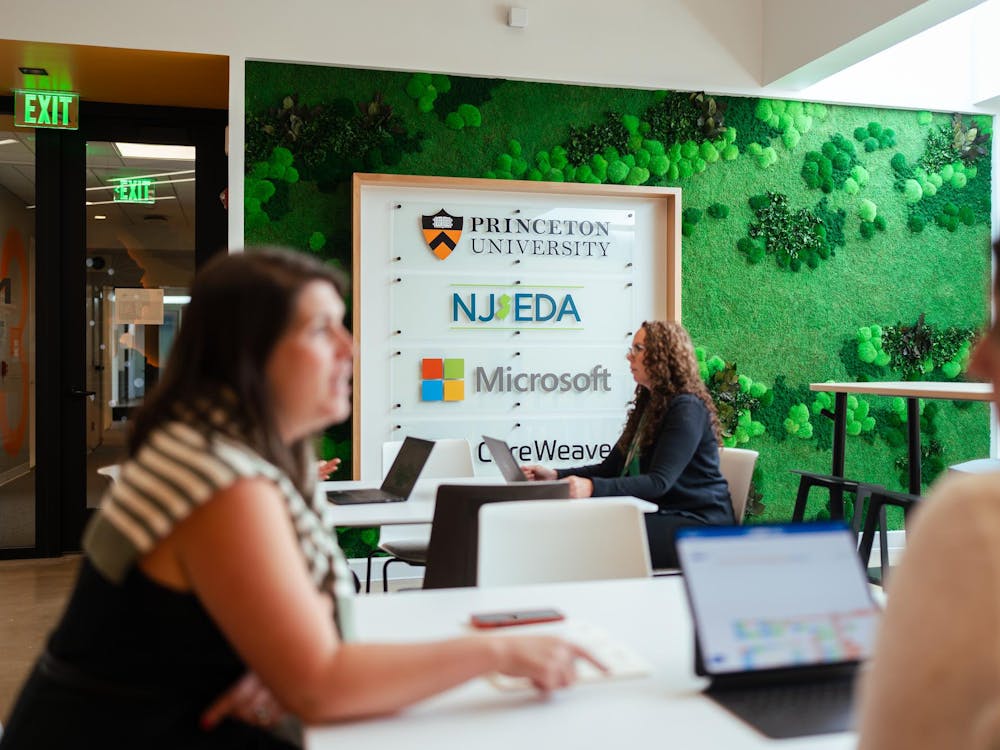
NJ AI Hub marks first anniversary with inaugural startup cohort
Zihan (Frank) XuFourteen selected start-ups receive weekly workshops, reverse pitches, corporate introductions, among other guidance over 12 weeks. The “AI accelerator” helps to test each company’s technology and fast-track its path to commercialization.
Fourteen selected start-ups receive weekly workshops, reverse pitches, corporate introductions, among other guidance over 12 weeks. The “AI accelerator” helps to test each company’s technology and fast-track its path to commercialization.
Three Princeton alumni awarded 2026 Fields Medal
Clara DochertyThe three alumni who received the medal are Yu Deng GS ’15, John Pardon ’11, and Jacob Tsimerman GS ’11.
The three alumni who received the medal are Yu Deng GS ’15, John Pardon ’11, and Jacob Tsimerman GS ’11.

Major gift from Leinweber Foundation to strengthen theoretical physics research
Daphne Lewis and Haeon LeeThe University is joining a national network of institutions advancing theoretical physics research, following the major gift. The foundation has committed over $165 million to top fundamental science research institutions during a period of uncertainty for research funding.