



The current meal exchange system will be decommissioned starting in the fall. The system currently allows students on different meal plans to dine together by swapping meal swipes at no additional cost. The meal exchange program itself is not anticipated to end, however.
“The decision was made by the University. However, we were told that the meal exchange software is antiquated and that due to the cost cutting initiative, the University is not in a position to fund the upgrade,” Hap Cooper ’82, chairman of the Graduate Interclub Council wrote in a statement to The Daily Princetonian.
The GICC and Interclub Council (ICC) have been asked to “take the lead” on maintaining the program beginning next fall, according to Cooper.
Cooper added that the University, the GICC, and the ICC are working together to find an alternative meal exchange system for the coming academic year.
Meal swaps “will not end,” Cooper wrote. “There are certainly logistics that need to be worked out, such as how we will gain access to University meal data, but given that the University and GICC/ICC are committed to social fluidity and choice, we believe they will work with us to figure it out.”
In a statement to the ‘Prince,’ President of the ICC Lilli Duberstein ’26 affirmed the organization’s commitment to finding a solution.
“The ICC was recently told by the University that it proposes to no longer fund the MealX software come Fall 2026. We are in communication with the Graduate Interclub Council and the University to discuss alternative approaches to the current software,” Duberstein wrote.
According to Cooper, the change was discussed last Wednesday at the monthly meeting between the GICC, the ICC, the Undergraduate Student Government, and “leaders of campus life.”

The news comes after University President Christopher Eisgruber ’83 announced plans to decrease the rate of budget growth on account of lower endowment return predictions, warning that the fiscal tightening would affect programs and create changes around campus. The University did not provide a comment in time for publication.
Currently co-administered by the ICC and Campus Dining, the meal exchange program permits students on different meal plans to share meals by swapping dining privileges. Either a student in an eating club or a student on a University dining plan could initiate an exchange, inviting the other to dine at their location in exchange for a meal at the counterpart’s dining hall or club. The “meal swap” was used to bridge the separation between students on different meal plans.
The digital meal swap was introduced in 2017. Smitha Haneef, Assistant Vice President of Campus Dining at the time, cited the introduction of the digital meal swap “as one of the ways we believe that we are able to bring solutions in service of our students, and here it’s not a differentiation between and amongst students.”
Cooper noted that there used to be a “paper-and-pencil meal exchange system” in the 1970s and ’80s, including when he had been a student at the University.
Changes to housing and dining have been on the horizon since Spring 2023, when the University implemented a dining pilot. Three hundred juniors and seniors were selected at random to have five meal swipes per week at eating clubs, co-ops, dining halls, retail dining locations, and late meal across an eight-week experiment meant to integrate the dining experience among upperclassmen.
Cooper expressed support for the pilot technology in his statement, calling it “fantastic.” He shared that the GICC has “asked for access to that software as we begin to discuss the transition and how the [meal exchange] process might be improved.”

The move to decommission the current system comes after administrators announced in late September that, beginning Fall 2026, all juniors and seniors living in University housing would be required to purchase a Campus Dining meal plan. This effectively eliminated multiple dining options, including the independent dining status, which allowed students to cook and eat without a University or club plan; the 105-block meal plan; and the two University-sponsored meals per week that upperclass students previously received regardless of dining affiliation.
After much backlash from current students, eating clubs, co-ops, and alumni, the University partially reversed the decision in November, declaring they would continue to cover the cost of the two University-sponsored meals a week for students in eating clubs or co-ops, while independent students would be required to purchase at least a 128-block plan rather than the 160-block.
Despite the University abandoning the current meal exchange system, Cooper claimed that “cancelling meal exchange has never been contemplated. Making it easier for students to meet and eat with friends in different clubs, co-ops, and the dining halls promotes a more closely knit campus and is supportive of mental health.”
Justus Wilhoit is a senior News writer and chief correspondent for the ‘Prince’ covering “The Street.” He is from Kenosha, Wis. and typically covers Princeton’s eating clubs/co-ops, identity & student life, and the Trump administration. He can be reached at jw5572[at]princeton.edu.
Lulu Mangriotis is the assistant News editor for the ‘Prince’ leading student life coverage. She is from New York City and can be reached at lm8001[at]princeton.edu.
Luke Grippo is a head News editor for the ‘Prince.’ He is from South Jersey, and typically covers high-profile interviews and University and town politics. He can be reached at lg5452[at]princeton.edu.
Please send any corrections to corrections[at]dailyprincetonian.com.
Read More

Thieves steal $250,000 in designer bags from Princeton luxury boutique in overnight break-in
Elizabeth HuFour masked people broke into a luxury boutique store in Princeton on Sept. 1, stealing over $250,000 worth of handbags.
Four masked people broke into a luxury boutique store in Princeton on Sept. 1, stealing over $250,000 worth of handbags.

Princeton students ‘Blossom Together’: A student club takes on global humanitarian efforts
Elma CesicThis past winter break, students from Blossom Together travelled to Benin, having raised around $17,000 for food packages, water wells, and cataract surgeries.
This past winter break, students from Blossom Together travelled to Benin, having raised around $17,000 for food packages, water wells, and cataract surgeries.
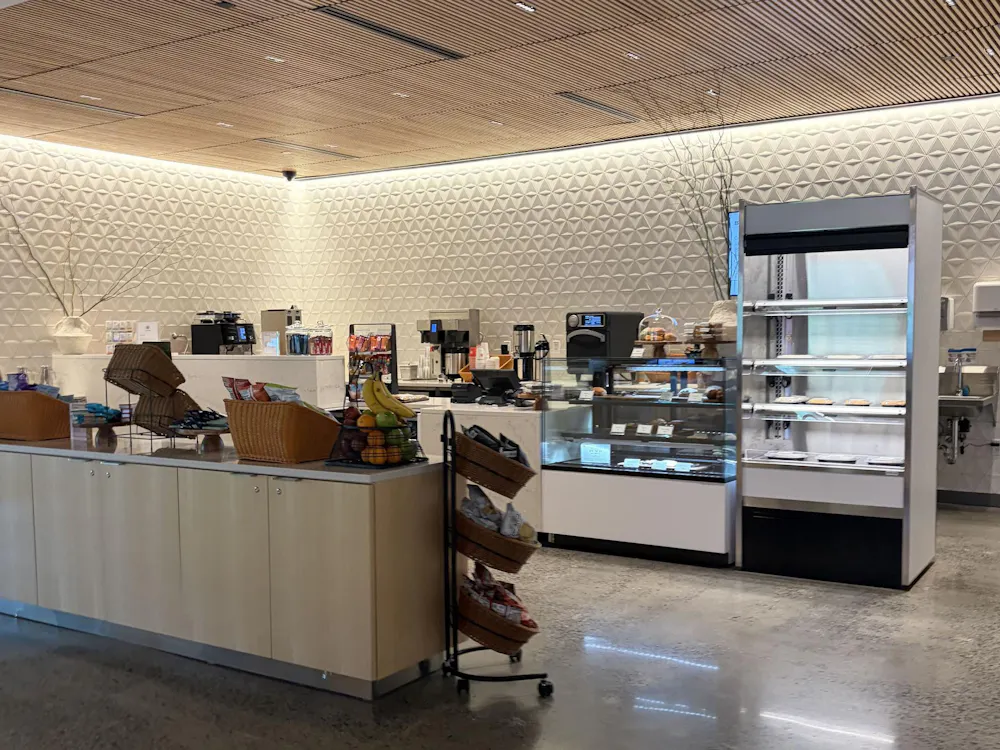
New Commons Cafe opens following cafe closures in previous years
Hifza KaleemFollowing multiple cafe closures across campus in the last two years, a new cafe opened in the SEAS Complex.
Following multiple cafe closures across campus in the last two years, a new cafe opened in the SEAS Complex.