



A Princeton-led NASA mission is currently studying the sun and mapping the heliosphere, a bubble-like region surrounding the solar system.
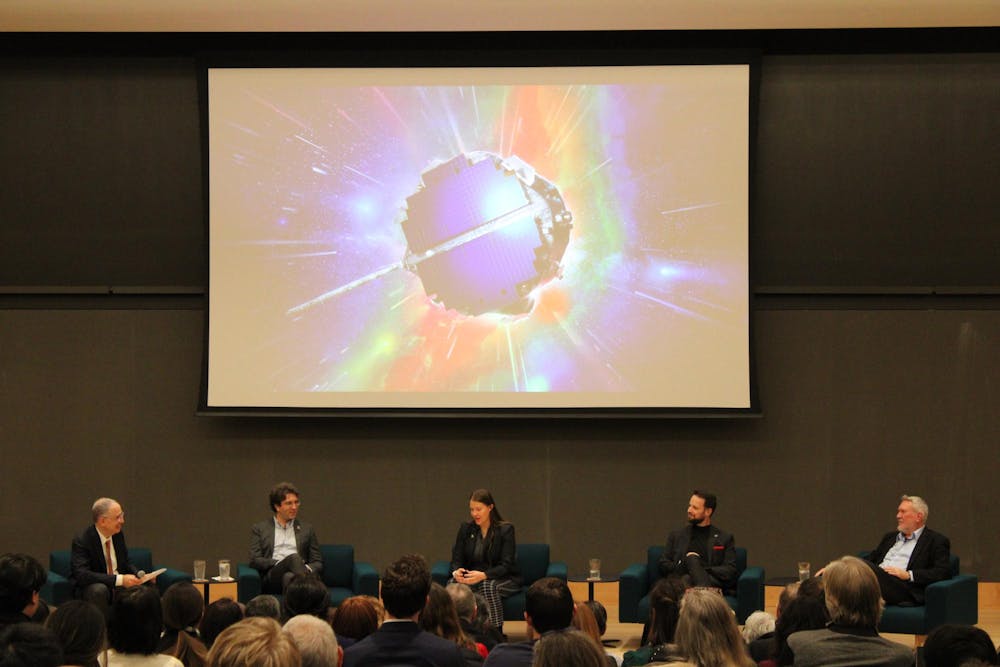
Five months after a highly-anticipated launch, members of the campus community gathered in Briger Hall on Thursday for “Journey to the Heliosphere: An IMAP Celebration” to commemorate Princeton’s central role in NASA’s Interstellar Mapping and Acceleration Probe (IMAP) mission, which took seven years to plan.
IMAP, launched in September 2025, is a multi-national collaboration aimed at studying the heliosphere — a region of space surrounding the solar system acting as a protective shield against harmful cosmic radiation — and better understanding the solar system. The celebrations opened with a video address from University President Christopher Eisgruber ’83.
“IMAP exemplifies what a successful partnership between government, industry, and higher education can achieve,” Eisgruber said.
A panel discussion brought together leading figures behind IMAP, including astrophysical sciences professor David McComas, IMAP’s principal investigator and former vice president of the Princeton Plasma Physics Laboratory (PPPL).
McComas reflected on the scale of the collaboration that made the mission possible. The IMAP mission is powered by contributions from over 20 partner institutions and sustained support from Princeton University researchers. McComas’s work at Princeton on IMAP has been conducted in what Dean of Research and Vice President of PPPL Peter Schiffer described as “the highest tech lab in the lowest tech-looking building.”
Joseph Westlake, director of NASA’s Heliophysics Division, situated IMAP within the broader field of heliophysics, which focuses on the study of the Sun and its impacts on the solar system. He underscored how profoundly modern infrastructure depends on the sun, explaining that “GPS devices, the behavior of the upper atmosphere and ionosphere, and our satellites orbiting Earth are all impacted by solar activity and space weather.”
IMAP’s data, Westlake added, will play a critical role in protecting astronauts and improving national space-weather readiness. Answering a question from Schiffer about the mission’s relation to the University’s informal motto of “in the nation’s service and the service of humanity,” Westlake said that IMAP’s measurements will help inform not only scientists but also pilots, farmers, and others whose work is affected by solar conditions.

Jamie Rankin, instrument lead for Solar Wind and Pickup Ion (SWAPI), a measuring instrument on IMAP that collects and counts solar wind particles and pickup ions, explained that large solar events expel material that cause auroras. IMAP is positioned to observe these expulsions while the materials are travelling towards Earth, providing roughly a thirty-minute forewarning, which is especially important for energy companies to prevent interference with energy grids that could lead to major blackouts. Through SWAPI, the data on these expulsions is transmitted to the ground within five minutes, allowing for near real-time analysis essential for predicting the dynamics of the heliosphere.
Jamey Szalay, who leads IMAP’s Combined Access Visualization and Analysis (CAVA) Tool, detailed the mission’s data collection and its applications. He described how IMAP allows researchers to study cosmic dust and sample material from comets, which he called “the remnants of the formation of the universe.” These tiny grains contain a wealth of information about the composition of space.
CAVA, he explained, is a desktop application designed to integrate this multi-instrument data into a unified data system. This capability will be essential as the mission begins to return unprecedented volumes of information. Asked about IMAP’s current status, McComas replied, “All systems and heads are on, collecting data … [and I] would give IMAP an A+.”
The presenting members recalled nervousness around the beginning of the mission.
McComas remembered the “high stakes during launch” throughout September last year, describing the experience as ten years worth of work sitting on top of an explosive device. As McComas put it, “all of that work came down to that one rocket launch, with a one second launch window.”
Rankin recalled the tense lead-up to Nov. 8, when SWAPI turned on while IMAP was in space. She noted, “a couple days later, they were lucky that large space weather activity passed by,” as the data they collected indicated that SWAPI performed much better than they had predicted in the lab.

Following the panel, undergraduate and graduate students presented their independent work and senior thesis projects developed in AST 250 & 251: Space Physics Laboratory in a Space Physics Expo.
One of the presenters, William Li ’27, a mechanical and aerospace engineering major, called the laboratory the “best engineering experience [he’s] had on this campus … that has shaped what [he] wants to do after college.” Li’s project, GEMINI, is a novel instrument that studies carbon foils — a unique hyper-thin structure that allows researchers to identify compounds via secondary electron emissions.
Students also showcased contemporary space physics tools, ranging from graphene-based detectors to chicane curves engineered for noise reduction and electrostatic analyzers designed for precise particle measurement.
McComas emphasized the University’s vibrant research culture, which he said pairs frontier science with an accessible educational mission. As an example, he highlighted the Space Physics Laboratory, which allows students to learn space instrumentation firsthand and build their own projects from scratch.
“We’re really, really excited to see what we discover in … about two months, so sit tight,” Szalay said.
Zihan (Frank) Xu is a contributing Data writer and a News contributor for the ‘Prince’ covering research at Princeton. He can be reached at fx9535[at]princeton.edu.
Please send any corrections to corrections[at]dailyprincetonian.com.
Read More

Thieves steal $250,000 in designer bags from Princeton luxury boutique in overnight break-in
Elizabeth HuFour masked people broke into a luxury boutique store in Princeton on Sept. 1, stealing over $250,000 worth of handbags.
Four masked people broke into a luxury boutique store in Princeton on Sept. 1, stealing over $250,000 worth of handbags.

Princeton students ‘Blossom Together’: A student club takes on global humanitarian efforts
Elma CesicThis past winter break, students from Blossom Together travelled to Benin, having raised around $17,000 for food packages, water wells, and cataract surgeries.
This past winter break, students from Blossom Together travelled to Benin, having raised around $17,000 for food packages, water wells, and cataract surgeries.
New Commons Cafe opens following cafe closures in previous years
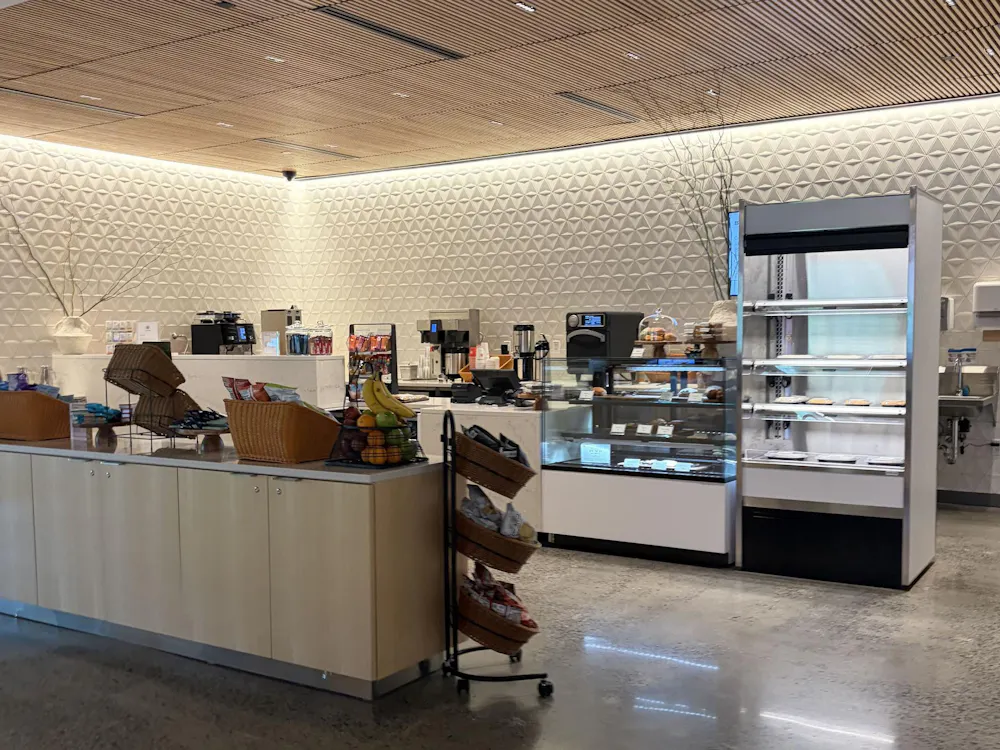
Hifza KaleemFollowing multiple cafe closures across campus in the last two years, a new cafe opened in the SEAS Complex.
Following multiple cafe closures across campus in the last two years, a new cafe opened in the SEAS Complex.