



The music recording industry filed 261 lawsuits in federal court on Monday seeking monetary damages from individual Internet file-sharers.
The suits, announced and organized by the Recording Industry Association of America, are the latest tactics in an increasingly aggressive campaign to end the four-yearlong slide in CD sales that the group attributes to the increasing popularity of online file-sharing programs.
"Nobody likes playing the heavy and having to resort to litigation," said RIAA president Cary Sherman. "But when your product is being regularly stolen, there comes a time when you have to take appropriate action."
It is not yet clear whether a University member has been affected.
In its wide dragnet, the RIAA has caught an eclectic mix, including a 12-year-old girl (with whom they have settled for $2,000), a 71-year-old grandfather (for his grandchildren's activities) and a Yale University photography professor (who has sworn off file sharing forever).
"We're intentionally trying to be random," said RIAA spokesman Jonathan Lammy.
The only criterion was that the user was offering a significant amount of copyrighted material for free download. "We need to achieve deterrence, and the best way to achieve that is for people to think they can get caught," Lammy said.
On average, those named in the lawsuits were sharing more than 1,000 copyrighted songs.

The suits stem from more than 1,500 subpoenas issued during the summer, including about 25 to colleges and universities. Princeton was not among those served. The subpoenas required Internet service providers to divulge the identities of suspected file-sharers using Kazaa, Morpheus and other programs.
Along with the suits, the RIAA announced a new amnesty policy, which it is calling "Clean Slate." The RIAA will agree not to prosecute, or aid the prosecution of, peer-to-peer users who sign an affidavit promising to delete all their illegally obtained music files and never to download or distribute such files again.
Experts have expressed skepticism regarding the amnesty policy, citing the intricacies of copyright law. While the RIAA can promise not to sue, there is no guarantee that a third party won't launch a suit of its own, said computer science professor Edward Felten.
"You're coming forward to sign a confession that will make you vulnerable to other lawsuits," said the senior staff attorney for the the Electronic Frontier Foundation, Fred von Lohmann, who referred to the policy as more "sham-nesty" than amnesty.
All of the subpoenas were obtained through a provision of the Digital Millennium Copyright Act. The DMCA, passed in 1998, granted unprecedented power to copyright holders by allowing them to obtain subpoenas without filing lawsuits or stating the intention to do so. Instead, all copyright holders had to do was to submit an affidavit noting that they had a good-faith belief that an individual was violating their copyright.
The subpoenas were then used to compel Internet service providers to divulge the identities of their users based on their Internet addresses.

According to von Lohmann, the DMCA subpoena powers subvert traditional due process rights.
"There is no other industry that gets the right to file subpoenas without filing a lawsuit or stating the intention to file a lawsuit," he said. "I think it reflects the incredible lobbying muscle that this industry has in congress, at least when there's no public opposition."
"They should play by the same rules that everyone else, including the FBI, has to play by," he said.
Read More
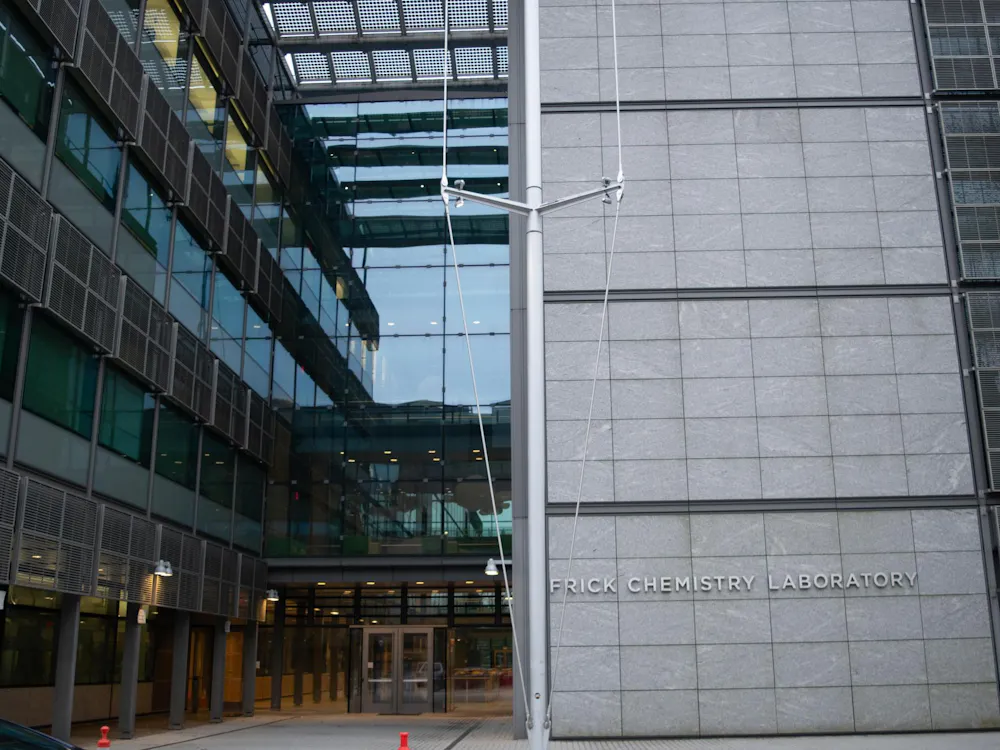
Two Princeton professors win 2027 American Chemical Society awards
Kimberly HutchinsonPrinceton chemistry professors David MacMillan and Paul Chirik were named 2027 American Chemical Society national award winners for their contributions to the field of chemistry.
Princeton chemistry professors David MacMillan and Paul Chirik were named 2027 American Chemical Society national award winners for their contributions to the field of chemistry.

Federal court blocks elimination of duration of status for international students
Luke GrippoA federal court has temporarily stopped the Department of Homeland Security from implementing its new final rule that would limit how long international students and exchange visitors can stay in the country. The next update on the case is set for Oct. 2.
A federal court has temporarily stopped the Department of Homeland Security (DHS) from implementing its new final rule that would limit how long international students and exchange visitors can stay in the country. The next update on the case is set for Oct. 2.

Forbes renovation scope still undecided as Hobson prepares to open
Gus Vogel and Daphne LewisAs Forbes students prepare to become the first cohort to live in Hobson College next year, specifics on Forbes' own renovation remains unsettled by the University nearly six months after the University announced it was accepting consultant bids for a campus-wide dorm renovation plan.
As Forbes students prepare to become the first cohort to live in Hobson College next year, specifics on Forbes' own renovation remains unsettled by the University nearly six months after the University announced it was accepting consultant bids for a campus-wide dorm renovation plan.