



The construction underway at the Princeton Public Library, the new Princeton First Aid and Rescue Squad vehicle racing down the street, the affordable housing programs that accommodate low-income people in the area — all are funded in part by donations from the University.
As the largest employer in Mercer County, the University pays $6.5 million in taxes — some voluntary — to Princeton Borough and Princeton Township, the two towns that the main campus straddles. The University also contributes to the local community through both monetary donations and in-kind transfers.
In an agreement approved last night by the Princeton Borough Council, the University agreed to increase its payments to the Borough from $110,882 in 2002 to $400,000 by 2006. Under a previous agreement, the University would have raised the amount by about $4,000 each year.
Over the past five years, Princeton has given over $3 million to "strengthen the community as a whole and benefit the faculty, staff, students, and general public," said Pamela Hersh, director of community and state affairs.
She explained the University gives money to other groups selectively. Since the University itself is a not-for-profit institution, the donations it receives are intended to further its educational goals.
"The things we choose to donate to have to relate to and support the mission of Princeton University," Hersh said. "They have to be related to making the community in which we live stronger or better, or they have to be related to something the students and faculty feel passionately about."
As a result, she said, the University gives money to local organizations. Most recently, in the wake of the Sept. 11 attacks, Princeton donated $1 million to fund Arts Alive, which provides cultural activities for the children of the victims of the Sept. 11 attacks, and to establish scholarships at the John Jay College of Criminal Justice.
The majority of donations, however, stays in the county, she said. Since 1995, over $500,000 has gone to the Borough and the Township for local park and infrastructure projects. The Princeton Public Library and Princeton Regional Schools have received $500,000 each, and $430,000 was given to the Princeton Medical Center.

The University also donated $90,000 in 2002 to affordable housing programs in the Borough and Township and has given land for building new housing.
Christy Peacock, the affordable housing coordinator for sales in Princeton Township, said that many sales are to University service employees. Low-income housing also benefits the University indirectly, she added, by creating a more ethnically and economically diverse community.
The reasoning behind University giving is similar: as the oldest, largest resident of the town, the University benefits from the wellbeing of its neighbors.
"It's in our own self-interest to help people," Hersh said. "You're not going to want to work or go to school here if it's not a strong, vibrant community. So from a selfish point of view, we want to keep the environment as healthy as possible."
"But from a general society point of view, it's important, if we're in a position to help the community, that we do it," she added.
Not everyone is satisfied, however. Community members note that the University sometimes places a burden on the area. Recently, for example, Concerned Citizens for Princeton argued that University visitors take up parking spaces downtown and should be provided additional spots.

Peacock, the housing coordinator, explained that University students drive the market price for rental housing higher since they can afford to pay more than local low-income residents.
"I would like to see the University contribute more," she said, adding that she was encouraged by the Borough agreement approved last night. "I think it could do more . . . and my sense from reading the papers and talking with people is that the community feels that the University could do more."
At the Borough Council meeting last night, some current and former Council members said that they believed even the increase in University giving was inadequate.
Councilman David Goldfarb, the only councilmember to vote against the new agreement, said the payments were too small. Mark Freda, a former councilman, called on the University to "step up" its giving.
The University also makes an annual donation of $33,000 to the Princeton First Aid and Rescue Squad and in addition gives money for special requests of the group. In April 2001, it funded the purchase of a new ambulance, bringing the squad's total to three ambulances as well as many other vehicles.
PFARS chief Greg Paulson '98 said the University has "always been a strong supporter of the Squad."
The group, which counts 15 to 20 University students among its 50 active volunteers, responds to over 2,000 calls each year, Paulson said. He joined freshman year after seeing the group in action.
"The University has shown a long history of being part of the community in many different ways," Paulson said. "Princeton University is a large part of the overall community, and it's important to work with the community and be a responsible community member."
Hersh noted that such monetary contributions are in addition to significant in-kind — non-monetary — donations. For example, the Office of Information and Technology provides free Internet access to Princeton public schools, the library, senior citizen facilities, and municipal facilities. Each year, dozens of Princeton High School students who have exhausted their school's curriculum are allowed to enroll in University courses at no charge.
Hersh said that area teenagers also benefit in another way. The Princeton Prep Program, started by sociology professor Miguel Centeno, provides intellectual enrichment to financially disadvantaged high school students from Princeton, Ewing and Trenton. The University foots $250,000 of the bill, Hersh added.
The University's annual United Way campaign is currently underway. Faculty, staff and retirees are encouraged to donate, and the University matches 15 percent of contributions through payroll deduction and 10 percent of other donations.
The campaign began Nov. 5 and extends through Dec. 5, with Dec. 10 as the day of giving at the Plasma Physics Laboratory. It is led by campaign chair Daniel Scheiner, acting vice president for human resources, and faculty chair Joseph Taylor, dean of the faculty. More than a hundred volunteers work to organize the donations within their departments.
Ronald Brown, director of planned giving, said that United Way is "an opportunity for people to give once a year to help about 70 programs that are available throughout the community."
Brown worked for United Way for 14 years before coming to the University. He has volunteered with the campaign since 1996. The Rescue Mission of Trenton, for example, receives funding from United Way, Brown said. The Rescue Mission provides an array of services for Trenton's poor, including temporary housing for the homeless and tutoring in preparation for the GED exam.
United Way also helps purchase prescription drugs for people who could not otherwise afford it, funds counseling and support services for battered women and aids local substance abuse programs. The local Red Cross, the Princeton Nursery School and the Trenton YWCA are also all beneficiaries of United Way contributions.
"Its board is made up of local volunteers, so all of the policy decisions on how to spend the money that's raised are decided by volunteers from greater Mercer County area," Brown said. He added that the United Way campaign minimizes disruption at the workplace by providing an opportunity to donate to one umbrella organization rather than having the programs appeal separately.
Barbara Spielman, United Way campaign coordinator and office manager of human resources, said that the fundraising highlights the unity between the University and the surrounding area. "There are people in the University community who have turned to different United Way programs on occasion," said Spielman. "We're all part of the community."
Since 1995, the University has donated an estimated $1.1 million to United Way, according to the 2002-03 University profile. The total in 2001 came to $189,854, including $22,679 in matching funds. As of Nov. 18, this year's subtotal was $83,715.46.
Other universities hold similar campaigns through which faculty, staff and retirees can donate. In 2001, Yale raised $400,000 for the United Way of Greater New Haven, the Yale University website said. According to the Harvard Gazette, Harvard's annual Community Gifts totaled $1 million last year, over $500,000 of which went to the United Way of Massachusetts Bay. ('Prince' senior writer Daniel Lipsky-Karasz contributed to this article.)
Read More
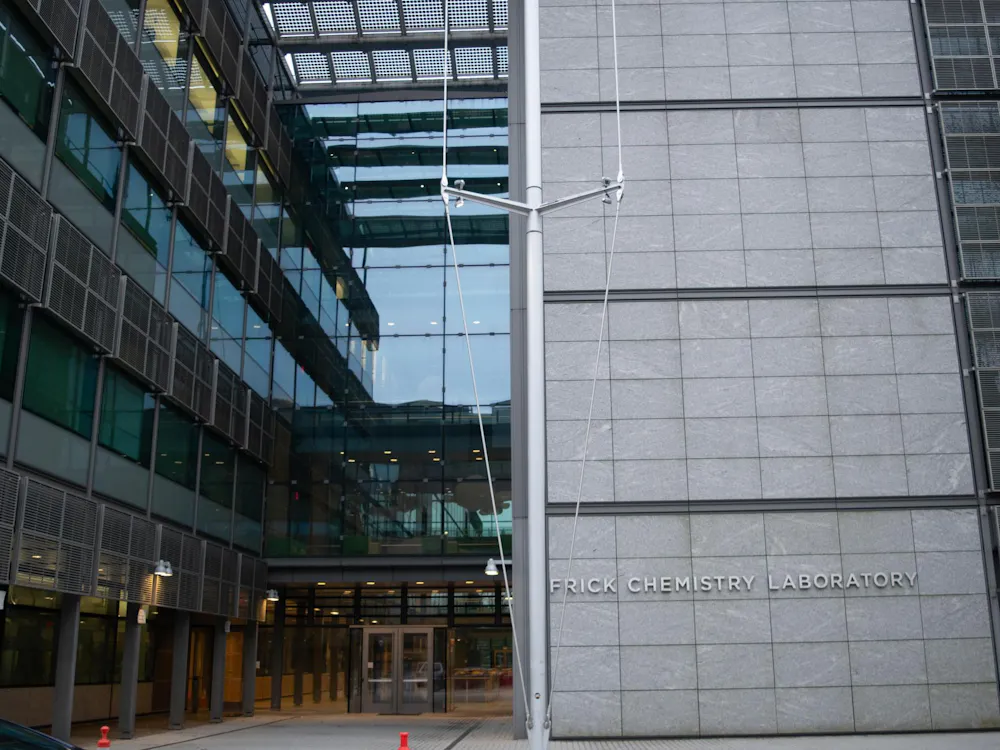
Two Princeton professors win 2027 American Chemical Society awards
Kimberly HutchinsonPrinceton chemistry professors David MacMillan and Paul Chirik were named 2027 American Chemical Society national award winners for their contributions to the field of chemistry.
Princeton chemistry professors David MacMillan and Paul Chirik were named 2027 American Chemical Society national award winners for their contributions to the field of chemistry.

Federal court blocks elimination of duration of status for international students
Luke GrippoA federal court has temporarily stopped the Department of Homeland Security from implementing its new final rule that would limit how long international students and exchange visitors can stay in the country. The next update on the case is set for Oct. 2.
A federal court has temporarily stopped the Department of Homeland Security (DHS) from implementing its new final rule that would limit how long international students and exchange visitors can stay in the country. The next update on the case is set for Oct. 2.

Forbes renovation scope still undecided as Hobson prepares to open
Gus Vogel and Daphne LewisAs Forbes students prepare to become the first cohort to live in Hobson College next year, specifics on Forbes' own renovation remains unsettled by the University nearly six months after the University announced it was accepting consultant bids for a campus-wide dorm renovation plan.
As Forbes students prepare to become the first cohort to live in Hobson College next year, specifics on Forbes' own renovation remains unsettled by the University nearly six months after the University announced it was accepting consultant bids for a campus-wide dorm renovation plan.