



Historian and author Linda Colley will fill a new position in the history department at the University next fall, becoming the first professor to occupy the recently endowed Shelby M. C. Davis Professor of History chair.
Created in 2001 for the purpose of supporting a meritorious scholar, the chair is the newest of three Davis chairs in the history department.
Colley taught at Yale University from 1982 to 1998 before moving to England for a research position at the London School of Economics.
"She is one of the stars of modern British history," said Robert Tignor, chair of the history department. He described her as overly qualified for the position.
Colley said she is equally eager to come to the University.
"I am intrigued to be coming to Princeton because it is a great place with great people whom I can talk to and learn from," she said in a telephone interview last week from her London office.
She had resigned her position as Yale's Colgate Professor of History to undertake a five-year fellowship at the London School of Economics, where she is a Leverhulme Research Professor. She is also a fellow of the British Academy.
Now Colley said she wishes to return to the United States to resume a regular academic position.

"I like living and working in America," Colley said. She underscored the importance of living outside Britain to truly see the impact of its global power.
Colley is recognized in academia as a renowned historian, who focuses on British national identity and emphasizes the unsung figures in history.
Her book "Britons: Forging a Nation," published in 1992, established her presence in the field of modern British history, won her the Wolfson Prize and provoked a major debate on national identities in Britain and elsewhere. In the book, Colley interweaves political, military, cultural, intellectual and social components of history.
In her most recent book "Captives," Colley shifts the perspective of conventional history books to one that examines the lives of common people.
She looks at soldiers, their wives and lovers, slaves, con men, traders and explorers and reveals the experiences of ordinary people who were captured during the rise of the British empire.
In this way, she investigates the formation of the empire, including its strengths and weaknesses, through the use of personal narratives.

Colley's approach to historical literature contributed to her being hired for the Davis chair, Tignor said. History department professors were impressed by the manuscript of "Captives," which they had read before its publication, he said.
Tignor said the work "established her reputation as a leading scholar of modern British history."
Taking into account her skill as a wonderful lecturer, her record as an eminent historian and her tenured positions at other prestigious universities, the University was compelled to hire Colley on automatic tenure, Tignor said.
The other two Davis chairs are the George Henry Davis '86 chair, held by James McPherson and the Shelby Collum Davis chair, held by William Jordan GS '73.
Read More
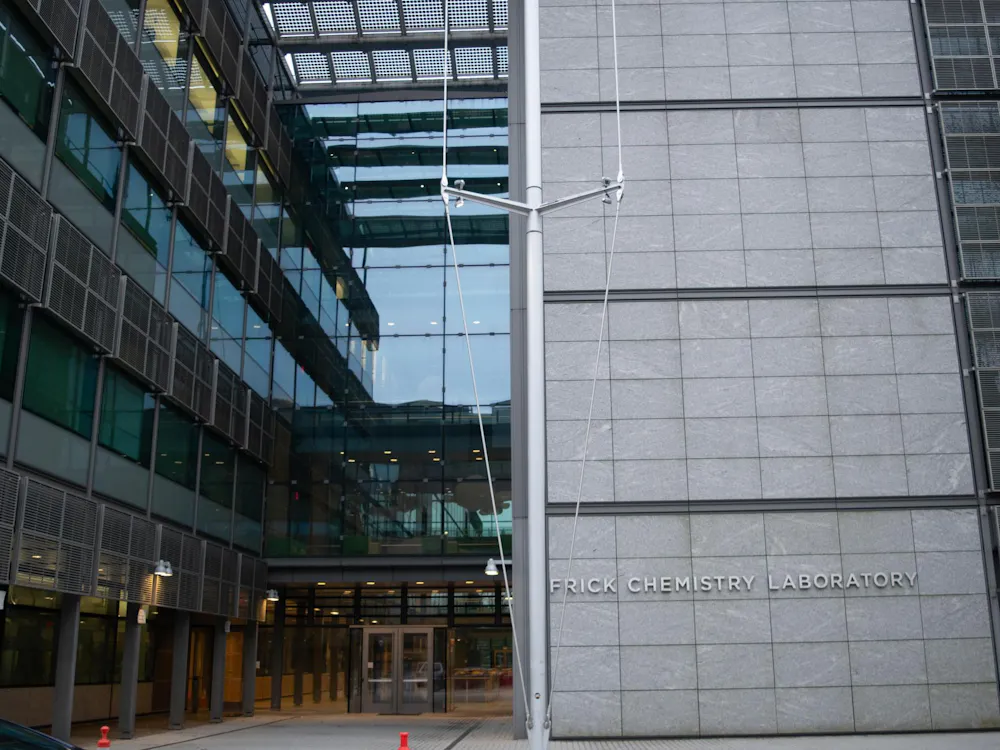
Two Princeton professors win 2027 American Chemical Society awards
Kimberly HutchinsonPrinceton chemistry professors David MacMillan and Paul Chirik were named 2027 American Chemical Society national award winners for their contributions to the field of chemistry.
Princeton chemistry professors David MacMillan and Paul Chirik were named 2027 American Chemical Society national award winners for their contributions to the field of chemistry.

Federal court blocks elimination of duration of status for international students
Luke GrippoA federal court has temporarily stopped the Department of Homeland Security from implementing its new final rule that would limit how long international students and exchange visitors can stay in the country. The next update on the case is set for Oct. 2.
A federal court has temporarily stopped the Department of Homeland Security (DHS) from implementing its new final rule that would limit how long international students and exchange visitors can stay in the country. The next update on the case is set for Oct. 2.

Forbes renovation scope still undecided as Hobson prepares to open
Gus Vogel and Daphne LewisAs Forbes students prepare to become the first cohort to live in Hobson College next year, specifics on Forbes' own renovation remains unsettled by the University nearly six months after the University announced it was accepting consultant bids for a campus-wide dorm renovation plan.
As Forbes students prepare to become the first cohort to live in Hobson College next year, specifics on Forbes' own renovation remains unsettled by the University nearly six months after the University announced it was accepting consultant bids for a campus-wide dorm renovation plan.