



Last semester, I argued that arbitrary limits in Princeton’s outside scholarship policy needed to change. At the time, I saw the issue mainly as a policy problem; the rules were inequitable, the fix seemed relatively straightforward, and I argued that the University should change them.
I still believe those things. But I have also come to think that my experience with this policy is emblematic of a larger issue at Princeton. Princeton students who are not already involved in political activism or student government on campus are not encouraged to see themselves as independent actors who can lead reform. This is an issue: Students, even those not directly involved with student political affairs on-campus, should recognize that administrators are more accessible than they seem, and take advantage of opportunities to make their voices heard.
The problem is not that students never speak up. We do, constantly. We vent to our friends, complain in group chats, perhaps make a Fizz post, and sometimes write op-eds or vote in referendums. These actions clearly matter — it’s important that the community engage in conversation about the issues pertaining to our campus, and that this conversation represents a diversity of voices. And when this discourse reaches the right audiences, it can have real impacts. Public criticism can draw attention towards obscure or harmful policies, which might eventually lead to substantive change. And while referendums are not a part of the University’s decision-making process, they can act as polls of the campus, showing what concerns are widely held.
But discourse is not the same as direct communication or appealing directly for change. Being heard or overheard in the clutter of the campus conversation is not the same as bringing a concern directly to the people who actually have the ability to change the policies in question. I can attest that it is gratifying when someone with the power to make change reads your article and takes your argument seriously. But relying on that kind of chance encounter is not the most effective way to pursue the reforms we care about.
The aftermath of my column about scholarship policy prompted my commitment to taking complaints directly to the source and pursuing more direct avenues for change. I was recruited through USG’s University Student Life Committee (USLC) to open a subcommittee focused exclusively on outside scholarship reform. Through that process, I was connected with administrators in the Office of Financial Aid and spoke at USLC and USG senate meetings.
Rather than ranting on a platform University administrators are unlikely to see, this type of engagement allows me to directly push for reform with those with the ability to make the necessary changes.
The boundary between student frustration and administrative conversation is not as insurmountable as students may assume. Administrators are actually receptive to our concerns and willing to listen when we pursue the appropriate avenues for change, such as scheduling meetings with representatives of their offices and reasoning out our grievances. There are plentiful opportunities for students who want to make Princeton a better place, if they are willing to take advantage of the opportunities available to them.
Before my recent experience, I had largely assumed that direct policy conversations with administrators were reserved for students in USG or other decisionmaking bodies on this campus. Part of that assumption comes from how opaque these processes can feel from the outside. To most students, it isn’t clear that reaching out to administrators directly is possible and useful, so these conversations can seem to belong only to those within student government or policy spaces. The truth is that these conversations are far more accessible than I, and many others, assumed.

Moreover, students should raise their concerns, ask questions, request meetings, and raise issues in the rooms where decisions are made. This is especially the case for student-facing deans. Residential college deans and assistant deans serve as academic advisors, as well as parties to consult with on other aspects of broader undergraduate student life. Hearing out student concerns and requests for reform should allow them to act as mediators between administrators with the power to make change and the students who seek it.
And this is where the real gap between student dismay and administrative change lies. The issue is not whether channels for change exist — because in many cases, they do — but instead that many students do not feel that those channels are accessible, legible, or worth pursuing. Administrative policy can feel fixed, and even when routes for engagement exist, they can feel intimidating enough that many students won’t attempt to use them.
USG must play an important role, not as a gatekeeper, but as a bridge. That means doing more than just listening to student complaints or proposing referendums. It should help students identify which offices and administrators oversee an issue, create clearer pathways for non-USG students to raise concerns through bodies like USLC subcommittees, and bring those students into direct conversation with decisionmakers. Its role should not be to absorb student complaints and speak on students’ behalfs. Its role should be to help students advocate directly for themselves.
But students have to be deliberate and engaged in their efforts to work with the administration on the changes they want to see instituted. Without that initiative, we can’t expect to see the student perspective represented in reforms. The University won’t hold our hands: If we want them to pursue the changes we discuss and write about, the onus is ultimately on us to propose those changes to them through direct conversation. It’s within our rights and capabilities to work at closing the perceived gap between students and the University.
My experience delving into policy and advocacy on the ground level taught me that Princeton is at its best when students don’t stop at identifying places for change. Instead we can take responsibility for bringing these issues forward, and participate in the process of instituting reform. Students should feel empowered not just to speak out, but to work with the University to reform the issues that are important to them.
Davis Hobley is a staff Opinion writer for the ‘Prince’ and a member of the Class of 2027 in the Princeton Neuroscience Institute. He can be reached at dh2172[at]princeton.edu or his personal Instagram @davishobley.
Read More
Bring back Communiversity
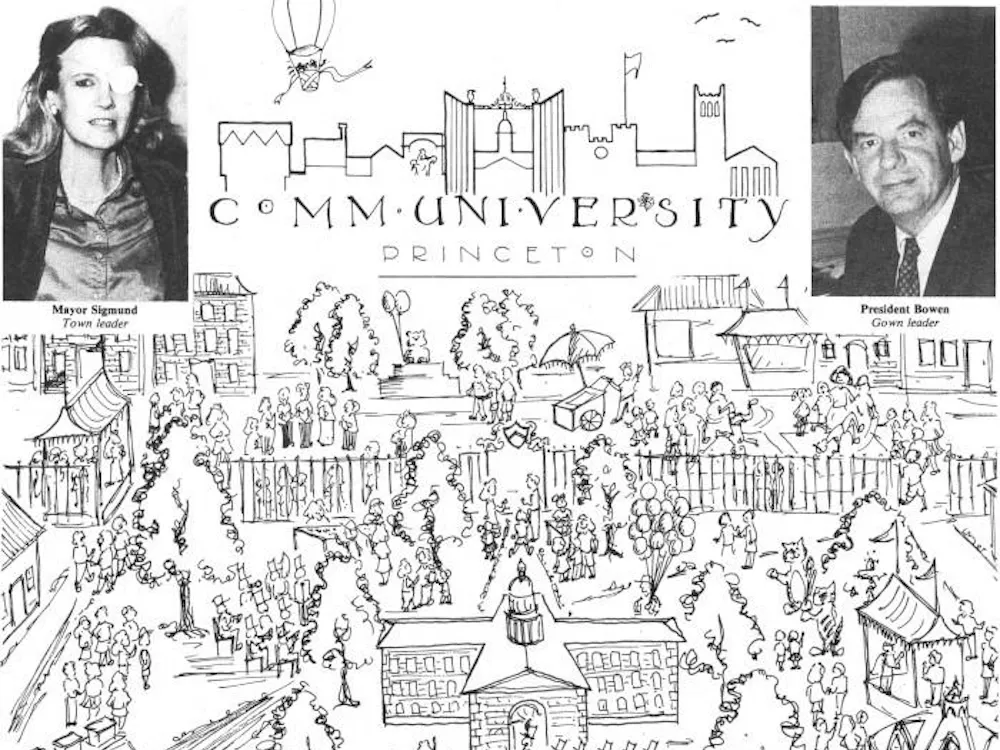
Isaac BarsoumFrom its inception in 1985, when it subsumed the Arts People Party — the Arts Council’s pre-existing festival — Communiversity always aimed to be more than just an arts festival. It was both a physical and symbolic coming-together of the University and the town in a celebration of all that we have in common and all that makes us different.
From its inception in 1985, when it subsumed the Arts People Party — the Arts Council’s pre-existing festival — Communiversity always aimed to be more than just an arts festival. It was both a physical and symbolic coming-together of the University and the town in a celebration of all that we have in common and all that makes us different.

Who rights our rules?
Charlie YaleWith fairness for students in mind, the University must require that all changes to RRR go through the Committee on Rights and Rules.
With fairness for students in mind, the University must require that all changes to RRR go through the Committee on Rights and Rules.
Freedom of speech is a right, not an excuse
Lily Halbert-AlexanderFreedom of speech should function to hold us to a high standard of honesty and transparency, not to excuse abuses of power and influence in the country’s most influential institutions.
Freedom of speech should function to hold us to a high standard of honesty and transparency, not to excuse abuses of power and influence in the country’s most influential institutions.