



Lea en español aquí.
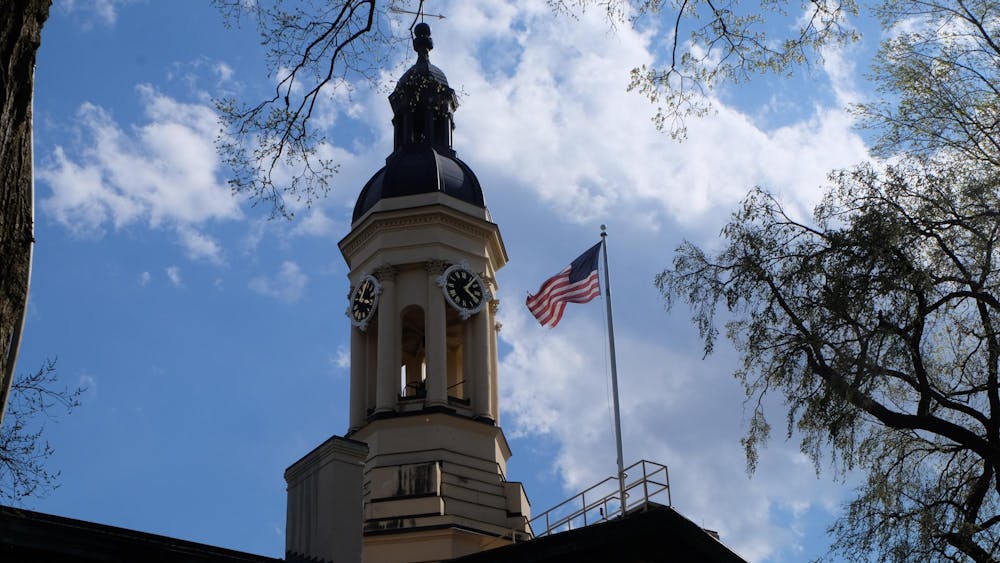
Mikie Sherrill was sworn in as the 57th governor of New Jersey on Jan. 20, becoming an ex officio trustee of Princeton University. In this role, she will hold a vote on major University decisions.
For the period between her election and inauguration day, Sherrill appointed two Princeton faculty members to lead two of her administration’s transition teams.
The first was School of Public and International Affairs Professor of the Practice Heather Howard, who co-chaired a team focused on affordable healthcare policy. In the role, Howard led multiple state and national experts focused on expanding healthcare affordability. Howard previously served as policy counsel for former N.J. Governor Jon Corzine and as commissioner of New Jersey’s Department of Health and Senior Services.
The other professor, Sociology and SPIA professor Kathryn Edin, co-chaired the Kids Mental Health and Online Safety Action Team. At Princeton, her work focuses largely on the effects of poverty in America.
At her inauguration, Sherrill discussed her term goals, including issuing a series of executive orders aimed at targeting high utility costs, accelerating renewable energy projects, and boosting government transparency, among other issues.
“I am going to spend every minute trying to make New Jersey more affordable and open doors to opportunity across our state,” Sherrill told an audience of more than 2,000 in her inaugural address. During her speech, the Governor signed two executive orders on stage that were largely in line with promises she made on the campaign trail.
The first order froze utility rates through bill subsidies and declared a state of emergency on the “electricity affordability crisis,” while the second addressed the need to expand energy supplies across the state. According to NPR, New Jersey residents have experienced a double-digit increase in electricity rates in the past year.

“As we see Washington trying to shut the door on opportunity, on your safety and security, on education, on healthcare, on access to good jobs, on innovation, and investments in energy and infrastructure, as we are seeing doors shut for families, for working people, for vulnerable communities, as they attempt to roll back the tide of progress — not here,” Sherrill said.
While Sherrill did not invoke President Donald Trump by name during her address, she compared his actions to the tyranny of King George III. The November election “proved that the people of New Jersey recognize the parallels,” Sherrill said. “That we see a president illegally usurping power.”
Once again referencing the United States’ founding, Sherrill cast New Jersey as a stronghold in the face of the President’s destructive actions. “On November 4th, the people of New Jersey once again gave the nation a glimmer of something it hadn’t felt in months: hope,” she said in her inaugural address, referencing her own election victory. “Yes, 250 years after the Declaration, 250 years after General Washington crossed the Delaware into the promised land, I am proud that once again, New Jersey is leading the way.”
Lieutenant Governor Dale Caldwell ’82 also delivered remarks on the same day, aligned closely with Sherrill’s characterization of New Jersey as a stronghold against national-level threats and divisions.
Beyond policy matters, Caldwell highlighted the need to “strengthen the social fabric of our state.” He continued, “At a time when Washington is intent on tearing us apart, here in New Jersey, we must rebuild the trust between neighbors.”
While Sherrill did not mention the Trump administration’s attacks on higher education explicitly in her inaugural address, her office is expected to take a hard stance against the President’s cuts to research.

In the first gubernatorial debate held in September, Sherrill expressed strong support for Princeton University, expressing that she wants to “ensure that we’re continuing to push money into our ally University, including where we are improving innovation, driving up our research.”
On the eve of the November election, The Daily Princetonian interviewed Caldwell, who made clear that the Sherrill administration will actively fight against Trump’s attacks on higher education.
“Donald Trump has targeted the Harvards, the Yales, the Princetons, the Columbias of the world for our research dollars,” he told the ‘Prince’ in November. “They’re trying to pull out billions of dollars out of Ivy League institutions, so they can’t do research.”
Caldwell also expressed the necessity to appoint “a strong attorney general” to fight “these unconstitutional abuses.”
Sherrill will serve a four year term as governor, with the possibility of re-election in 2029. Her first Princeton Board of Trustees meeting is scheduled for Jan. 31.
Sena Chang is the associate News editor for the ‘Prince’ leading investigations. She is from Japan and South Korea, and she often covers local politics and student life. She can be reached at sc3046[at]princeton.edu.
Gray Collins is the assistant News editor for the ‘Prince’ leading university administration coverage. He is from outside of Philadelphia and can be reached at graycollins[at]princeton.edu.
Please send any corrections to corrections[at]dailyprincetonian.com.
Read More

NJ AI Hub marks first anniversary with inaugural startup cohort
Zihan (Frank) XuFourteen selected start-ups receive weekly workshops, reverse pitches, corporate introductions, among other guidance over 12 weeks. The “AI accelerator” helps to test each company’s technology and fast-track its path to commercialization.
Fourteen selected start-ups receive weekly workshops, reverse pitches, corporate introductions, among other guidance over 12 weeks. The “AI accelerator” helps to test each company’s technology and fast-track its path to commercialization.
Three Princeton alumni awarded 2026 Fields Medal
Clara DochertyThe three alumni who received the medal are Yu Deng GS ’15, John Pardon ’11, and Jacob Tsimerman GS ’11.
The three alumni who received the medal are Yu Deng GS ’15, John Pardon ’11, and Jacob Tsimerman GS ’11.

How Charles Plohn ’66 brought his classmates together on the shelves
Nikki HanFor decades, Charles J. Plohn, Jr. ’66 has been collecting books published by members of his class. With nearly 700 titles in this collection, Plohn is attempting to find his library a permanent home.
For decades, Charles J. Plohn, Jr. ’66 has been collecting books published by members of his class. With nearly 700 titles in this collection, Plohn is attempting to find his library a permanent home.