



Linking two ordinarily distinct subjects, religious miracles and social movements, Parigi explained that the proclamations of new miracles and saints during that period were part of the “strategy of the Church for defending itself” against the dissolution of its support amid the enormous changes in Western culture during the era that saw the expansion of the Protestant Reformation and the Inquisition. Through its use of these two devices, “the Church brought the world to God,” he said.
Parigi said that acolytes and other advocates of the Church were successful in preserving its dominance because they effectively gave Catholics a “new communal identity” that tied them more closely to the Church. Thus, “the greater heterodoxy [that arose due to the upheaval of the era] generated orthodoxy,” which overcame the uncertainty of the times, he explained.
Parigi emphasized the importance of acolytes in the process of announcing the revelations of miracles, drawing a powerful analogy between these acolytes and political activists in other social movements. “Maintaining power . . . requires consensus,” and the acolytes played a large role in forming this consensus, Parigi said.
While saints can perform miracles both during their lifetimes — in vitam miracles — and after death — post mortem miracles — the Church only considers post mortem miracles for canonization, Parigi explained. He also emphasized the nature of the formal approval of miracles: They largely depend on the involvement of acolytes, further highlighting the importance the Church places on the acolytes as “entrepreneurs.”
Parigi also discussed relics as instruments through which Catholics interacted with the lofty concepts of saints and miracles. “For centuries, relics had healing powers, and animals were worshipped as saints,” he said, explaining that it was for this reason that people continued to call on relics to carry out miracles even after the death of the candidates who used them. “Candidate” was the term Parigi used for the performer of an act being evaluated by the Church as a potential miracle.
But historical context was “not the sociological focus” of the lecture, Parigi said. Rather, he suggested that more attention should be given to the Church’s ability “to give space to local claims, movements and identities.” Because the Church exercised this ability, Europe became united amid gaping divides that characterized the historical context in which these miracles occurred.
The information presented in the lecture rested on the extensive research Parigi has done in the Vatican Secret Archive and the Vatican Library. Particularly important to his work, he said, were documents such as the “List of Approved Miracles” and “Transcripts of the Canonization Trials.”
The atmosphere of the talk was characterized by a good amount of audience involvement, which was perhaps due to the audience being tightly packed in the small seminar room and Parigi being comfortable and engaging. Audience members asked several questions, and Parigi’s remarks drew laughter several times. This lent an air of lightness to this scholarly topic.
Read More
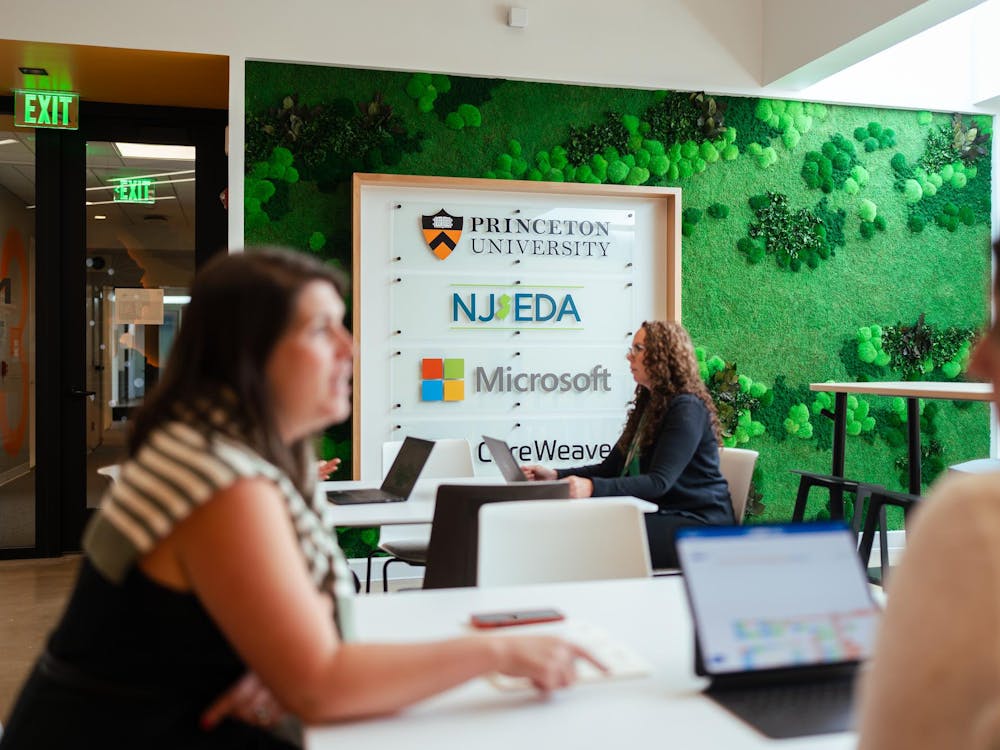
NJ AI Hub marks first anniversary with inaugural startup cohort
Zihan (Frank) XuFourteen selected start-ups receive weekly workshops, reverse pitches, corporate introductions, among other guidance over 12 weeks. The “AI accelerator” helps to test each company’s technology and fast-track its path to commercialization.
Fourteen selected start-ups receive weekly workshops, reverse pitches, corporate introductions, among other guidance over 12 weeks. The “AI accelerator” helps to test each company’s technology and fast-track its path to commercialization.
Three Princeton alumni awarded 2026 Fields Medal
Clara DochertyThe three alumni who received the medal are Yu Deng GS ’15, John Pardon ’11, and Jacob Tsimerman GS ’11.
The three alumni who received the medal are Yu Deng GS ’15, John Pardon ’11, and Jacob Tsimerman GS ’11.

Major gift from Leinweber Foundation to strengthen theoretical physics research
Daphne Lewis and Haeon LeeThe University is joining a national network of institutions advancing theoretical physics research, following the major gift. The foundation has committed over $165 million to top fundamental science research institutions during a period of uncertainty for research funding.