



Bolstered by its status as the film critics' darling, Academy Award-winning director Ang Lee's new film "Brokeback Mountain" — you know, that "gay cowboy" movie — is well on its way to completing its evolution from relative obscurity to taking cinematic center stage.
After winning the top prize at the Venice Film Festival this summer, the movie, which stars teen heartthrobs Heath Ledger and Jake Gyllenhaal, has gone on to win high acclaim from both the Los Angeles and New York film critics associations. On Tuesday, the Hollywood Foreign Press Association announced that "Brokeback" led this year's pack of releases with seven Golden Globe nominations, including best film, best director, best actor and best supporting actress. Moving into the New Year, Oscar buzz abounds.
Entertainment Weekly's cover story last week called the movie "the year's most daring love story" — "a kind of Romeo and Romeo on horseback" — and other media outlets have used similar language in describing the film, emphasizing the "risk" the producers, director and, most of all, the actors took in making it.
After all, "Brokeback" is about two men — two cowboys who kiss each other, cheat on their wives and have sex! Will mainstream audiences watch, let alone appreciate, such a movie? Perhaps surprisingly, the answer, according to those who made the movie, is a resounding "yes."
"There's no reason not to market it," James Schamus, president of Focus Features and one of the movie's producers, told me at a recent New York City gathering for members of the press. He said that "far from having resistance" to the film, there is "intense competition" among movie theatres wanting to screen it.
"Brokeback" opened over the weekend with a per-screen average of $109,485 — the highest of any movie this year and ninth overall among top weekend averages since 1982, according to data from BoxOfficeMojo.com. And while it is currently out in limited release, "Brokeback" should be showing on 200 screens by January, Schamus said.
Part of the reason for that high number is, of course, intense interest in the film in the LGBT community. "Clearly, there are enormous expectations for the [LGBT] community," Schamus said. "They are so ready [for a movie like "Brokeback"] ... We want them to feel like this is a movie they can be proud of."
And proud they seem to be. The Gay and Lesbian Alliance Against Defamation, an advocacy group that seeks to promote "fair, accurate and inclusive" representations of the LGBT community in the media, has hailed the movie "as a historic moment in film history."

" 'Brokeback Mountain' is one of the most poignant love stories I've ever seen committed to film," said Neil Giuliano, the group's president, in a recent statement. "This film has tremendous potential to connect with audiences, gay and straight alike. People will relate to these characters and to the emotional authenticity of their story."
The "emotional authenticity" of the story — or, more broadly, the universality of human love, gay or straight — is a theme most of the film's supporters come back to time and time again.
"We've managed to make a love story about gay cowboys not as stereotypes, but as human beings," Anne Hathaway, who plays Gyllenhaal's wife in the movie, told me at the press junket.
Hathaway's comments aren't to say, however, that those involved with the movie aren't anticipating a possible backlash. "Don't ruin that image," pleaded a playwright from Wyoming, where the story is set, in the Casper Star-Tribune. "There's nothing better than plain old cowboys," she said, in what is probably one of the more diplomatic criticisms of the film.

Ledger, however, is having none of it. "I just find it really immature and naive of people to be so opinionated about their disgust and fear about how two people love each other," he said in an interview, adding that he is "proud" of his work on the film and is "hopeful" that some good may come of it.
A recent review by the Catholic News Service offers another perspective: "As the Catholic Church makes a distinction between homosexual orientation and activity," the review notes, "[Ledger's and Gyllenhaal's characters'] continuing physical relationship is morally problematic."
But the reviewer goes on to write that, "It's the emotional honesty of the story overall, and the portrayal of an unresolved relationship — which, by the way, ends in tragedy — that seems paramount ... While the actions taken by [the characters] cannot be endorsed, the universal themes of love and loss ring true."
And that's the reaction that Schamus, the movie's producer, is ostensibly hoping for; in his words, he wants viewers to be "swept up in the epic." "There's a yearning for a really old-fashioned American love story," he told me.
"It'll find its way," said screenplay writer Diana Ossana. "It may take some time, but it'll find its way ... I think more people are moved than not."
The movie's theme "will always be relevant," she added, pointing out that the New Yorker short story that the movie was adapted from was published in the same year that Matthew Sheppard, an openly gay teenager, was murdered in Wyoming. "It still happens," Ossana said. "It's even more repressed now ... there's all this brouhaha about gay marriage."
But even though the movie may figure into the broader national debate about gay rights in the minds of some, for Ossana and the others, their aim was not to make a political film.
"We didn't want to make a political message," Hathaway said, while conceding, "I have a feeling this film will play well in blue states, moderately well in red states and just thrive on DVD. What people aren't willing to do publicly, they are sometimes willing to do privately."
"I hope people just go to see the film," she added.
"The film becomes part of the conversation" on gay issues and gay rights, Schamus said. "All we can do is put the film into that context. And that's great."
Regardless of the film's political effects, Schamus is certain that progress, as he sees it, has been made with "Brokeback." While taking on a gay role was previously thought to mean career suicide for an actor, as evidenced by the refusal of many top name to take on explicitly gay roles in the 1980's and 1990's, the release of this movie marks a shift.
"Actors, whether straight or gay, are saying, 'Great movie, great director — gay, not gay — this is what I want to be doing,' " he said. " 'Brokeback' was the first step," and having a major out gay actor in Hollywood will be the second step, Schamus said.
"I think it's a shame that it gets cast as daring and risky," Ledger said of the press coverage of the movie and his and Gyllenhaal's decisions to play explicitly gay roles. "I refuse to think of homosexual love as daring," Hathaway added.
But can "Brokeback" move beyond the "gay cowboy" moniker and being the butt of "South Park" pudding jokes?
While the answer to that question remains unclear, Ossana, the screenwriter, offers an alternative description: "It's a story about a doomed love between two Wyoming ranch hands in 1963. Give it a chance. It's not what you'll expect."
Read More

Lawsuits filed against University after cybersecurity incidents
Shaun KaraniMultiple lawsuits have been filed against Princeton in the wake of a widespread cybersecurity breach.
Multiple lawsuits have been filed against Princeton in the wake of a widespread cybersecurity breach.

Israeli consulate visits Princeton to discuss experience of Jewish students, follows Tsurkov release
Luke GrippoFor the first time since the 2024 “Gaza Solidarity Encampment” at Princeton, Yuval Donio Gideon, head of the Public Policy Department of the Consulate General of Israel in New York, met with University administrators and campus rabbis to discuss the experience of Israeli and Jewish students on campus.
For the first time since the 2024 “Gaza Solidarity Encampment” at Princeton, Yuval Donio Gideon, head of the Public Policy Department of the Consulate General of Israel in New York, met with University administrators and campus rabbis to discuss the experience of Israeli and Jewish students on campus.
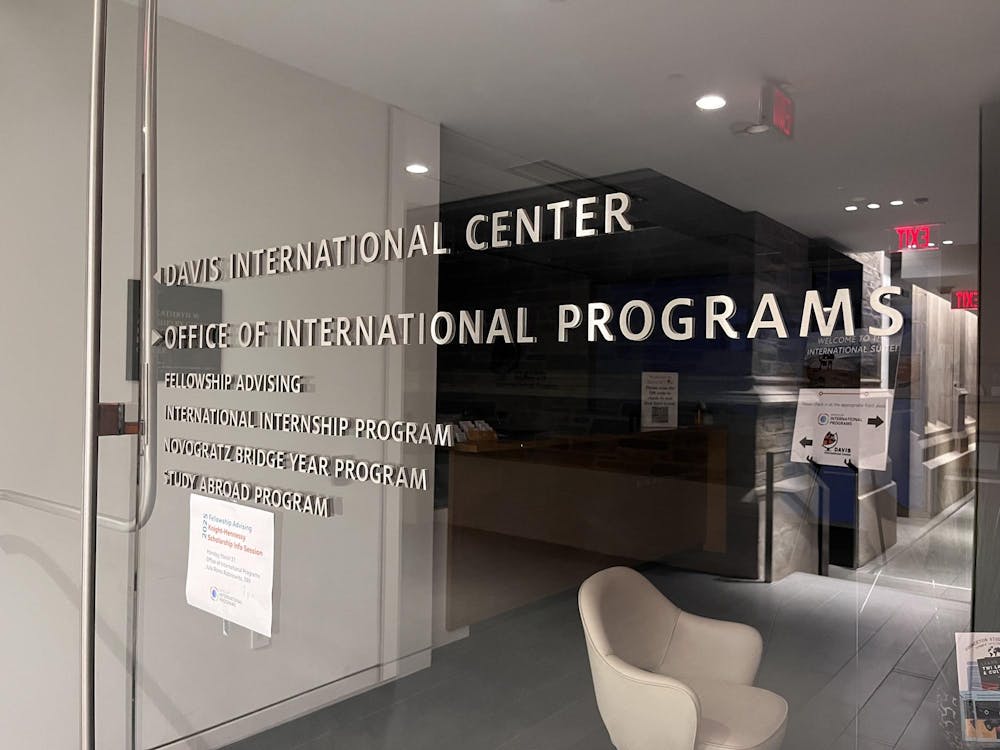
Trump administration announces new travel, visa restrictions in last days of semester
Luke GrippoNew travel restrictions announced by the Trump administration could impact international students returning to campus after break.
New travel restrictions announced by the Trump administration could impact international students returning to campus after break.