



With just days from the end of the semester, a small group of international students and academics may have to unexpectedly stay in the United States after new travel restrictions announced by the Trump administration.
These new restrictions, set to take effect on Jan. 1, expand the administration’s full travel ban to Burkina Faso, Mali, Niger, South Sudan, Syria, Laos, and Sierra Leone, as well as individuals with travel documents issued by the Palestinian Authority. The restrictions will also limit new visa issuances for a broader category of countries, including F, M, and J visas.
These rules will not apply to individuals inside the United States on Jan. 1 or to those who hold a valid visa. However, international students from many of the countries listed have only been eligible for single entry visas, meaning that if they exit the country for the holidays, they must apply for a new visa to re-enter for the spring semester.
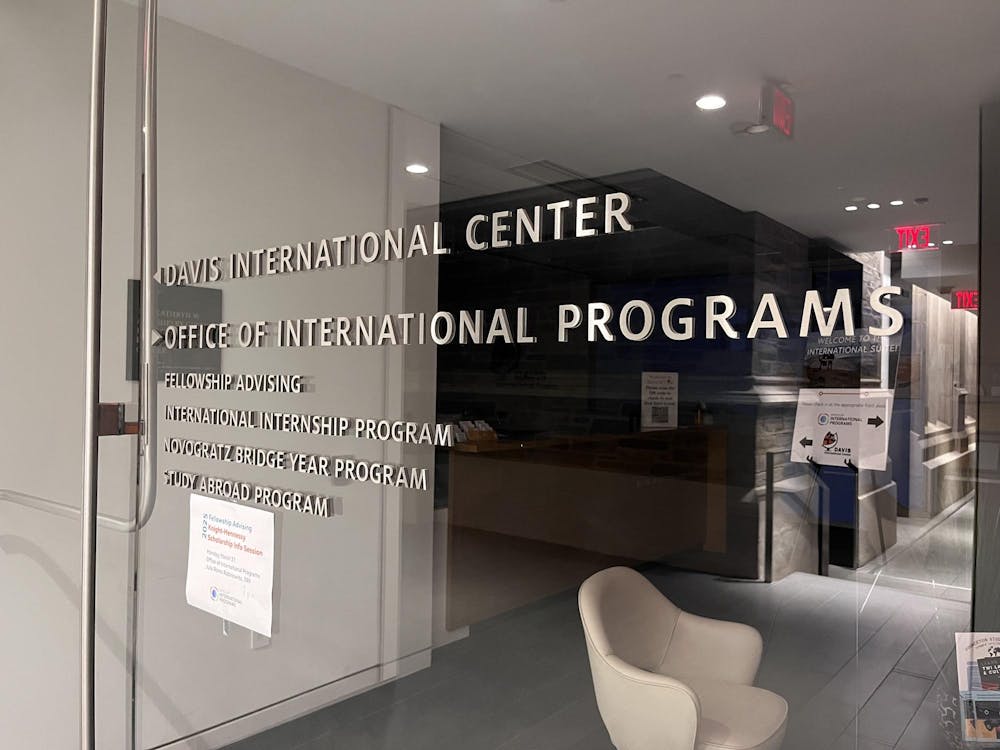
The Davis International Center said in a Thursday email to international students that they will be directly reaching out to “currently sponsored Princeton students and scholars” from the countries now on the list for new restrictions. Last year, there were 10 students, both undergraduate and graduate, from the countries listed. The data for this year has not been released.
Travel and visa bans now apply to all international students and scholars who are from the following countries: Afghanistan, Burkina Faso, Burma (Myanmar), Chad, Republic of Congo, Equatorial Guinea, Eritrea, Haiti, Iran, Laos, Libya, Mali, Niger, Sierra Leone, Somalia, South Sudan, Sudan, Syria, Yemen, and individuals with Palestinian Authority-issued travel documents. As of last year, 21 graduate students, including 16 Iranians, and 12 undergraduates hailed from these countries.
The other travel and visa restrictions will apply to immigrant visas and B-1, B-2, F, M, and J non-immigrant visas for students and scholars who are from: Angola, Antigua and Barbuda, Benin, Burundi, Cote d’Ivoire, Cuba, Dominica, Gabon, The Gambia, Malawi, Mauritania, Nigeria, Senegal, Tanzania, Togo, Tonga, Venezuela, Zambia, and Zimbabwe. As of last year, there were 24 undergraduates from these countries and 11 graduate students from these countries.
United States permanent residents and individuals with certain special visas will also be exempt from these travel restrictions, as well as with individuals with dual nationalities and passports from unrestricted countries.
On Dec. 9, the Davis IC reported that social media vetting would include H-1B and H-4 visa applications, effective on Monday. A similar process had been instituted for F and J visa applications earlier this summer.

The University declined to comment further on these restrictions.
“We recognize that this news comes at a time when our international community is already navigating a challenging and uncertain environment. We are here to support you. Please feel free to contact your Davis IC advisor if you have any questions or concerns,” the email concluded.
Luke Grippo is an assistant News editor for the ‘Prince.’ He is from South Jersey and typically covers University and town politics on a national, regional, and local scale. He can be reached at lg5452[at]princeton.edu.
Please send any corrections to corrections[at]dailyprincetonian.com.
Read More

Princeton University Orchestra and men’s ultimate frisbee team named in University’s latest hazing report
Andrew ArthurTwelve students in the Princeton University Orchestra and Men's Ultimate Frisbee team were found responsible for hazing violations in the University's latest Campus Hazing Transparency Report. Sanctions ranged from Dean's warnings to disciplinary probation.
Twelve students in the Princeton University Orchestra and Men's Ultimate Frisbee team were found responsible for hazing violations in the University's latest Campus Hazing Transparency Report. Sanctions ranged from Dean's warnings to disciplinary probation.

Murray-Dodge Café celebrates 50th Anniversary, drawing over 260 students
Hifza KaleemOn Wednesday, Murray Dodge Cafe celebrated its 50th anniversary, drawing more than 260 students to celebrate with free cookies and merchandise.
On Wednesday, Murray Dodge Cafe celebrated its 50th anniversary, drawing more than 260 students to celebrate with free cookies and merchandise.
Students share mixed reactions as mandated officer and treasurer trainings return to in-person format
David EstradaThe University's student organization officers and treasurers returned to mandatory in-person training this fall after years of online sessions. Student reactions found parts of the training redundant or tedious, though most agreed the sessions were important.
The University's student organization officers and treasurers returned to mandatory in-person training this fall after years of online sessions. Student reactions found parts of the training redundant or tedious, though most agreed the sessions were important.