



Ben Klaber '05 appears to be just like any other University senior. He chats about starting work on his thesis, planning activities at Colonial Club — where he is an officer — and anticipating Friday night movie showings at Frist Campus Center. And that's when his pants start talking.
Klaber pauses, listening intently to the crackling, barely audible voice coming from the small, black pager hanging from his belt. He nods as he processes the information, unfazed by the sudden interruption.
As a volunteer firefighter with the Princeton Fire Department, Klaber is accustomed to hearing calls over the radio lines.
"Everyone has a pager," he said. "You get a signal when there is a call in town, and, if you have time, you go to the station, put on your uniform and jump on the truck."
Instead of employing a full-time force, the Princeton Fire Department relies solely on community volunteers. In the past, a significant number of Princeton students have worked as volunteer firefighters. That number, however, has dwindled to just two undergraduate student volunteers on campus — Klaber and Michael Westrol '07.
Westrol, a volunteer firefighter since high school, is familiar with the danger of an undersupply of community members offering their time and service.
"I think part of the problem is that people don't even know that we have a volunteer fire department," he said. "The department needs people."
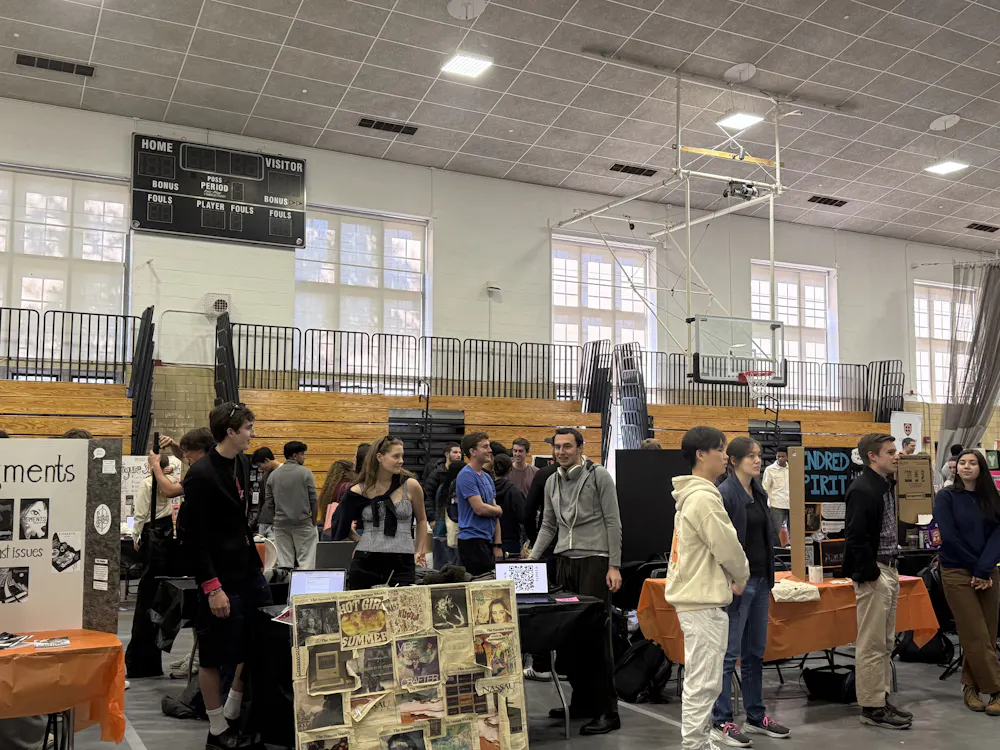
Klaber called the student volunteer shortage unacceptable. "It disturbs me that someone's house could be on fire and nobody shows up," he said. Both Klaber and Westrol talked to students at the activities fair earlier in September with hopes of encouraging students to join the department, but their efforts have been largely unsuccessful. "Princeton students are hardworking, smart and are great assets to the fire department, except that we don't have enough of them," Westrol said.

While becoming a certified firefighter requires about 100 hours of training, both volunteers emphasized the nature of college life as ideal for volunteering. They stressed that there is no minimum number of required hours and no scheduled duty.
"It's really friendly to students' schedules," Westrol explained. Klaber added, "You go when you're not tied down to something immediately."
Both students spoke enthusiastically of the personal and social benefits of volunteering.
"You develop a special type of friendship," Westrol said. "It's a bit cliche, but we're truly all brothers."
"It's not just service, it's a lot of fun!" Klaber added. "You can develop strong relationships with fellow members founded on common goals and shared sweat. The camaraderie that you'll find in our department and other volunteer fire departments around the country is great to be a part of — it's kind of like an eating club for your whole life."
Read More

Princeton University Orchestra and men’s ultimate frisbee team named in University’s latest hazing report
Andrew ArthurTwelve students in the Princeton University Orchestra and Men's Ultimate Frisbee team were found responsible for hazing violations in the University's latest Campus Hazing Transparency Report. Sanctions ranged from Dean's warnings to disciplinary probation.
Twelve students in the Princeton University Orchestra and Men's Ultimate Frisbee team were found responsible for hazing violations in the University's latest Campus Hazing Transparency Report. Sanctions ranged from Dean's warnings to disciplinary probation.

Murray-Dodge Café celebrates 50th Anniversary, drawing over 260 students
Hifza KaleemOn Wednesday, Murray Dodge Cafe celebrated its 50th anniversary, drawing more than 260 students to celebrate with free cookies and merchandise.
On Wednesday, Murray Dodge Cafe celebrated its 50th anniversary, drawing more than 260 students to celebrate with free cookies and merchandise.
Students share mixed reactions as mandated officer and treasurer trainings return to in-person format
David EstradaThe University's student organization officers and treasurers returned to mandatory in-person training this fall after years of online sessions. Student reactions found parts of the training redundant or tedious, though most agreed the sessions were important.
The University's student organization officers and treasurers returned to mandatory in-person training this fall after years of online sessions. Student reactions found parts of the training redundant or tedious, though most agreed the sessions were important.