



In a case involving teaching assistants (TAs) at Brown University, the National Labor Relations Board recently ruled that graduate students do not have the right to unionize. Under this decision, universities could ban graduate students from gathering with the intent of creating a union.
Though the ruling represents a dramatic overturn of the 2000 precedent allowing TAs to collectively bargain, the response from Princeton graduate students was tepid.
"I've never heard anyone mention unionizing here at Princeton. So the ruling doesn't affect graduate students here as much as at some of our peer institutions," said Christine Percheski, a secretary in the Graduate Student Government.
The NLRB also found that "graduate student assistants . . . are primarily students and have a primarily educational, not economic, relationship with their University."
Most students, Percheski said, see themselves as fulfilling a combination of the two roles of student and employee.
Rather than go to unions, graduate students generally use their student representation as a conduit for relaying their concerns. Recently, when the cost of living in Princeton began to outpace graduate stipends, the GSG successfully lobbied for lower cost housing.
The GSG is bound by its constitution not to participate in union activities. However, members of the GSG have heard their counterparts at other universities discuss forming unions.
Students from Brown and Yale Universities and the University of Pennsylvania have been at the forefront of this trend, often working with national unions such as United Automobile Workers to organize and address their grievances.

In 2003, many Yale graduate students participated in an employee strike in order to bring attention to their goal of unionization. Prior to the strike there were allegations that Yale administrators had tried to intimidate and threaten those who spoke of forming unions.
No such charges have been leveled here against the University administration. "The administration has been very receptive to most requests especially in the area of quality of life," Percheski said.
Read More

Princeton University Orchestra and men’s ultimate frisbee team named in University’s latest hazing report
Andrew ArthurTwelve students in the Princeton University Orchestra and Men's Ultimate Frisbee team were found responsible for hazing violations in the University's latest Campus Hazing Transparency Report. Sanctions ranged from Dean's warnings to disciplinary probation.
Twelve students in the Princeton University Orchestra and Men's Ultimate Frisbee team were found responsible for hazing violations in the University's latest Campus Hazing Transparency Report. Sanctions ranged from Dean's warnings to disciplinary probation.

Murray-Dodge Café celebrates 50th Anniversary, drawing over 260 students
Hifza KaleemOn Wednesday, Murray Dodge Cafe celebrated its 50th anniversary, drawing more than 260 students to celebrate with free cookies and merchandise.
On Wednesday, Murray Dodge Cafe celebrated its 50th anniversary, drawing more than 260 students to celebrate with free cookies and merchandise.
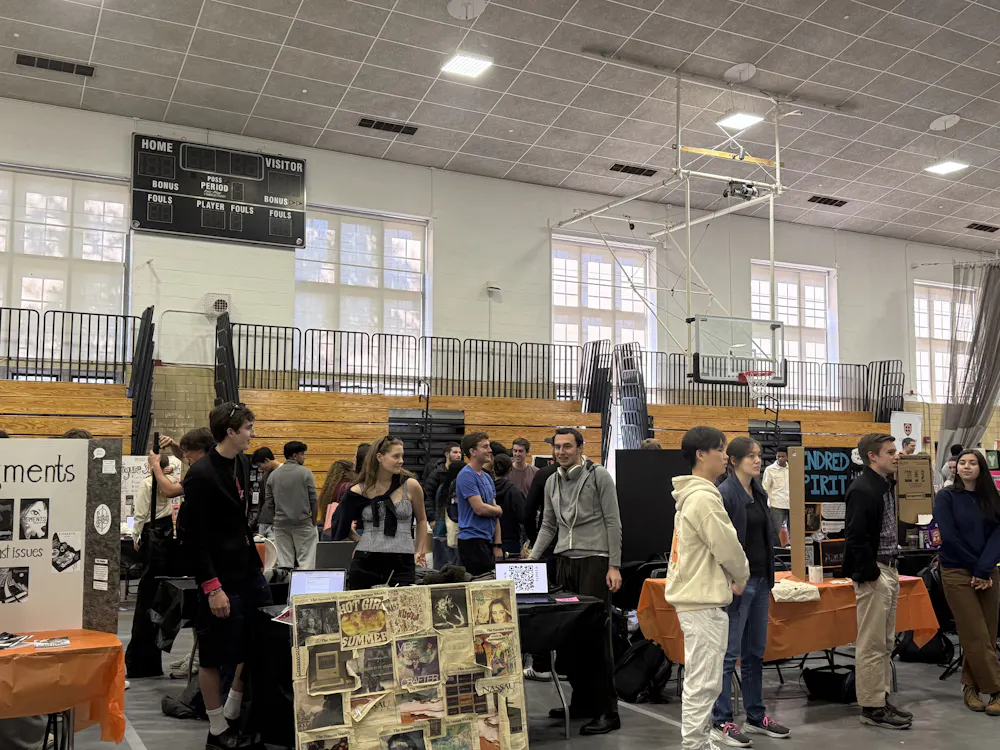
Students share mixed reactions as mandated officer and treasurer trainings return to in-person format
David EstradaThe University's student organization officers and treasurers returned to mandatory in-person training this fall after years of online sessions. Student reactions found parts of the training redundant or tedious, though most agreed the sessions were important.
The University's student organization officers and treasurers returned to mandatory in-person training this fall after years of online sessions. Student reactions found parts of the training redundant or tedious, though most agreed the sessions were important.