



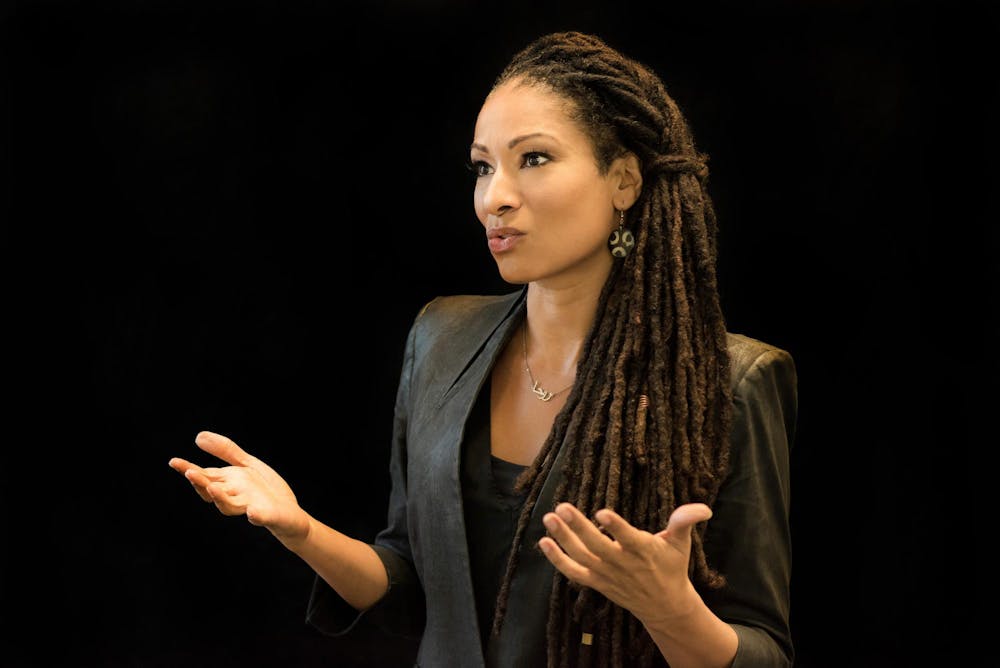
New York City Mayor-elect Zohran Mamdani named more than 400 advisors to serve on his transition committees earlier this month, including Princeton professor Ruha Benjamin, who was appointed to Mamdani’s Committee on Technology.
Awarded a MacArthur Foundation “Genius” Fellowship in 2024, Benjamin’s research at the Ida B. Wells Just Data Lab, which she founded in 2020, aims to “rethink and retool the relationship between stories and statistics, power and technology, data and justice.” Benjamin has taught at Princeton since 2014, and was awarded the President’s Award for Distinguished Teaching in 2017.
Her research focuses on bias in data systems, algorithmic discrimination, and surveillance technologies, including facial recognition tools that disproportionately misidentify people of color. Benjamin is the author of several books on technology and inequality, including Race After Technology, which critiques what she terms the “New Jim Code” embedded in digital systems.
Mamdani’s transition team was assembled following his election victory in the 2025 mayoral election to advise the incoming administration on policy and personnel decisions ahead of his January inauguration.
In a statement to The Daily Princetonian, Benjamin said that the technology transition committee’s primary role is to “recommend appointments for the heads of city agencies and to provide technology policy guidance directly to the Transition Team.”
A democratic socialist, Mamdani defeated independent candidate and former New York Gov. Andrew Cuomo by a near double-digit margin after running a campaign centered on rent-controlled housing, accessible groceries and child care, free and fast public transportation, and other affordability efforts.
Benjamin described the invitation process as unexpected. In mid-November, she received a “cryptic” email under the subject line “Urgent Request From Mayor-Elect Zohran Mamdani Transition Team,” requesting a phone call.
“I am a notorious phone-phobe,” Benjamin wrote. “I tried to dodge it by asking if they could simply email the request. No such luck; it needed to be a call, which ultimately lasted only a few minutes.”

The impromptu nature of the call led Benjamin to suspect the request was a prank. However, she looked up the staffer on LinkedIn and messaged him to confirm the invitation was legitimate. “A few weeks later, I found myself at El Museo del Barrio in East Harlem alongside 400 people,” Benjamin wrote.
Transition team members did not learn who their fellow committee members were until after that in-person meeting, when the full lists were released publicly.
“That’s when it hit me,” Benjamin wrote. “This was an opportunity to work with an extraordinary group of people whose technology advocacy and justice work I have long admired.”
“Although Mamdani is the charismatic and committed face of this ‘new era’ in city government, I was equally struck by the others who took the stage that morning, as well as those in the audience who asked the Transition Committee pressing questions about the path ahead,” she continued.
Benjamin explained that she chose to join the technology committee because she believes technology policy is central to addressing inequality in New York City. “Technology companies continue to exacerbate inequities in employment, education, healthcare, housing, policing, immigration – you name it,” she wrote. “Technology is never neutral, and its harms and benefits are unevenly distributed.”
Her work has focused on what she described as “taking back tech,” collaborating with digital justice organizations to develop approaches that prioritize equity and community. She pointed to Barcelona’s participatory platform Decidim, an open-source system that allows residents to propose and shape policy as an example of how cities can reclaim democratic oversight of technological infrastructure.

The platform has since been adopted in more than 80 cities worldwide, including in participatory budgeting initiatives in New York.
Benjamin said her work on the transition committee will not affect her teaching at Princeton, adding that most of the committee’s work will be completed before spring classes begin.
“Some students on the waitlist for my spring course were worried I wouldn’t be offering it again, but I’m not going anywhere,” she said.
Benjamin has said she has not interacted directly with Mamdani and did not have a prior relationship with the campaign.
“The closest I’ve come to speaking with Mamdani is that his TikTok account reposted a hilarious video of someone gushing about the ‘stacked’ transition appointments — specifically highlighting my role on the technology committee,” she wrote, adding that she plans to revisit the comments section if she’s ever feeling down.
Serving on the technology committee, Benjamin wrote, allows her to apply lessons from these global efforts while gaining an inside view of the challenges involved in limiting corporate influence over public institutions.
“I see this moment as one of genuine possibility,” she wrote. “But whatever positive transitions we achieve, inshallah, will be the result of organized people power, not politics as usual.”
Leela Hensler is a staff News writer and a staff Sports writer for the ‘Prince.’ She is from Berkeley, Calif. and can be reached at leela[at]princeton.edu.
Teresa Chen is a News contributor from Shanghai. She can be reached at tc7069[at]princeton.edu.
Please send any corrections to corrections[at]dailyprincetonian.com.
Read More

Princeton University Orchestra and men’s ultimate frisbee team named in University’s latest hazing report
Andrew ArthurTwelve students in the Princeton University Orchestra and Men's Ultimate Frisbee team were found responsible for hazing violations in the University's latest Campus Hazing Transparency Report. Sanctions ranged from Dean's warnings to disciplinary probation.
Twelve students in the Princeton University Orchestra and Men's Ultimate Frisbee team were found responsible for hazing violations in the University's latest Campus Hazing Transparency Report. Sanctions ranged from Dean's warnings to disciplinary probation.

Murray-Dodge Café celebrates 50th Anniversary, drawing over 260 students
Hifza KaleemOn Wednesday, Murray Dodge Cafe celebrated its 50th anniversary, drawing more than 260 students to celebrate with free cookies and merchandise.
On Wednesday, Murray Dodge Cafe celebrated its 50th anniversary, drawing more than 260 students to celebrate with free cookies and merchandise.
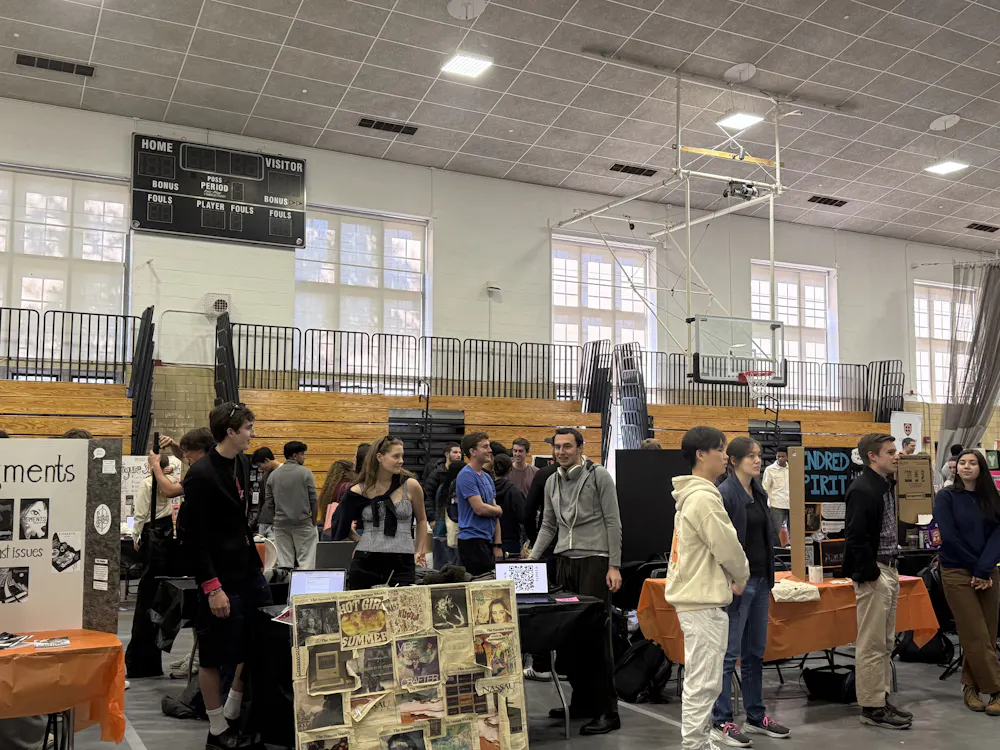
Students share mixed reactions as mandated officer and treasurer trainings return to in-person format
David EstradaThe University's student organization officers and treasurers returned to mandatory in-person training this fall after years of online sessions. Student reactions found parts of the training redundant or tedious, though most agreed the sessions were important.
The University's student organization officers and treasurers returned to mandatory in-person training this fall after years of online sessions. Student reactions found parts of the training redundant or tedious, though most agreed the sessions were important.