



Among the countless letters pre-frosh receive before arrival at Princeton is the housing letter, containing one word that could possibly shape the course of their next four years on campus — the name of their residential college.
Each of the five colleges —Butler, Forbes, Mathey, Rockefeller and Wilson — has accumulated various stereotypes and opinions leaving freshmen to discuss the pros and cons of residential life.
While most freshmen and sophomores living in the residential colleges appreciate the idea of the system, some members of the Class of 2008 feel isolated.
Jorge Santana '08 of Forbes College finds it difficult to meet students from other colleges because of the separation between dormitories.
"It has to be a personal effort to seek out other students," he said.
While students may not necessarily see all the benefits of living in such a close-knit community, the masters of each college understand the rationale for the dorm life.
Elizabeth Lunbeck, master of Forbes College, has worked at Princeton since 1988. She believes "the residential college is the bridge between academic and nonacademic life."
Lunbeck said residential colleges bring people together from "all different parts of their lives.

There are undergrads, graduate students, professors, fellows, advisers and the staff who the students interact with on a daily basis."
Even though there are five separate colleges, the close proximity of up-campus Rocky and Mathey and down-campus Wilson and Butler gives students the chance to meet others outside their dorms.
However, Lindsay Morris '08 of Wilson College said, "I don't actually see a lot of Butler people."
And the students in Forbes do feel the inconveniences of isolation from the main campus.
"During freshmen week, all the activities involved getting to know the people in your college, but for the people in Forbes, it should be more to get to know kids from other colleges since we are so far away from them," Santana said.
As the two years in the residential colleges progress, upperclassmen believe that meeting fellow students becomes easier.

Jen Ragus '06, once a member of Rocky, said that "my friends now are from all different residential colleges. Eventually, I got to meet people from other dorms through friends."
The residential college system saw its beginning when Wilson first proposed an idea in 1906 to create colleges where undergraduates would live with recreational and academic facilities.
The current system was established in 1979 after the Committee on Undergraduate Residential Life asked for dining and social life to be more intertwined with academics.
Read More

Princeton University Orchestra and men’s ultimate frisbee team named in University’s latest hazing report
Andrew ArthurTwelve students in the Princeton University Orchestra and Men's Ultimate Frisbee team were found responsible for hazing violations in the University's latest Campus Hazing Transparency Report. Sanctions ranged from Dean's warnings to disciplinary probation.
Twelve students in the Princeton University Orchestra and Men's Ultimate Frisbee team were found responsible for hazing violations in the University's latest Campus Hazing Transparency Report. Sanctions ranged from Dean's warnings to disciplinary probation.

Murray-Dodge Café celebrates 50th Anniversary, drawing over 260 students
Hifza KaleemOn Wednesday, Murray Dodge Cafe celebrated its 50th anniversary, drawing more than 260 students to celebrate with free cookies and merchandise.
On Wednesday, Murray Dodge Cafe celebrated its 50th anniversary, drawing more than 260 students to celebrate with free cookies and merchandise.
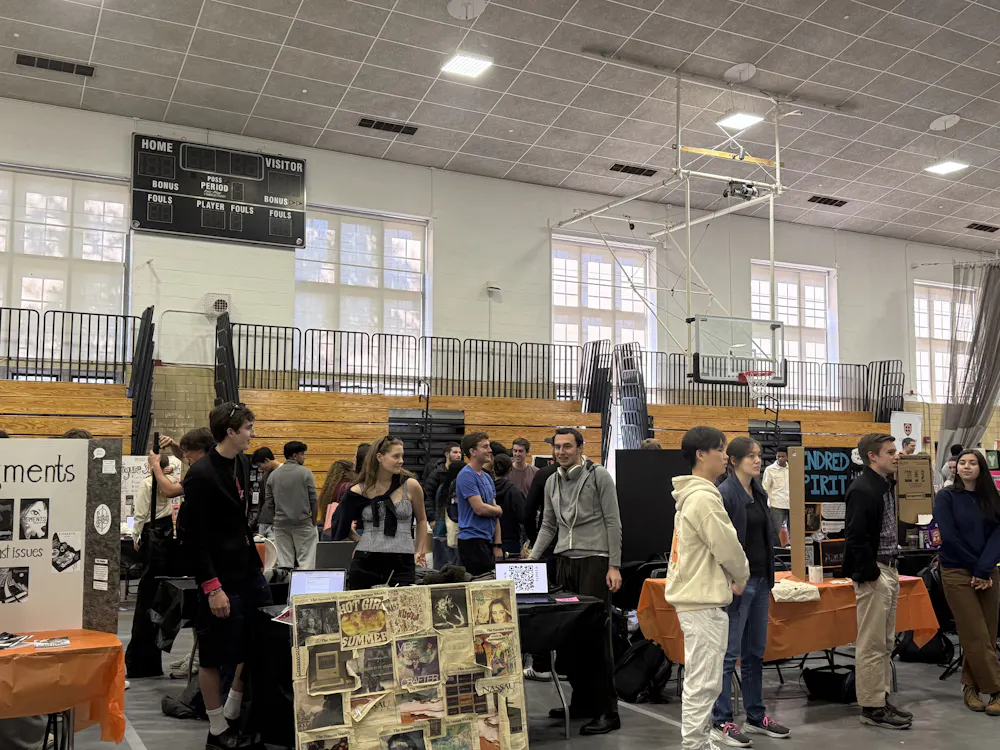
Students share mixed reactions as mandated officer and treasurer trainings return to in-person format
David EstradaThe University's student organization officers and treasurers returned to mandatory in-person training this fall after years of online sessions. Student reactions found parts of the training redundant or tedious, though most agreed the sessions were important.
The University's student organization officers and treasurers returned to mandatory in-person training this fall after years of online sessions. Student reactions found parts of the training redundant or tedious, though most agreed the sessions were important.