



Students at Princeton are subject to a fast-paced life. The academic pressures, in addition to athletic and extracurricular commitments Tigers face while balancing a social life, often manifest themselves in a large number of sleep-deprived students.
During midterm week this problem becomes more apparent because students have to attend classes and practices while turning in papers, attending review sessions and taking exams. Consequently, midterm week increases the visibility of the problem of sleep deprivation, as evidenced by Frist Campus Center's 24-hour-a-day operation during the week.
Though most people require six to eight hours of sleep, many students find themselves falling short of this quota.
Sleep deprivation is not unique to midterm week or Princeton students. "From research and reports from vice presidents of similar universities and colleges around the country, [we see that] our situation is not unusual. That doesn't mean it's good. It's a challenge for college students and teenagers in general to have much less sleep at night than is recommended by doctors," Vice President for Campus Life Janet Dickerson said.
Dickerson attributed lack of sleep to the competitiveness of the student body at the University. The pressure that students put on themselves to be the best is great, she said.
Robby Braun '07 disagreed. "In high school I felt that academics and activities took a precedence over sleep, because I felt that I had to worry about getting into a selective college. Now that I'm here, I don't feel pressured as much, though I still have a lot of work. But I force myself to get a minimum amount of sleep," said Braun, who is also a member of the 'Prince' editorial board.
Another freshman, Taylor Beck, finds himself in a different situation. Being a freshman in a dorm with dozens of people his age under one roof provides constant social distractions. This leads to him "hanging around" until late at night with other students from the dorm, Beck said.
Another factor contributing to the University's high-pressure environment is that Princeton has the fewest class days when compared to comparable institutions. Students accomplish the same amount of academic work, if not more, in a smaller number of days. Athletic seasons run the same lengths as those at other institutions as well.

Dickerson, however, disagreed that the academic calendar could lead to lack of sleep. "Even though Princeton has 12 weeks of classes [per semester], it has a longer reading period than our peer institutions. The students have the opportunity to do their best when they are not also attending classes and lectures [during reading period]," Dickerson said.
Instead, Dickerson said she feels the Internet and campus social life — usually beginning late at night — exacerbate poor sleeping habits.
Leon Skornicki '06 said his sleeping habits are better now than they were during his freshman year. "Writing seminars were in part responsible for me pulling all-nighters. Usually I would have slept-in the day after the all-nighter, but the early morning writing seminar forced me get up to turn my work," Skornicki said.
The heavy courseload for the writing seminar often caused hm to get only three or four hours of sleep. He added that although he did not miss a single seminar, the rule that missing two classes leads to failure in the course did not help his stress.
Dr. Janet Neglia, director of clinical services for University Health Services, explained how McCosh Infirmary helps students suffering from sleeping problems.
"Students who come to us for sleep disturbances are evaluated medically and, in conjunction with the counseling center, are evaluated psychologically because depression could be a cause for someone not to sleep, or lack of sleep can also cause depression," she said. "We work closely with the counseling center to determine what are the reasons for the student not sleeping."

In light of midterm week, Neglia said that "all-nighters" are inadvisable. "Frequently around the time of exams students will stay up on nights at end in the hopes of getting more work done. It is counterproductive towards getting more good work done, because studies have proven that you do not remember as well the things that you try to cram, as opposed to the things you learn over a longer period of time."
Neglia said extended lack of sleep may make it hard to return to a normal sleep pattern. Some may need medication to sleep normally again, she said.
Neglia added that taking naps is a better way of staying awake than resorting to the use of stimulants. "If your body is telling you that you really need to close your eyes for a few minutes, you need to listen to it," she said. "You will be more productive if you take that nap instead of hiking through it or if you try to artificially stimulate yourselves."
Stimulants may keep students awake, but they do not make the brain more productive, she added. Dickerson agreed with Neglia's advice.
"We remind students that part of you being the best is taking care of yourself, your body and brain — and the brain requires sleep," Dickerson added.
Read More

Princeton University Orchestra and men’s ultimate frisbee team named in University’s latest hazing report
Andrew ArthurTwelve students in the Princeton University Orchestra and Men's Ultimate Frisbee team were found responsible for hazing violations in the University's latest Campus Hazing Transparency Report. Sanctions ranged from Dean's warnings to disciplinary probation.
Twelve students in the Princeton University Orchestra and Men's Ultimate Frisbee team were found responsible for hazing violations in the University's latest Campus Hazing Transparency Report. Sanctions ranged from Dean's warnings to disciplinary probation.

Murray-Dodge Café celebrates 50th Anniversary, drawing over 260 students
Hifza KaleemOn Wednesday, Murray Dodge Cafe celebrated its 50th anniversary, drawing more than 260 students to celebrate with free cookies and merchandise.
On Wednesday, Murray Dodge Cafe celebrated its 50th anniversary, drawing more than 260 students to celebrate with free cookies and merchandise.
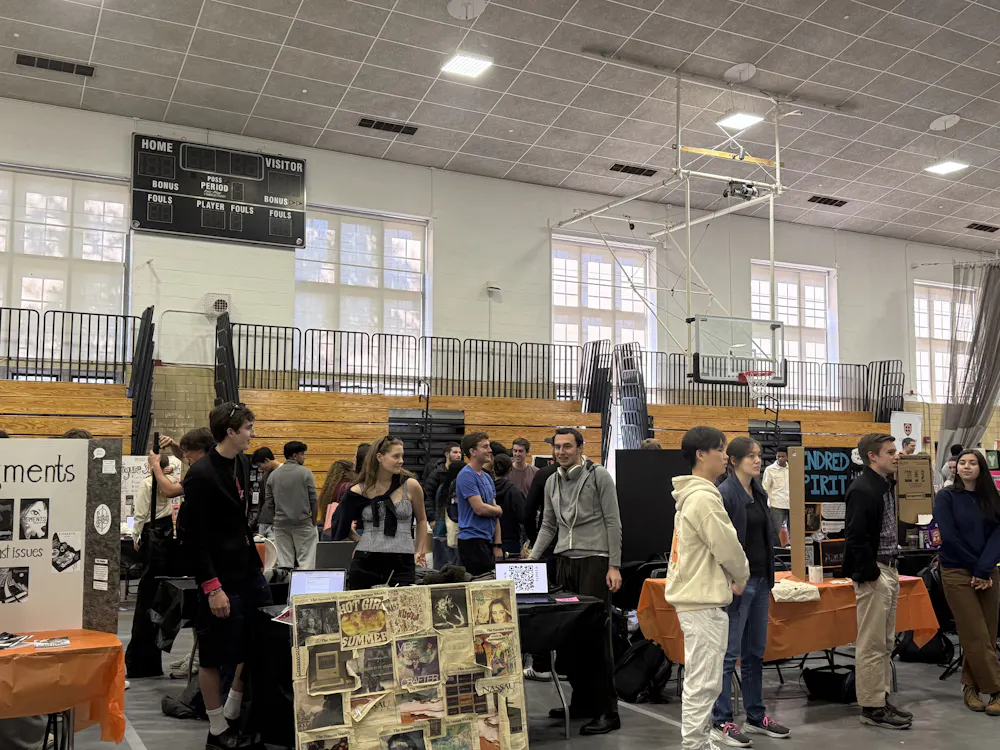
Students share mixed reactions as mandated officer and treasurer trainings return to in-person format
David EstradaThe University's student organization officers and treasurers returned to mandatory in-person training this fall after years of online sessions. Student reactions found parts of the training redundant or tedious, though most agreed the sessions were important.
The University's student organization officers and treasurers returned to mandatory in-person training this fall after years of online sessions. Student reactions found parts of the training redundant or tedious, though most agreed the sessions were important.