



With ticket sales topping $100 million and congregations across the nation renting out movie theaters for special screenings of "The Passion of the Christ," the purportedly true-to-the-gospels documentary of the last 12 hours of the life of Jesus has stirred interest and controversy among the religious and nonreligious alike.
A panel of University professors and religious figures not associated with the campus community discussed issues surrounding the film Tuesday in McCosh 50.
They responded to the religious, cultural and historical questions that have emerged since the Ash Wednesday release of Mel Gibson's independent, foreign-language film.
This film inspires individual piety, said religion professor Cornel West GS '80, "but issues of imperial power and state might, that have been behind anti-Semitism, were rendered less important."
William Donohue, president of the Catholic League for Religious and Civil Rights, spoke in favor of Gibson, a personal acquaintance.
"I have never seen a more vicious and unethical assault on a filmmaker than on Mel Gibson in this film," Donohue said. "Gibson doesn't need to vet his movie by any scholars," he added, in reference to a panel of theologians who were disappointed with the film. "He's not an altar boy. It's his movie and his interpretation." On campus, the film's buzz among students is hard to escape.
Joe Skloot '05, president of the Center for Jewish Life, attended an interfaith dialogue on the subject Monday night.
"From my conversations with Christians on campus who've seen the movie, it's pretty clear they see this movie as a monument to faith in Jesus," Skloot said in an email. "They believe this movie is about Jesus, not the people who killed him."

Michael Kenneally '06, a ministry assistant with the Aquinas Institute — the Catholic fellowship on campus — saw the film Friday with members of Aquinas, Athletes in Action and Agape Christian Fellowship.
"I thought it was a great way for me to come to a better understanding of Christ's sacrifice on the cross and to appreciate it more," Kenneally said.
Jarrod Grover '04 said he hopes the film will uplift and inspire Christians and contended the film does not encourage anti-Semitism.
"Jewish organizations that have squandered time and money arrogantly criticizing this work of art while claiming to prevent pogroms in Pittsburgh have done far more harm to the Jewish community than this movie will ever do," Grover said in an email.
David Elcott, director of inter-religious affairs for the American Jewish Committee, and one of two Jewish speakers on the panel, also denied the film was anti-Semitic. However, he did critique the film's polarization of good and evil, use of stereotypes and denigration of humanity. Robert George, a politics professor, de-emphasized the question of veracity in depicting the final hours of Christ, and instead drew attention to the personal message of sacrifice and individual repentance.
Both West and religion professor Jeffrey Stout GS '76 expressed concern that the film's sadomasochistic voyeurism was a reason for its public appeal.

Stout also said Gibson paid less attention to guarding against a negative portrayal of the Jews than of the Romans, who he said were depicted more ambivalently.
John Gager, professor of religion and Steven Tepper, deputy director of the Center for Arts and Cultural Policy Studies, also joined the panel. Thomas Breidenthal, dean of the University's Office of Religious Life, moderated.
George, along with West and other panel members, said he had not yet seen the film.
Read More

Princeton University Orchestra and men’s ultimate frisbee team named in University’s latest hazing report
Andrew ArthurTwelve students in the Princeton University Orchestra and Men's Ultimate Frisbee team were found responsible for hazing violations in the University's latest Campus Hazing Transparency Report. Sanctions ranged from Dean's warnings to disciplinary probation.
Twelve students in the Princeton University Orchestra and Men's Ultimate Frisbee team were found responsible for hazing violations in the University's latest Campus Hazing Transparency Report. Sanctions ranged from Dean's warnings to disciplinary probation.

Murray-Dodge Café celebrates 50th Anniversary, drawing over 260 students
Hifza KaleemOn Wednesday, Murray Dodge Cafe celebrated its 50th anniversary, drawing more than 260 students to celebrate with free cookies and merchandise.
On Wednesday, Murray Dodge Cafe celebrated its 50th anniversary, drawing more than 260 students to celebrate with free cookies and merchandise.
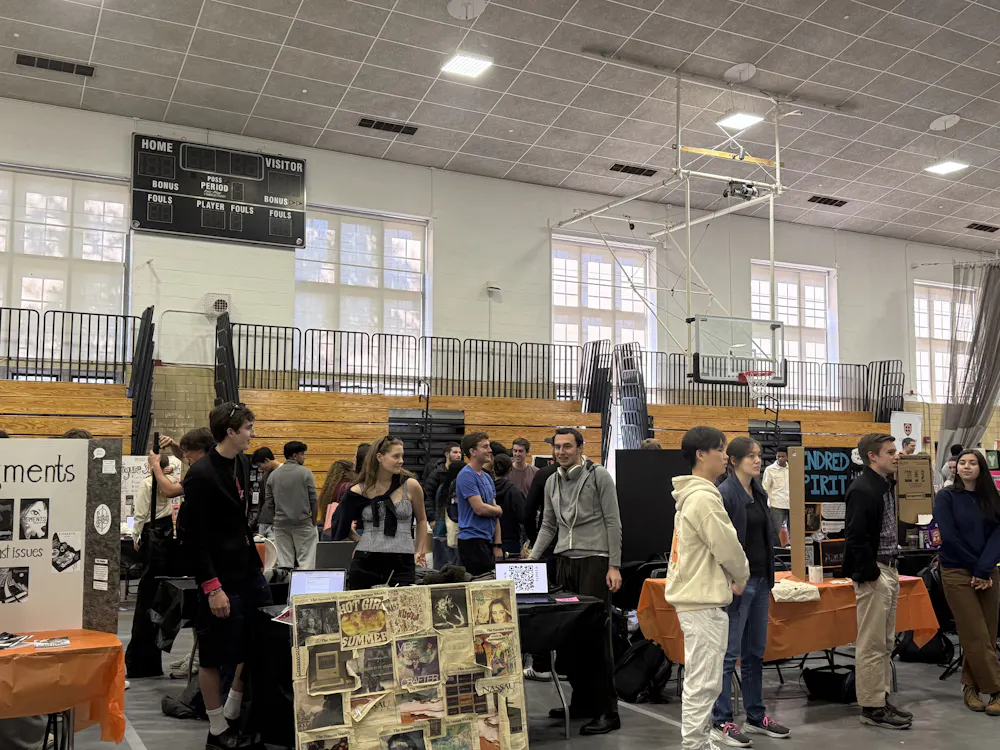
Students share mixed reactions as mandated officer and treasurer trainings return to in-person format
David EstradaThe University's student organization officers and treasurers returned to mandatory in-person training this fall after years of online sessions. Student reactions found parts of the training redundant or tedious, though most agreed the sessions were important.
The University's student organization officers and treasurers returned to mandatory in-person training this fall after years of online sessions. Student reactions found parts of the training redundant or tedious, though most agreed the sessions were important.