



At a time when many college students across the country face the prospect of rising tuition, President George W. Bush's proposed budget for the 2005 fiscal year has called for an increase in the Federal Student Loan limit for freshmen. The proposed budget has done little, however, to bolster Pell Grants and other programs aimed at low-income students.
These changes will have little impact on Princeton students due to the University's policy of replacing loans in the initial financial aid package with grants and its commitment to meeting the full demonstrated need of every student, director of undergraduate financial aid Don Betterton said.
"We give so little in the way of loans that these issues don't strike at Princeton immediately," he said. "In the first two years only about 15 percent of the students take out loans, and even though this number goes up a little when students enter eating clubs all students have the opportunity to graduate debt free."
Bush's proposal would increase the amount of federal money freshmen could borrow from $2,625 to $3,000, but borrowing limits for upperclassmen would remain at their current level and the overall limit would remain at $23000. The budget does not allocate any new funds for Perkins loans, which traditionally go to students from low-income families.
Bush also proposes to reserve an additional $3 billion over 10 years for unspecified student-loan benefits.
Despite the proposed increase in loan limits, the budget does not increase other sources of financial aid, such as Pell Grants, which are currently underfunded by $3.7 million. The proposed budget did not include funding to reduce the shortfall nor did it raise the maximum grant, which has been at $4,050 for the last three years, according to an article in The Chronicle of Higher Education.
Fluctuations in Pell Grant funding will not affect University students since the University covers full demonstrated need, Betterton said.
"There is no gap between Pell Grant money and University grants," he said. "We cover full need so we would cover decreases in the money allocated for Pell Grants."

Higher education lobbying groups differs on their assessment of the budget proposal.
The Coalition for Better Student Loans, a lobbying group made up of financial aid administrators, parents, loan providers and organizations representing more than 2,000 colleges and universities praised the increase in loan limits, saying in a February press release that it "[represents] an important first step in bringing the federal student loan programs up to date with the reality of student costs."
Other groups, like the Officials of the American Association of State Colleges and Universities, expressed concern about current student debt levels, according to the Chronicle of Higher Education article.
Higher Education Act
The budget proposal provides a glimpse into the administration's financial aid priorities as Congress prepares to reauthorize the 1965 Higher Education Act, which governs most student financial aid programs.
The reauthorization process will most likely have an impact on colleges throughout the country in part because Bush is currently pushing to redirect a $1.7 billion pot of money known as campus-based aid away from private colleges in New England toward colleges and universities in the Sun Belt.
The University currently receives about $3 million in campus-based aid per year, Betterton said. The U.S. Department of Education reports that Harvard, Northeastern and Boston College each received $7 million and MIT and Boston College received about $4 million.

Campus-based aid is divided between Perkins Loans, Supplemental Educational Opportunity Grants and work-study jobs and goes directly to universities, rather than the students themselves, to aid students from low-income families.
The money is distributed to colleges and universities based on a 25-year formula that tends to favor older, wealthier schools in the northeast.
If funds were redirected then the University would lose much of the $3 million that it currently receives, Betterton said, but it would make up for it with its own funds.
"If this proposal were approved we would have time to adjust before it was supplemented and it would be phased in over a long period of time," he said. "It's still a political process so it may be modified in many ways, but no matter what the University will maintain its commitment to meeting students' needs."
Read More

Princeton University Orchestra and men’s ultimate frisbee team named in University’s latest hazing report
Andrew ArthurTwelve students in the Princeton University Orchestra and Men's Ultimate Frisbee team were found responsible for hazing violations in the University's latest Campus Hazing Transparency Report. Sanctions ranged from Dean's warnings to disciplinary probation.
Twelve students in the Princeton University Orchestra and Men's Ultimate Frisbee team were found responsible for hazing violations in the University's latest Campus Hazing Transparency Report. Sanctions ranged from Dean's warnings to disciplinary probation.

Murray-Dodge Café celebrates 50th Anniversary, drawing over 260 students
Hifza KaleemOn Wednesday, Murray Dodge Cafe celebrated its 50th anniversary, drawing more than 260 students to celebrate with free cookies and merchandise.
On Wednesday, Murray Dodge Cafe celebrated its 50th anniversary, drawing more than 260 students to celebrate with free cookies and merchandise.
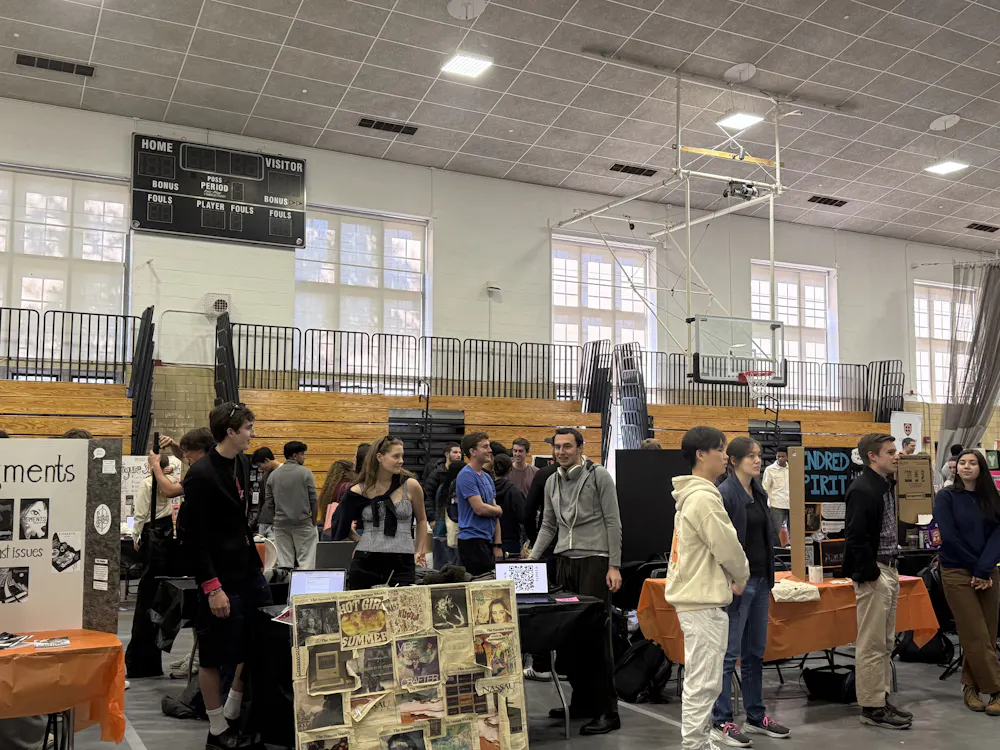
Students share mixed reactions as mandated officer and treasurer trainings return to in-person format
David EstradaThe University's student organization officers and treasurers returned to mandatory in-person training this fall after years of online sessions. Student reactions found parts of the training redundant or tedious, though most agreed the sessions were important.
The University's student organization officers and treasurers returned to mandatory in-person training this fall after years of online sessions. Student reactions found parts of the training redundant or tedious, though most agreed the sessions were important.