



About three million people die each year of AIDS, most living in poor countries without access to care and treatment. And over 40 million are infected with HIV worldwide.
This week, students are trying to raise awareness on campus of the global HIV/AIDS epidemic as they work more to increase activism on the issue as part of Global AIDS Week.
The Students Global AIDS Campaign (SGAC), an undergraduate group, and the Princeton AIDS Initiative — with faculty, graduates and undergraduates — are distributing materials from a table in Frist Campus Center and have planned a range of activities for this week.
A "Performing Arts Night Fundraiser" will be held tomorrow night in Friend Center at 8 p.m. Student groups DiSiac, Adwaaba Gumboot Drumming and acapella group Shere Kahn — as well as a guest speaker who has HIV — will be featured.
This afternoon, a senior adviser on gender and HIV/AIDS for the United nations Development Fund for Women will discuss "Who Cares? Women Infected and Affected in the Era of HIV/AIDS." Stephanie Urdang, a former journalist from South Africa, will speak at 4:30 p.m. in Dodds Auditorium, Robertson Hall.
SGAC is tentatively planning a "postcard campaign" to garner student signatures and send them to congressmen in support of AIDS-related legislation and more fundraising events like tomorrow's performances.
SGAC is now part of a national umbrella organization of the same name that started two years ago. But it's been operating on the Princeton campus for four years.
Ariel Wagner '05, SGAC president, said the organization now plans not only to promote awareness of HIV/AIDS issues but also push for political change.

Many of the original members of SGAC — which was formerly known as AIDS Awareness — graduated last year, Wagner said, adding that this year is a "rebuilding year" for the group as they try to attract new members and change the group's focus.
SGAC wants "to get people involved to effect change," Wagner said.
"[The adage] 'knowledge is power' is not enough," she said. "Our goal is to give students the means to fight the AIDS crisis."
With student activism now as the group's primary aim, SGAC plans support a wide range of events and projects.
The SGAC also seeks to have more students involved in activism programs abroad.
This past summer the SGAC helped a few undergraduate students travel to Cuba, South Africa and Ghana to work with international AIDS-related organizations.

Wagner said she hopes more students take part in this kind of global AIDS activism.
Wagner said SGAC does not rely heavily on the national parent group, but rather "does much of their own programming, and primarily relies on [the SGAC's national leadership] for suggestions."
For financial support, however, SGAC receives most of its funding from the newly established Princeton AIDS Initiative, which is the University's umbrella organization on AIDS.
After enrolling in a class on the world AIDS crisis, graduate students in the Wilson School created the PAI last spring as a group that would centralize campus resources for studying issues related to AIDS.
Read More

Princeton University Orchestra and men’s ultimate frisbee team named in University’s latest hazing report
Andrew ArthurTwelve students in the Princeton University Orchestra and Men's Ultimate Frisbee team were found responsible for hazing violations in the University's latest Campus Hazing Transparency Report. Sanctions ranged from Dean's warnings to disciplinary probation.
Twelve students in the Princeton University Orchestra and Men's Ultimate Frisbee team were found responsible for hazing violations in the University's latest Campus Hazing Transparency Report. Sanctions ranged from Dean's warnings to disciplinary probation.

Murray-Dodge Café celebrates 50th Anniversary, drawing over 260 students
Hifza KaleemOn Wednesday, Murray Dodge Cafe celebrated its 50th anniversary, drawing more than 260 students to celebrate with free cookies and merchandise.
On Wednesday, Murray Dodge Cafe celebrated its 50th anniversary, drawing more than 260 students to celebrate with free cookies and merchandise.
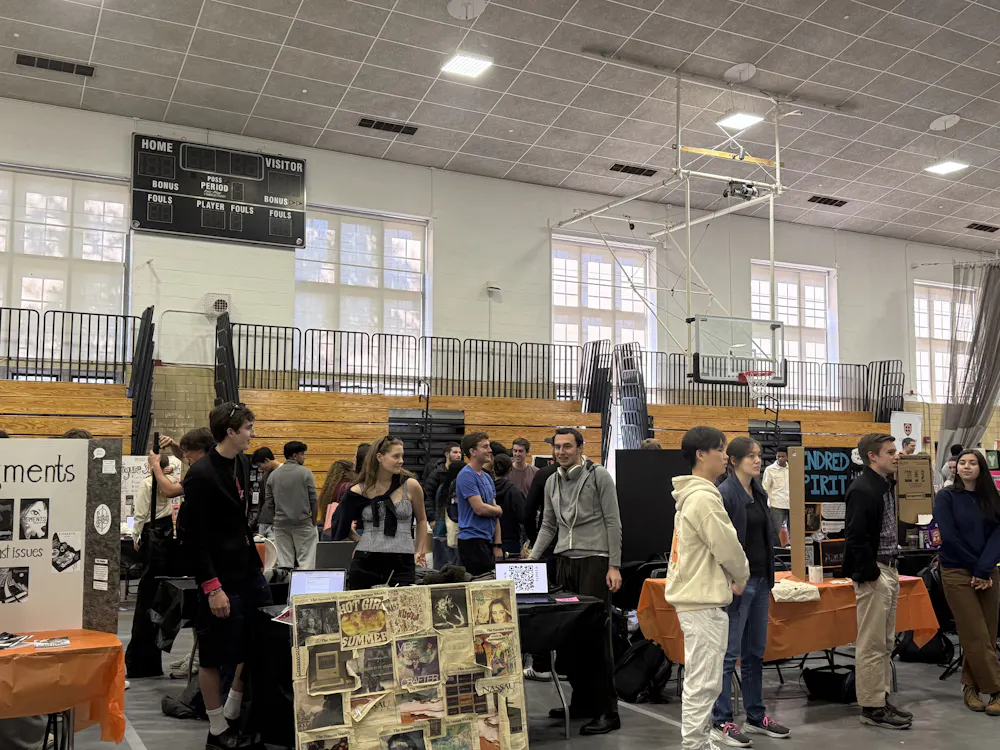
Students share mixed reactions as mandated officer and treasurer trainings return to in-person format
David EstradaThe University's student organization officers and treasurers returned to mandatory in-person training this fall after years of online sessions. Student reactions found parts of the training redundant or tedious, though most agreed the sessions were important.
The University's student organization officers and treasurers returned to mandatory in-person training this fall after years of online sessions. Student reactions found parts of the training redundant or tedious, though most agreed the sessions were important.