



The Princeton Association of Black Women held a panel Tuesday night titled "The Street and Beyond: A Discussion about the Nightlife for Black Women" in which PABW members, nonmember attendees and five panelists explored how black women on campus perceive the University's social atmosphere.
Among the panelists were members of bicker and sign-in eating clubs and an independent student, bringing to the panel diverse perspectives regarding the Street.
Connie Lewin '05, vice president of PABW and panel moderator, opened the discussion by asking if many black women have the "perception the Street is not open."
"I feel a lot of the time certain clubs are not accepting," said Sodiqa Williams '05, who is not in an eating club.
She said, however, that this was not primarily responsible for her independent status.
"I would have joined an eating club if not for the financial obligations," she said.
Most panelists seemed to agree with Williams, explaining that while some clubs are exclusive, others offer an inviting atmosphere to minority students.
Colonial and Campus clubs are both highlighted as welcoming places for all comers.

"Campus is a blessing," Williams said. "It's open to everyone and everyone has a good time."
Another panelist, who asked to remain nameless, warned participants not to assume all clubs were unfriendly just because of a bad experience at one.
"Don't bash a club just because of a couple of people," she said. "Make an informed decision."
Camille Coates '06, a student attending the discussion, wondered what makes certain eating clubs unwelcoming.
"Is it the history, the music or the paintings on the wall?" Coates asked.
Most members of the panel seemed to believe that it is the number of people a guest knows at a club that determine whether it will be a welcoming place.

Fadzi Makanda '07 used her own experience as support.
"I'm in a sorority, so when I'm at the Street I know a lot of people and always feel comfortable, regardless of my race," Makanda said.
However, Makanda also said she is "aware not all black people share this experience and that not many blacks go out to the Street."
She said she was curious whether black people are not accepted in that social setting or if they choose not to go out for other reasons.
Though there is no definite answer to this question, Lewin cautioned the discussion participants not to let the drawbacks of some clubs deter them from going out and enjoying one of the University's main social venues.
Rather, she encouraged them to use their presence to make the clubs more welcoming to others like them.
"The Street is what you make of it," Lewin said. "Go out there and try to change the face of the clubs."
Read More

Princeton University Orchestra and men’s ultimate frisbee team named in University’s latest hazing report
Andrew ArthurTwelve students in the Princeton University Orchestra and Men's Ultimate Frisbee team were found responsible for hazing violations in the University's latest Campus Hazing Transparency Report. Sanctions ranged from Dean's warnings to disciplinary probation.
Twelve students in the Princeton University Orchestra and Men's Ultimate Frisbee team were found responsible for hazing violations in the University's latest Campus Hazing Transparency Report. Sanctions ranged from Dean's warnings to disciplinary probation.

Murray-Dodge Café celebrates 50th Anniversary, drawing over 260 students
Hifza KaleemOn Wednesday, Murray Dodge Cafe celebrated its 50th anniversary, drawing more than 260 students to celebrate with free cookies and merchandise.
On Wednesday, Murray Dodge Cafe celebrated its 50th anniversary, drawing more than 260 students to celebrate with free cookies and merchandise.
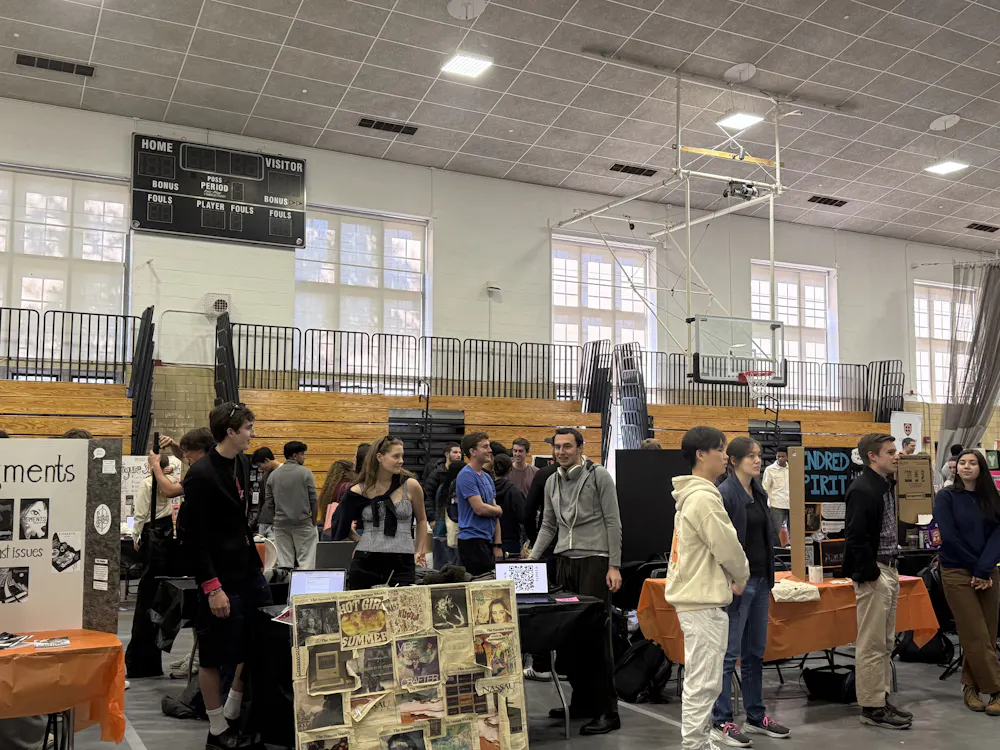
Students share mixed reactions as mandated officer and treasurer trainings return to in-person format
David EstradaThe University's student organization officers and treasurers returned to mandatory in-person training this fall after years of online sessions. Student reactions found parts of the training redundant or tedious, though most agreed the sessions were important.
The University's student organization officers and treasurers returned to mandatory in-person training this fall after years of online sessions. Student reactions found parts of the training redundant or tedious, though most agreed the sessions were important.