



The Program in the Study of Women and Gender, which marked its 20th anniversary last year, is looking to expand its reach into the politics and economics departments and add a Queer Studies component, said the program's acting director, history professor Christine Stansell '71.
Typically known for its strength in the pure humanities, the program is part of a larger trend in many gender studies programs to reassert relevance and modify their curricula.
"Women's studies is at the very heart of so many disciplines," Stansell said. "For me, what's most exciting about this is that feminism is integrated into world politics, domestically and abroad."
The program is shifting its focus towards politics by commissioning Wilson School and politics department faculty to teach on gender and development in the Middle East and the overlap between feminism and global politics, she said.
"The position of women worldwide coincides with the human rights agenda," Stansell said. "Students need to think about questions of gender to become educated citizens of the world."
Founded in 1982, the program has 15 associated faculty members, the majority of which are from the English and history departments.
"Our strength has historically been in history and the humanities," program manager Barbara Gershen said.
Though the program is small — awarding only 10 to 12 certificates in an average year — it is looking to expand.

Students are "wanting and demanding" more cross-listed courses in the Wilson School and Politics, Gershen added.
Cate Reid '04 is a Wilson School major working with lecturer Karen McGuinness toward a certificate in gender studies. Her thesis will focus on microfinance and female empowerment, a topic that arose from her Wilson School Task Force.
"I wish there were a broader range of professors," she said. "But once you're in the department, it's easy to contest courses [to satisfy program requirements]."
Reid explained that even though the program is flexible, it is still difficult to obtain a certificate in gender studies if a student is majoring in the sciences, for example, or another unrelated field.
There are no courses listed as covering the Queer Studies component now. Under her tenure, Stansell has been in negotiation with an independent nonprofit group called Fund for Reunions to endow a salary for a professor to come teach queer studies at Princeton.
The push towards including a Queer Studies curriculum is part of a larger trend across many universities.

At Stanford University, for example, where students can concentrate in feminist studies or receive a minor certificate, administrators articulated the demand for Queer Studies.
"We are trying to incorporate the transgender voice with the rise of Queer Studies. There are more and more people interested in that," said Nikhila Pai, program manager for Stanford's feminist studies department.
Read More

Princeton University Orchestra and men’s ultimate frisbee team named in University’s latest hazing report
Andrew ArthurTwelve students in the Princeton University Orchestra and Men's Ultimate Frisbee team were found responsible for hazing violations in the University's latest Campus Hazing Transparency Report. Sanctions ranged from Dean's warnings to disciplinary probation.
Twelve students in the Princeton University Orchestra and Men's Ultimate Frisbee team were found responsible for hazing violations in the University's latest Campus Hazing Transparency Report. Sanctions ranged from Dean's warnings to disciplinary probation.

Murray-Dodge Café celebrates 50th Anniversary, drawing over 260 students
Hifza KaleemOn Wednesday, Murray Dodge Cafe celebrated its 50th anniversary, drawing more than 260 students to celebrate with free cookies and merchandise.
On Wednesday, Murray Dodge Cafe celebrated its 50th anniversary, drawing more than 260 students to celebrate with free cookies and merchandise.
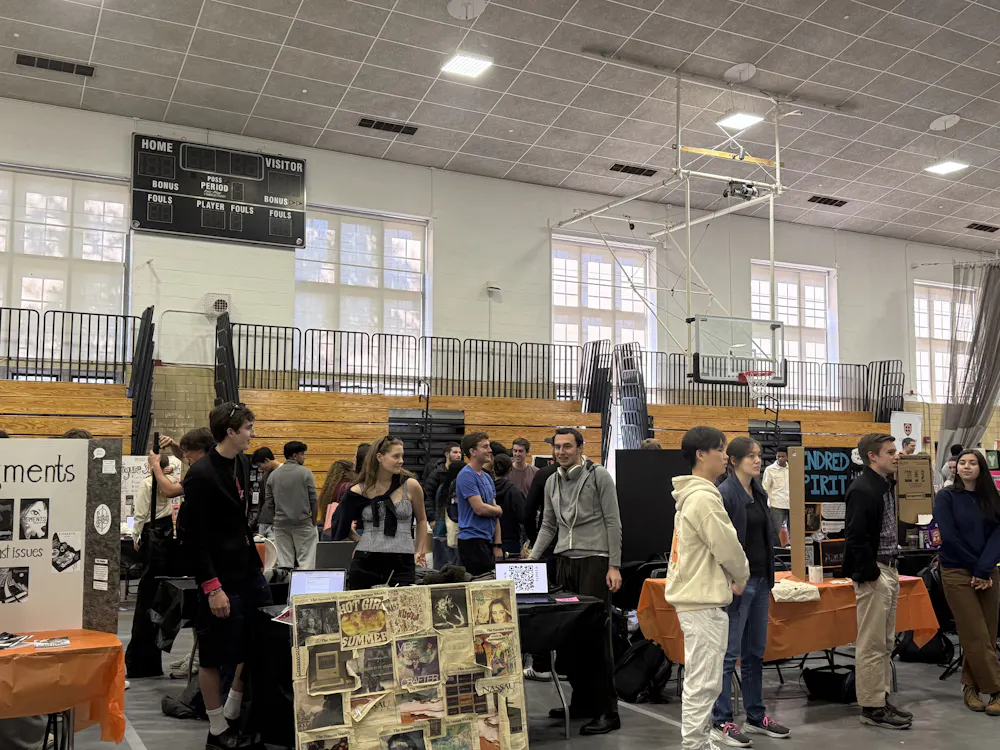
Students share mixed reactions as mandated officer and treasurer trainings return to in-person format
David EstradaThe University's student organization officers and treasurers returned to mandatory in-person training this fall after years of online sessions. Student reactions found parts of the training redundant or tedious, though most agreed the sessions were important.
The University's student organization officers and treasurers returned to mandatory in-person training this fall after years of online sessions. Student reactions found parts of the training redundant or tedious, though most agreed the sessions were important.