



Kathy Sartarelli, a docent archivist and tour guide at the Princeton University Art Museum, has found unique ways to bring the beauty and importance of art out of impenetrable glass cases and into the consciousness of visitors.
This past Thursday during a tour for a College of New Jersey group, she wielded a Chinese calligraphy brush and began to mimic the graceful inscription of an ancient Chinese scroll.
Discussing Buddhist figurines, she brought current events into play by displaying 2002 news clippings of a Buddhist statue torn down by the Taliban in Afghanistan. The students and their Chinese history professor looked on as snuff bottles, paintings and pottery emerged from the static state of artificial preservation and into the limelight of their historical and contemporary context.
Sartarelli leads museum tours as a member of the Docent Association of the Art Museum. The Association was established in 1966 when the Art and Archaeo-logy department appealed to the University League, a social and service group for the families of faculty and staff.
Eighteen members were initially recruited, a small fraction of the 78 docents currently involved. Roughly 75 percent of the docents give tours, said Nancy Greenspan, director of the organization. Other volunteers staff the museum information desk or find other ways to lend their knowledge and services to the Association and visitors of the University community.
Training
Docents represent diverse educations and backgrounds, including lawyers, schoolteachers and even a computer specialist. They are not required to have any previous experience with art. Curator of Education Carolyn Cassels runs a yearlong training session for prospective docents following the initial interview. Fellow docents are involved in this training and contribute to the ongoing process of education and research through study groups that produce information preserved in the archive.
"The role of the docent is to educate, but in the process you want people to be able to . . . interact," Greenspan said. "Their willingness [to interact] is partially dependent on age."
Tours for schoolchildren make up about 70 percent of the docket, Sartarelli said. The unabashed curiosity of these young visitors means there is usually no shortage of raised hands. Alumni, senior citizens, and even classes from other universities also take tours.

The list of weekly scheduled activities includes gallery highlight tours open to the public on Saturdays, lectures at gallery tours on Fridays and children's talks on Saturday mornings.
"One of the things I'm trying to get our docents to realize is that we need to reach out to the public," Greenspan said. The museum has seen more visitors since two banners were posted outside advertising gallery exhibitions, even during reconstruction of the Mc-Cormick library.
The Association already extends its services to a variety of museumgoers of all ages. Reaching out to the greater New Jersey community, docents offer kid-friendly one-hour tours to third-graders from elementary schools in Trenton once a week during the school year. As they learn about the history and art of various cultures, the schoolchildren receive stamps on their museum "passport" and join their teachers for activities afterwards.
The handicapped are also accommodated at the museum. During special tours, blind museumgoers learn about art by touching objects that lend themselves to such innovative exploration.
Having successfully completed a trial run this summer, the Association will launch a new initiative in January dubbed "Take a lunch break." Focusing on one gallery at a time, a docent will discuss one to three pieces with University staff and faculty on the second and fourth Wednesday of each month.
The Docent Association would also like to increase participation of the Friends of the Museum, the fundraising arm. While tours to educational institutions are free, and senior citizens receive a discount, others must pay for the services of the docents.

"This museum was designed as a teaching museum," Sartarelli said, so University students have scheduling priority.
However, Greenspan hopes to get more involved with Princeton professors. When University professors request that certain objects or exhibitions be displayed, the Curator of Education becomes the intermediary between the University and the Association, keeping docents up to date with the background of new additions.
Sartarelli has had a special interest in Chinese art since living in Singapore, as does Greenspan, who lived in Taiwan. Greenspan worked for five years as docent at the National Palace Museum in Taiwan, following a career in clothing production and design. While allowing and encouraging specialized interests, all the docents must be knowledgeable on the collections in each gallery.
A broad knowledge of the Museum exhibitions helps visitors to the museum "make connections between objects in the museum," Sartarelli said.
Read More

Princeton University Orchestra and men’s ultimate frisbee team named in University’s latest hazing report
Andrew ArthurTwelve students in the Princeton University Orchestra and Men's Ultimate Frisbee team were found responsible for hazing violations in the University's latest Campus Hazing Transparency Report. Sanctions ranged from Dean's warnings to disciplinary probation.
Twelve students in the Princeton University Orchestra and Men's Ultimate Frisbee team were found responsible for hazing violations in the University's latest Campus Hazing Transparency Report. Sanctions ranged from Dean's warnings to disciplinary probation.

Murray-Dodge Café celebrates 50th Anniversary, drawing over 260 students
Hifza KaleemOn Wednesday, Murray Dodge Cafe celebrated its 50th anniversary, drawing more than 260 students to celebrate with free cookies and merchandise.
On Wednesday, Murray Dodge Cafe celebrated its 50th anniversary, drawing more than 260 students to celebrate with free cookies and merchandise.
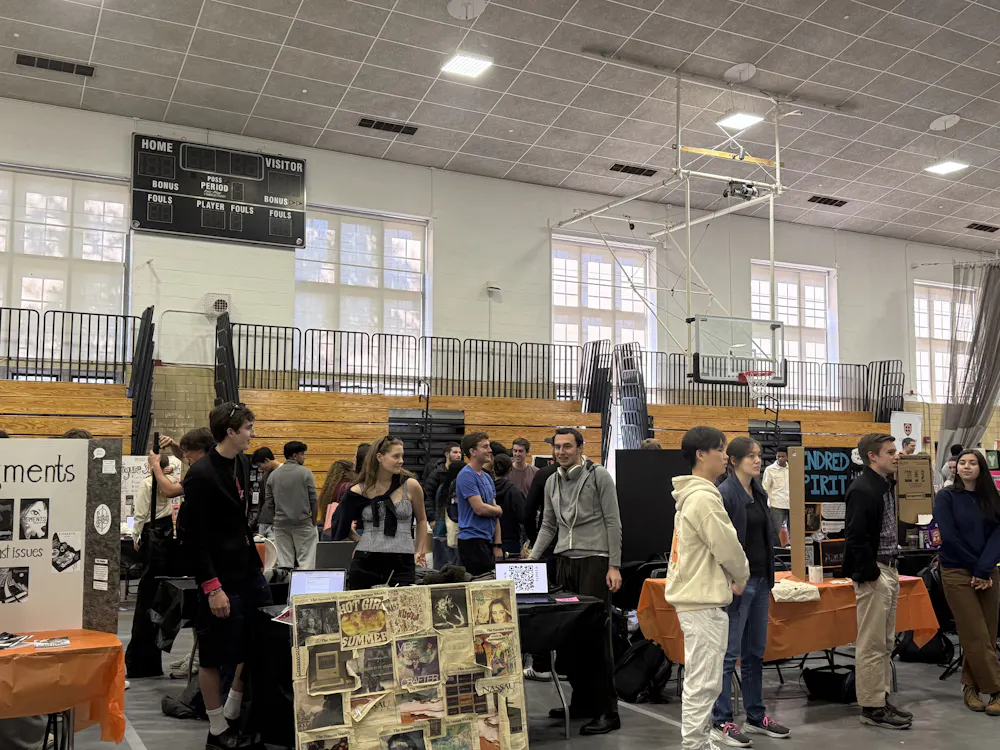
Students share mixed reactions as mandated officer and treasurer trainings return to in-person format
David EstradaThe University's student organization officers and treasurers returned to mandatory in-person training this fall after years of online sessions. Student reactions found parts of the training redundant or tedious, though most agreed the sessions were important.
The University's student organization officers and treasurers returned to mandatory in-person training this fall after years of online sessions. Student reactions found parts of the training redundant or tedious, though most agreed the sessions were important.