



Affiliates of Princeton University have given a total of $12,415 to support 2004 presidential candidate and former governor of Vermont Howard Dean, placing University members as one of the top 20 groups of contributors to the campaign.
Those in the Princeton ZIP code 08540 have donated $126,020 to the Dean campaign, the second highest contribution of all ZIP codes in the nation, according to third quarter finance reports candidates filed with the Federal Election Commission last week.
Princeton has joined a list of 450 university communities who have contributed a combined sum of $852,205 to Dean's $25.3 million total, trailing contributions from the retired sector of $1,779,489 and from lawyers and law firms, which have contributed $966,232.
It is unknown whether much of the contributions from the Princeton University come from faculty, administrators or students.
So far, there are 66 "Princetonians" registered with Princetonfordean.com, which states the campaign's goal to register a total of 500.
Opinions vary as to why Howard Dean has garnered so much support in the area.
"Princeton University and Princeton New Jersey are centers of political liberalism," Fred Greenstein, a former University politics professor, said in an email. "If you include the town as well as the Univesity zip code, the Dean support would track with a town in which the Borough Council has just passed a resolution condemning the Bush administration's Patriot Act."
Area resident Nicholas Katzenbach '43, former attorney general under President Johnson, said that he has contributed to the Dean campaign as well as to several others.

"I don't usually support people in the primaries, but I guess now you have to spend any money you can afford, because everyone seems to needs money. Money seems to be winning office," Katzenbach said.
Some attribute Dean's popularity with universities to his intelligent proposals and willingness to defend his opinions.
"I can see that to an intellectual, a more original thinker like Dean would appeal more than the kind of mushy, washy people who are carefully nuanced in their statements," Wilson School professor Uwe Reinhardt said.
Many note Dean's ability to attract the highly educated.
"I think [Dean] has a distinct appeal to intellectually minded, or you might say 'thinking people,'" economics professor Alan Blinder said. "That's a term I don't mean to apply exclusively to professors, because professors are only a minority of the area of 08540."
Nolan McCarty, a professor in the Wilson School, believes that Dean's similarity to the local population has contributed to his popularity.

"His medical background probably fits well with people who work in the drug industry in the area, he's a professional who's highly educated which probably sits well with the highly educated," McCarty said. Community members have also stressed the importance fundraising will play in the election.
"I don't like [the influence of money in politics] myself, but I give. It's a little bit like unilateral disarmament — it's not wise when you've got an armed enemy," said Blinder, who has attended a local fundraiser for Dean.
Several professors expressed doubt that the money attributed to the University has come from the faculty.
Blinder guessed some of the support may have come from students.
Some professors believe it is unprofessional or inappropriate to publicly endorse candidates.
"The University can't be too involved because it might affect the tax exempt status, and professors tend to shy away from being too involved in these activities for fear it might compromise their objectivity on social and other political issues," McCarty said.
Others believe the integrity of their work may be compromised by publicly endorsing a candidate.
"[Professors] are much more interested in getting a policy done than who actually does it. Whoever is the most useful donkey to carry a policy idea, that's the donkey you load it on. I've always worked this way," Reinhardt said.
Read More

Princeton University Orchestra and men’s ultimate frisbee team named in University’s latest hazing report
Andrew ArthurTwelve students in the Princeton University Orchestra and Men's Ultimate Frisbee team were found responsible for hazing violations in the University's latest Campus Hazing Transparency Report. Sanctions ranged from Dean's warnings to disciplinary probation.
Twelve students in the Princeton University Orchestra and Men's Ultimate Frisbee team were found responsible for hazing violations in the University's latest Campus Hazing Transparency Report. Sanctions ranged from Dean's warnings to disciplinary probation.

Murray-Dodge Café celebrates 50th Anniversary, drawing over 260 students
Hifza KaleemOn Wednesday, Murray Dodge Cafe celebrated its 50th anniversary, drawing more than 260 students to celebrate with free cookies and merchandise.
On Wednesday, Murray Dodge Cafe celebrated its 50th anniversary, drawing more than 260 students to celebrate with free cookies and merchandise.
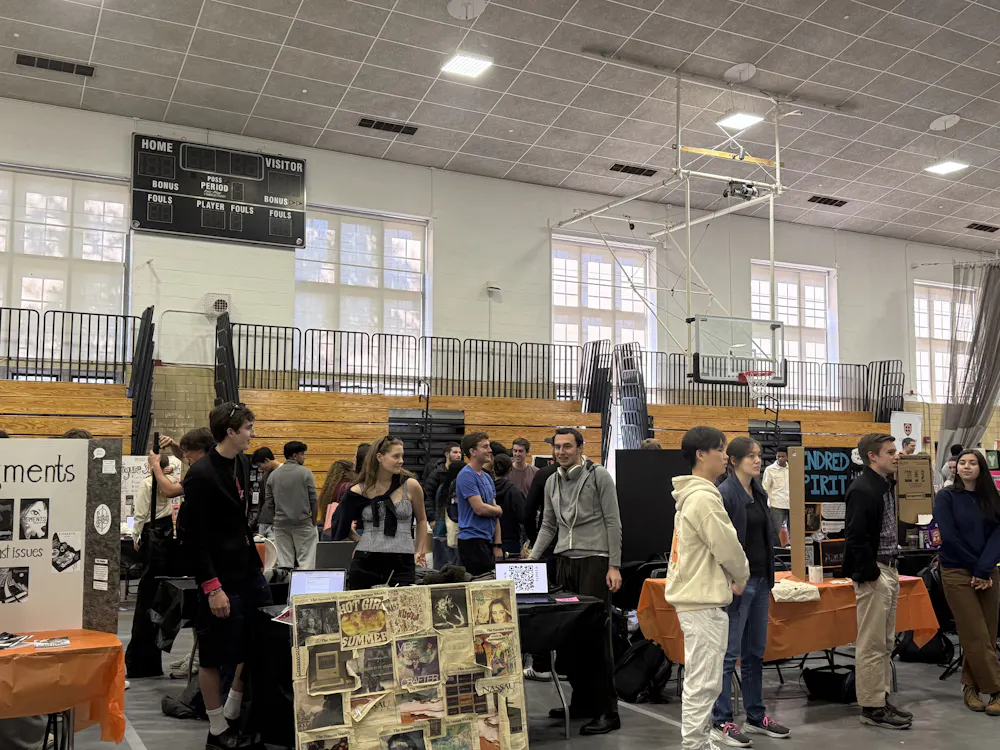
Students share mixed reactions as mandated officer and treasurer trainings return to in-person format
David EstradaThe University's student organization officers and treasurers returned to mandatory in-person training this fall after years of online sessions. Student reactions found parts of the training redundant or tedious, though most agreed the sessions were important.
The University's student organization officers and treasurers returned to mandatory in-person training this fall after years of online sessions. Student reactions found parts of the training redundant or tedious, though most agreed the sessions were important.