



The U.S. military's increasing role as a major tool in American foreign policy has created new policy concerns for the country, Dana Priest, a reporter and military intelligence writer for The Washington Post, said in a lecture yesterday.
"The US military dominates our foreign policy in a way that would surprise most people," Priest said, adding that the issue is more apparent under the Bush administration.
Priest has covered military operations in Panama, Iraq, Bosnia and Kosovo.
Priest said the military's enhanced role in diplomacy and peacekeeping have put strains on traditional military structure.
"I found, not surprisingly, a mismatch between the mission and the training and culture," Priest said, describing her experience with a regiment assigned to peacekeeping duties in Kosovo.
"In 10 years of nation building, the army has refused to come up with training for these situations," Priest said, agreeing with an Army general who told her development of such training is "just too hard."
"In peacekeeping, the dynamic tends to be 'just don't get into trouble' because no one knows what success is anyway," Priest said.
Priest discussed the possibility of multilateral, international forces playing a greater role in future peacekeeping missions.

"I definitely think the military will support someone else doing nation building," she said.
Priest also described the growth of military special forces teams, which she said she first learned about while reporting on an unrelated story at an Army secretary's briefing. While there, she saw a world map marked by 300 red flags indicating deployment of special forces troops worldwide, including Indonesia and Pakistan, for which Congress had suspended military action.
The special forces commission had created a legal loophole, Priest said, that enabled troops to be sent anyway.
Also, because of another legal quirk, "the CIA receives more oversight than the special forces," she said.
"We're faced with a situation where we know very little about what they do," she said.
She predicted that as a result of the War on Terrorism "we will see increased military spending, increases in secret military alliances and an increase in CIA detention centers."

Priest also said she holds out hope for the futures of Iraq and Afghanistan, though there is currently a shaky balance in Iraq between violence and progress.
"Which one is going to outweigh the other, we just can't know yet," Priest said.
Read More

Princeton University Orchestra and men’s ultimate frisbee team named in University’s latest hazing report
Andrew ArthurTwelve students in the Princeton University Orchestra and Men's Ultimate Frisbee team were found responsible for hazing violations in the University's latest Campus Hazing Transparency Report. Sanctions ranged from Dean's warnings to disciplinary probation.
Twelve students in the Princeton University Orchestra and Men's Ultimate Frisbee team were found responsible for hazing violations in the University's latest Campus Hazing Transparency Report. Sanctions ranged from Dean's warnings to disciplinary probation.

Murray-Dodge Café celebrates 50th Anniversary, drawing over 260 students
Hifza KaleemOn Wednesday, Murray Dodge Cafe celebrated its 50th anniversary, drawing more than 260 students to celebrate with free cookies and merchandise.
On Wednesday, Murray Dodge Cafe celebrated its 50th anniversary, drawing more than 260 students to celebrate with free cookies and merchandise.
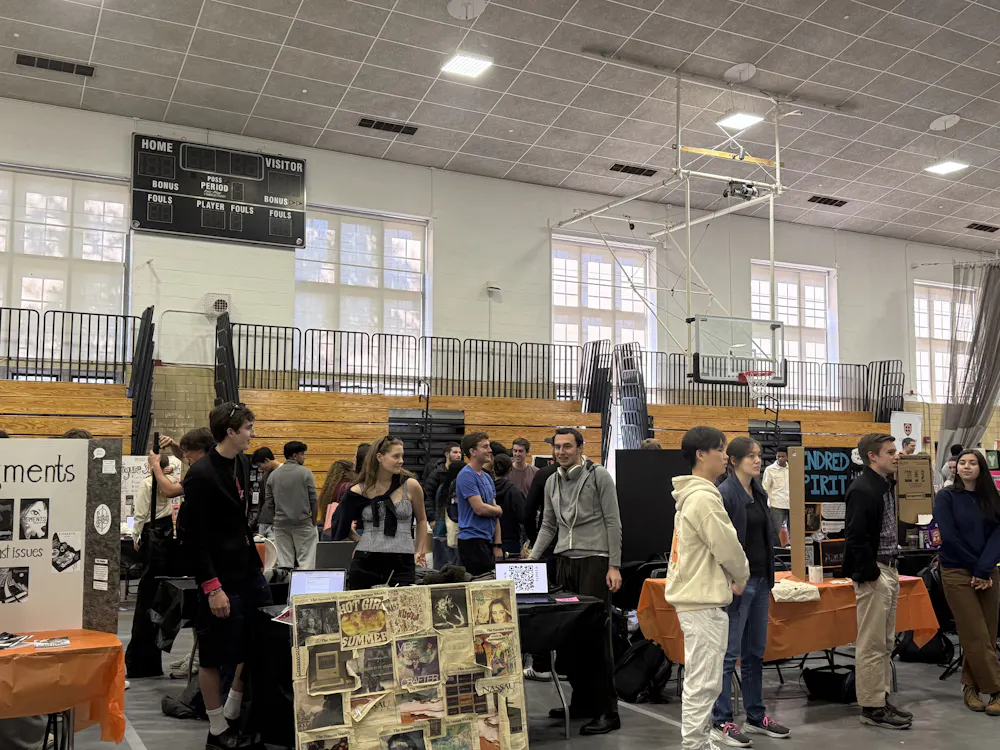
Students share mixed reactions as mandated officer and treasurer trainings return to in-person format
David EstradaThe University's student organization officers and treasurers returned to mandatory in-person training this fall after years of online sessions. Student reactions found parts of the training redundant or tedious, though most agreed the sessions were important.
The University's student organization officers and treasurers returned to mandatory in-person training this fall after years of online sessions. Student reactions found parts of the training redundant or tedious, though most agreed the sessions were important.