



The University has created a new program — the Princeton AIDS Initiative (PAI) — to respond to the worldwide AIDS epidemic.
PAI will host speakers, including Patricia Siplon on Oct. 20, and feature a film series, which Ariel Wagner '05, the president of the Student Global AIDS Campaign, will organize. The PAI will act as clearinghouse for campus AIDS activism and discussion.
"The most important goals for us are to raise the awareness of the Princeton community to the range and scope of this problem and engage the community to do more," PAI director and politics professor Evan Lieberman said. "Beyond thinking, we'd like to see some action."
Finding a presence
PAI launched a website, www.wws.princeton.edu/pai, which will publicize courses that cover AIDS-related material, internship and job opportunities at AIDS organizations and names of faculty members conducting AIDS research.
An estimated 42 million people are infected with HIV/AIDS in the world. There are about five million new HIV infections per year.
The idea for PAI surfaced last spring after a group of Wilson School graduate students and Lieberman separately approached Wilson School Dean Anne-Marie Slaughter '80 about the AIDS crisis.
Slaughter "was concerned that there was no organized unit [to encourage AIDS awareness]," Lieberman said.
The graduate students had taken a class with Keith Hansen, the manager of the World Bank's AIDS Campaign for Africa, called WWS 594M: The Development Challenge of HIV/AIDS.

Rachel Tobey, PAI graduate student coordinator, said that Hansen was an inspiring professor.
"He made us feel like we couldn't sit back and let this happen," she said.
Hansen's course emphasized that "HIV/AIDS is much more than a health problem — it's a symptom of a broken society," Tobey said.
Questions
In tackling the scope and implications of the AIDS epidemic, Tobey and other students asked, "What can I — or we as a community — do about it? Where are our assets best suited?"
After the students from WWS 594M and Lieberman met with Slaughter, a larger group of faculty, undergraduates and graduate students held a brainstorming session that generated a "laundry list of ideas," Tobey said. And those ideas were finally put into action this fall.
"In the past, there have been a wide variety of students and faculty interested in the issue of global HIV/AIDS — whether through research, campus activism or other activities," Wagner, PAI's undergraduate student leader, said.

But until now, Wagner said, these activities have not been coordinated at Princeton.
"With the launch of PAI, members of the Princeton community who are interested doing more to understand and fight the proliferation of HIV/AIDS will now have a central resource and means through which to channel some of these energies," she added.
Lieberman stressed that PAI hopes to foster an interdisciplinary approach to dealing with the AIDS crisis by encouraging study "within broader courses on Africa, Latin American, Asia and international relations."
'Problem'
"Even if [faculty] haven't done scholarship on AIDS, they see it as an important problem to address," he said.
Lieberman said the University's lack of a medical or public health school won't be a barrier.
Rather, he said the Wilson School's public policy emphasis will allow it to draw more speakers involved in the politics, economics and policy of the AIDS crisis.
"There are countless ways that students here at Princeton can impact the AIDS crisis, big and small and regardless of one's interests," Wagner said.
"Whether that means traveling to Haiti, making a documentary, doing an economic analysis of drug pricing in the developing world or just donating money, we can all make a difference if we are willing."
Read More
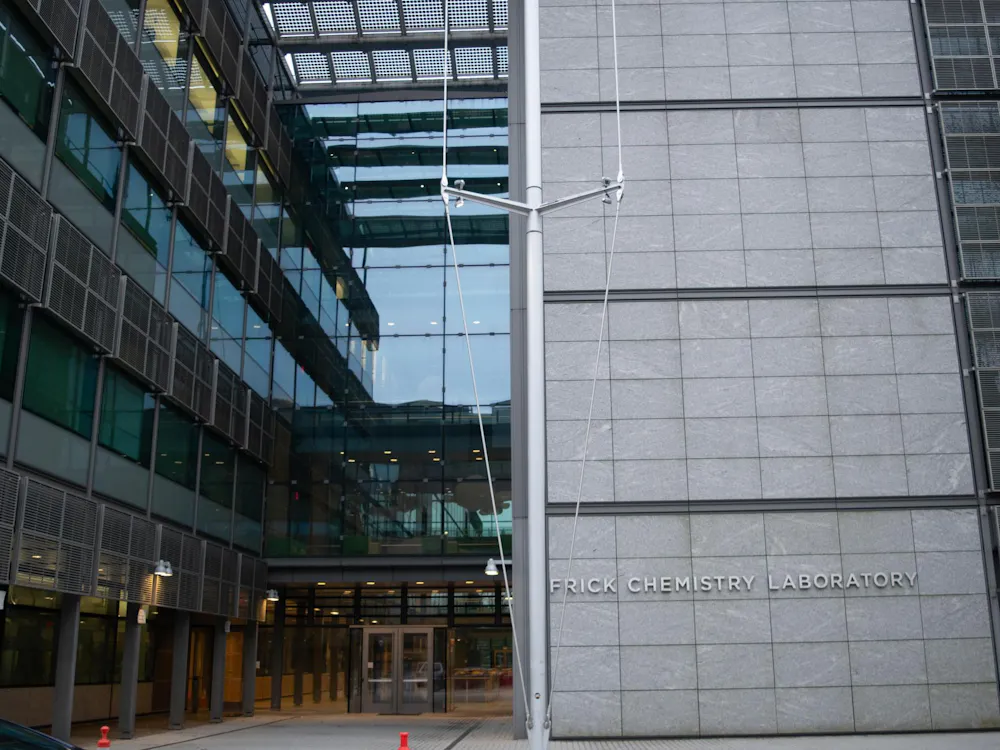
Two Princeton professors win 2027 American Chemical Society awards
Kimberly HutchinsonPrinceton chemistry professors David MacMillan and Paul Chirik were named 2027 American Chemical Society national award winners for their contributions to the field of chemistry.
Princeton chemistry professors David MacMillan and Paul Chirik were named 2027 American Chemical Society national award winners for their contributions to the field of chemistry.

Federal court blocks elimination of duration of status for international students
Luke GrippoA federal court has temporarily stopped the Department of Homeland Security from implementing its new final rule that would limit how long international students and exchange visitors can stay in the country. The next update on the case is set for Oct. 2.
A federal court has temporarily stopped the Department of Homeland Security (DHS) from implementing its new final rule that would limit how long international students and exchange visitors can stay in the country. The next update on the case is set for Oct. 2.

Forbes renovation scope still undecided as Hobson prepares to open
Gus Vogel and Daphne LewisAs Forbes students prepare to become the first cohort to live in Hobson College next year, specifics on Forbes' own renovation remains unsettled by the University nearly six months after the University announced it was accepting consultant bids for a campus-wide dorm renovation plan.
As Forbes students prepare to become the first cohort to live in Hobson College next year, specifics on Forbes' own renovation remains unsettled by the University nearly six months after the University announced it was accepting consultant bids for a campus-wide dorm renovation plan.