



With the general presidential election more than a year away, the University has started gearing up for the primary season. Student groups have sprung up supporting Democratic contenders Howard Dean, Wesley Clark and John Edwards P '04, and the College Democrats are planning a trip to New Hampshire in January for its members to campaign for their candidates.
"[Bush has] been one of the worst presidents in modern history," said Owen Conroy '05, president of the College Democrats. "As progressive college students, that should be firing us up to do everything in our power to change the course of the nation and make sure we don't have four more years of this."
Nearly 50 students attended Students for Clark's Sept. 17 information session, co-founder Shlomi Sher GS said. Clark, a retired four-star general, had announced he would run only hours before the event, and about half of the students who showed up were simply curious about the new candidate.
Students for Dean drew about 20 students to its meeting the following day, said co-founder and Wilson School student Joaquin Tamayo GS.
The group has launched a website, www.princetonfordean.com, and scheduled its first on-campus Meetup for tomorrow. The former Vermont governor's success has been in part attributed to local gatherings of his supporters, arranged through Meetup.com.
Starting this week, Clark supporters will staff a table in Frist. Both groups are launching poster campaigns and planning upcoming information sessions and events to raise awareness about their candidates.
Meanwhile, Catharine Edwards '04 is forming a group in support of her father, Sen. John Edwards of North Carolina, who held a fundraiser at the Nassau Inn on Sept. 18.
Though the group has not yet held a formal information session, Edwards estimated that more than 50 students have already expressed interest in joining.

She said that Students for Edwards would "get a dialogue going about the kinds of things that young people are concerned about . . . and have a good outlet right to him."
"He has a lot of insight into how college-age people think and what their issues are and what their lives are like, but every candidate needs to hear ideas," Edwards said. "It's a great opportunity, not only for us, but for him."
Though Edwards has worked for years on her father's Senate and presidential campaigns, Tamayo's and Sher's previous political involvement has been minimal.
Tracking Dean's progress on the Internet over the summer, Tamayo decided to found the group after noticing there was no Princeton presence on the Students for Dean website. With a few quick emails, he located significant interest among his peers in the Wilson School.
Dean's popularity, Tamayo explained, stems from his belief that voters are not looking for someone who is "accommodationist or slightly less worse" than Bush.
Last March, Tamayo attended the Princeton community's first MeetUp of roughly 20 Dean supporters — which included, he noted, a few Republicans who were "embarrassed as to what their party has become."

The primary season kicks off in late January with New Hampshire's election, followed by the Iowa caucus and South Carolina primary in February. The primaries culminate across the nation in early March.
Though the New Jersey primary is not critical because it is held at the end of the cycle, the Dean group hopes to encourage students to vote in their home states by absentee ballot and build momentum going into the general election.
But a Dean victory in the primary is by no means assured, especially with Clark's entry into the race garnering much of the recent media focus. A Sept. 26 Newsweek Magazine poll showed Dean with the support of 12 percent of Democratic voters, trailing Clark's 16 percent.
Sher attributed Clark's popularity to his coherent vision and ability to "redefine the terms of the debate" — which, Sher said, will serve him well in the general election.
"He articulates what I believe better than any of the other candidates," he said, "but he does it with a language and rationale that will appeal to a lot of the centrists."
Sher became involved with the Draft Clark initiative over the summer and spent a few days at the movement's Little Rock headquarters before coming to Princeton.
Tamayo noted Princeton's reputation for being "at worst conservative, at best apolitical."
This general lack of activism on campus echoes a nationwide disconnect between politics and everyday life, he explained, but he hopes his group will help change that.
"Given the right incentive to support a candidate," he said, "Princeton students will be motivated to do so."
Though students may disagree over who has the best chance of defeating Bush, all believe the 2004 election is critical.
"If the Democratic party wants to maintain its status as a power player, they have to win," Tamayo said.
"If we reelect Bush, we're headed for disaster," Sher added.
Read More
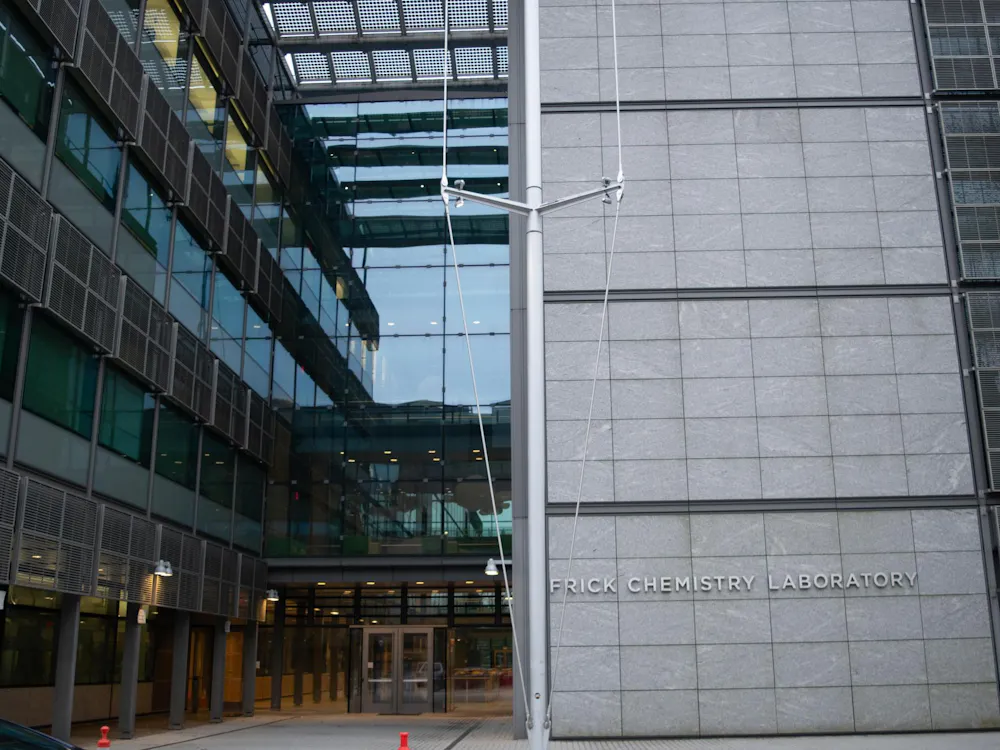
Two Princeton professors win 2027 American Chemical Society awards
Kimberly HutchinsonPrinceton chemistry professors David MacMillan and Paul Chirik were named 2027 American Chemical Society national award winners for their contributions to the field of chemistry.
Princeton chemistry professors David MacMillan and Paul Chirik were named 2027 American Chemical Society national award winners for their contributions to the field of chemistry.

Federal court blocks elimination of duration of status for international students
Luke GrippoA federal court has temporarily stopped the Department of Homeland Security from implementing its new final rule that would limit how long international students and exchange visitors can stay in the country. The next update on the case is set for Oct. 2.
A federal court has temporarily stopped the Department of Homeland Security (DHS) from implementing its new final rule that would limit how long international students and exchange visitors can stay in the country. The next update on the case is set for Oct. 2.

Forbes renovation scope still undecided as Hobson prepares to open
Gus Vogel and Daphne LewisAs Forbes students prepare to become the first cohort to live in Hobson College next year, specifics on Forbes' own renovation remains unsettled by the University nearly six months after the University announced it was accepting consultant bids for a campus-wide dorm renovation plan.
As Forbes students prepare to become the first cohort to live in Hobson College next year, specifics on Forbes' own renovation remains unsettled by the University nearly six months after the University announced it was accepting consultant bids for a campus-wide dorm renovation plan.