



It takes courage these days to be a critic of college athletics, says former Princeton president William Bowen GS '58. He spoke to a crowded lecture hall yesterday on an intercollegiate athletic system he believes to be in serious crisis.
At the heart of the issue is the gulf between the goals of higher education and varsity athletics.
Bowen said recruited Ivy athletes "differ more and more from their fellow students; they enter with weaker credentials and tend to underperform academically, [and] increasingly they are seen on campuses as a group apart from their classmates."
While emphasizing that he is critical of athletic policies, not individual student athletes, Bowen revealed statistics about athletic life.
Admission advantage
Across all SAT ranges, for instance, recruited male athletes enjoy a significant admission advantage over their nonathletic male peers.
Athletes tend to segregate themselves socially and avoid nonathletic endeavours like student government and the performing arts, he said. Eighty percent of recruited athletes in "high profile" Ivy sports are in the bottom third of the class.
Yet Bowen said the college athletic environment makes student-athletes perform worse academically than their college admissions tests would have suggested.
Practice time
The amount of time and energy athletes spend practicing and playing affects students differently than those participating in other extracurriculars, he said.

Such statistics prompted the Council of Ivy League Presidents to establish a seven-week athletic moratorium last year. By preventing athletes from practicing with a coach or team for seven weeks of the year, the moratorium aims to give them time to focus on schoolwork, try new activities and meet new social groups.
Yet, according to Bowen's own findings, "highly significant degrees of underperformance persist among recruited athletes even when these athletes are not playing on intercollegiate teams" — as in cases of sports injury.
Bowen named several "costs of the academic-athletic divide."
Talented nonathletic students may turn away as more recruited athletes swell class ranks and walk-on athletes may be denied the chance to play as recruits fill teams.
Another cost was the amount of resources spent on athletic facilities and personnel to uphold the image of athletic teams.
Yet Bowen remained hopeful, especially in view of recent athletic reforms in the Ivies, that these trends could be reversed.

His prescription?
"More regularly-chosen students, who have come to highly selective colleges for the right educational reasons, should have the right to play competitively — to learn the lessons that sports can teach, and to have fun in the process."
Read More

Princeton University Orchestra and men’s ultimate frisbee team named in University’s latest hazing report
Andrew ArthurTwelve students in the Princeton University Orchestra and Men's Ultimate Frisbee team were found responsible for hazing violations in the University's latest Campus Hazing Transparency Report. Sanctions ranged from Dean's warnings to disciplinary probation.
Twelve students in the Princeton University Orchestra and Men's Ultimate Frisbee team were found responsible for hazing violations in the University's latest Campus Hazing Transparency Report. Sanctions ranged from Dean's warnings to disciplinary probation.

Murray-Dodge Café celebrates 50th Anniversary, drawing over 260 students
Hifza KaleemOn Wednesday, Murray Dodge Cafe celebrated its 50th anniversary, drawing more than 260 students to celebrate with free cookies and merchandise.
On Wednesday, Murray Dodge Cafe celebrated its 50th anniversary, drawing more than 260 students to celebrate with free cookies and merchandise.
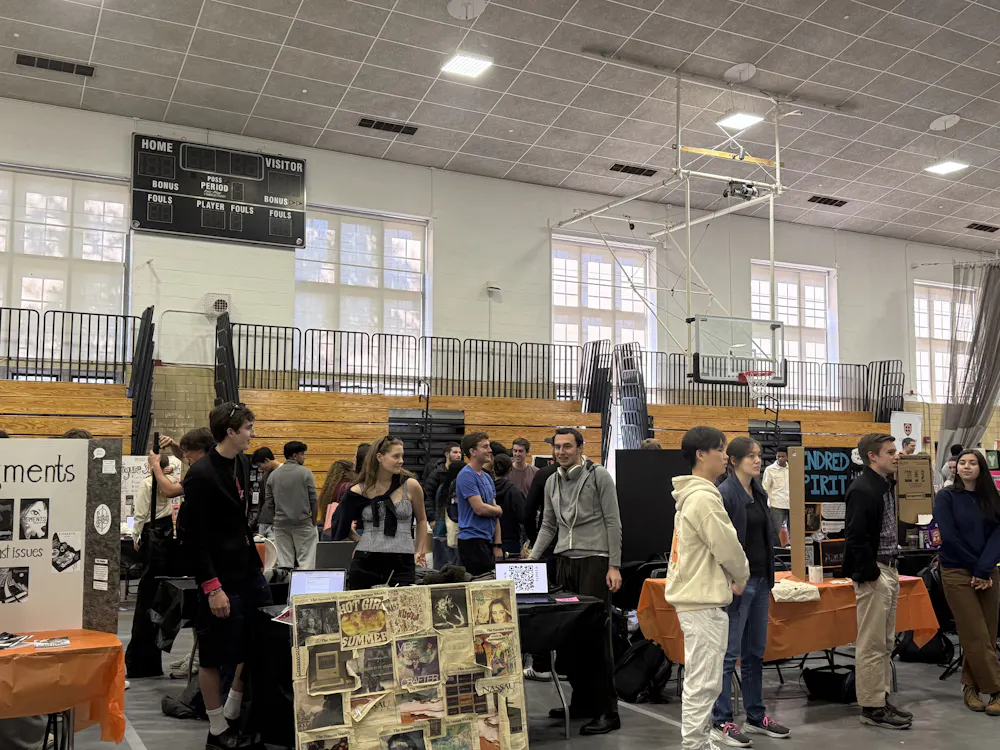
Students share mixed reactions as mandated officer and treasurer trainings return to in-person format
David EstradaThe University's student organization officers and treasurers returned to mandatory in-person training this fall after years of online sessions. Student reactions found parts of the training redundant or tedious, though most agreed the sessions were important.
The University's student organization officers and treasurers returned to mandatory in-person training this fall after years of online sessions. Student reactions found parts of the training redundant or tedious, though most agreed the sessions were important.