



With the Committee on Conference and Faculty Appeal unable to gather last semester or during the summer, history professor Andrew Isenberg's fate at the University remains in limbo following his denial of tenure last spring.
Isenberg filed an appeal after the University turned down his bid last semester.
A student petition of 500 signatures and personal protest statements sent to President Tilghman strengthened his resolve to appeal.
"I was always going to file an appeal," he said. "The students' effort on my behalf was heartening — and made me feel better about the appeal."
Uproar at Isenberg's denial was considerable last semester, as he has long been considered a skilled teacher.
His 374
His course HIS 374: History of the American West is extremely popular among University students, requiring 11 precepts and listed as a "cool course" in the fall Student Course Guide.
A faculty member since 1997, Isenberg received the 2001 President's Distinguished Teaching Award.
But student popularity carries no weight in the appeal process, history department chair Robert Tignor said.

Only faculty who believe their tenure reviews were compromised by procedural error may file an appeal.
The appeals process does not reconsider the teaching ability, scholarship, or citizenship analyzed in the original process. The committee that handles this process consists of six faculty members elected by their peers — four tenured and two untenured.
'Rare but not unprecedented'
"It is rare for faculty members to invoke this process, though not unprecedented," said Toni Turano, associate dean of the faculty. During Tignor's time on the committee, there were one to three per year, he said.
"Was some information lacking? Was his effectiveness as a teacher not properly conveyed?" said Tignor, who served on the appeal committee for three years. An affirmative answer to questions like these could provide Isenberg valid grounds for appeal.
No details
Isenberg declined to give details of his appeal case.
Both Tignor and humanities council chair and history professor Anthony Grafton emphasized that teaching skills are given considerable weight in the original tenure process by both the administration and the individual department.

Grafton said that a professor's popularity is not a major factor when the University decides cases of tenure.
"Wider questions of popularity are hard to weigh," Grafton said, noting that subject matter and class size can have a considerable effect on how students perceive a professor as "popular."
In the original tenure process, the Committee of Three — six faculty members, the senior deans and the provost — read the entire file, then make a recommendation to the University president who renders the final decision.
Tilghman has encouraged Isenberg to submit an appeal.
"Professor Isenberg has options," she said in the 'Prince' last Spring. "He can request an appeal and that is a judicial system that allows for the fact that we could have made a mistake. He should do that." Meanwhile, while waiting for the appeals committee to convene, Isenberg is teaching and researching as usual — and working on contingency plans for a job next year.
Read More

Princeton University Orchestra and men’s ultimate frisbee team named in University’s latest hazing report
Andrew ArthurTwelve students in the Princeton University Orchestra and Men's Ultimate Frisbee team were found responsible for hazing violations in the University's latest Campus Hazing Transparency Report. Sanctions ranged from Dean's warnings to disciplinary probation.
Twelve students in the Princeton University Orchestra and Men's Ultimate Frisbee team were found responsible for hazing violations in the University's latest Campus Hazing Transparency Report. Sanctions ranged from Dean's warnings to disciplinary probation.

Murray-Dodge Café celebrates 50th Anniversary, drawing over 260 students
Hifza KaleemOn Wednesday, Murray Dodge Cafe celebrated its 50th anniversary, drawing more than 260 students to celebrate with free cookies and merchandise.
On Wednesday, Murray Dodge Cafe celebrated its 50th anniversary, drawing more than 260 students to celebrate with free cookies and merchandise.
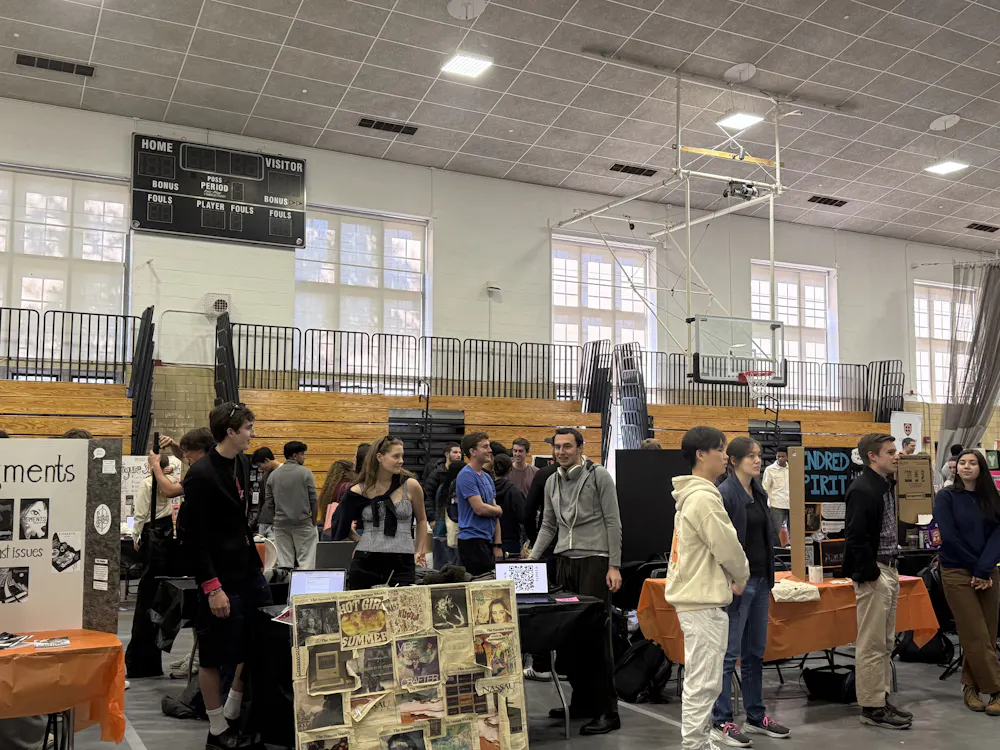
Students share mixed reactions as mandated officer and treasurer trainings return to in-person format
David EstradaThe University's student organization officers and treasurers returned to mandatory in-person training this fall after years of online sessions. Student reactions found parts of the training redundant or tedious, though most agreed the sessions were important.
The University's student organization officers and treasurers returned to mandatory in-person training this fall after years of online sessions. Student reactions found parts of the training redundant or tedious, though most agreed the sessions were important.