



Robert Hargraves, emeritus professor of geosciences and an expert in both earthly and extraterrestrial geology, died March 21 at Princeton Medical Center of complications from radiation treatment and chemotherapy. He was 74.
"All of us in the geosciences department had the highest regard for Rob as a scientist and a colleague," said Anthony Dahlen, chairman of the geosciences department.
"Through his broad geological perspective, he made many important contributions to science, and we are saddened that his career was tragically shortened," Dahlen added.
A native of South Africa and a member of the Princeton faculty from 1961 until his retirement in 1994, Hargraves spent much of his career studying the magnetic properties of the rocks of the earth's crust, looking for clues about the origins and movement of the continents.
He received his B.Sc. with honors from the University of Natal in South Africa in 1948, and began his work as a mining engineer there. After moving to the United States and serving in the U.S. Army from 1953-1956, he came to Princeton as a graduate student and later became a member of the faculty.
Working with some of the oldest rocks in the world in South Africa, he became an expert on the early Earth, said geosciences professor Lincoln Hollister. "He had this perspective of the history of the Earth," he said.
Hargraves was the first to identify certain geological features in South Africa as the impact crater of a meteorite. He used the same criteria to identify another crater in southwestern Montana, one of the largest impact sites in the world.
He also studied the moon rocks recovered from the Apollo missions and analyzed the data from the Martian lander missions of the 1970s and 1999.

Studying other objects in the solar system is "very relevant to the early history of the Earth," said geoscience professor Jason Morgan.
Morgan said Hargraves was "the most pleasant person I have ever worked with – just someone you'd like to have as a colleague."
Read More
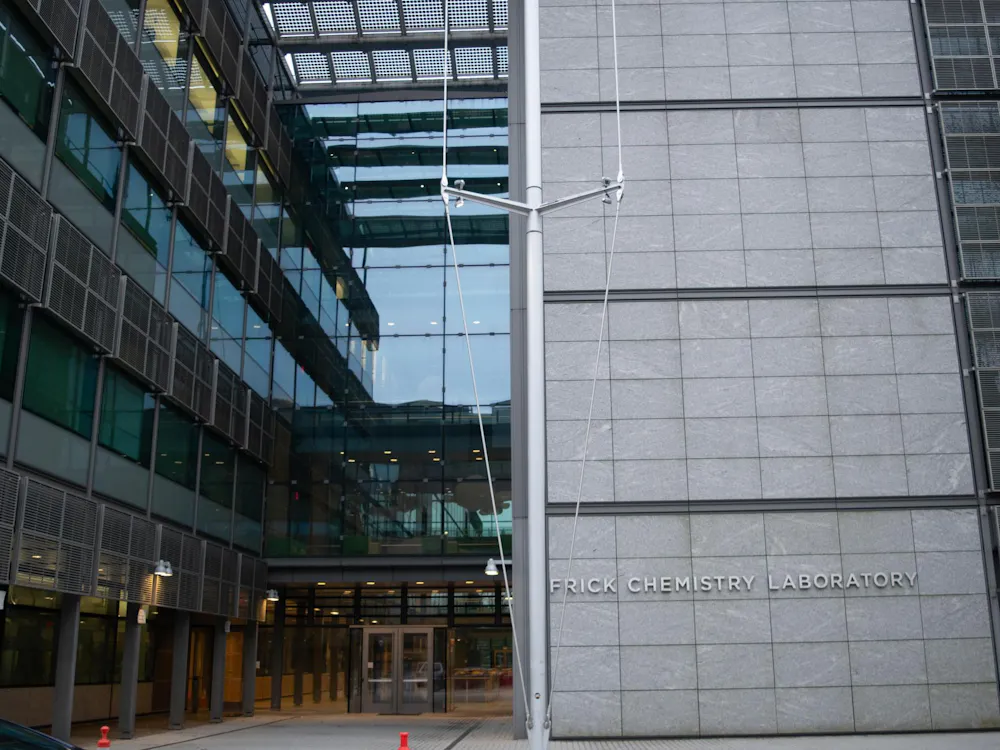
Two Princeton professors win 2027 American Chemical Society awards
Kimberly HutchinsonPrinceton chemistry professors David MacMillan and Paul Chirik were named 2027 American Chemical Society national award winners for their contributions to the field of chemistry.
Princeton chemistry professors David MacMillan and Paul Chirik were named 2027 American Chemical Society national award winners for their contributions to the field of chemistry.

Federal court blocks elimination of duration of status for international students
Luke GrippoA federal court has temporarily stopped the Department of Homeland Security from implementing its new final rule that would limit how long international students and exchange visitors can stay in the country. The next update on the case is set for Oct. 2.
A federal court has temporarily stopped the Department of Homeland Security (DHS) from implementing its new final rule that would limit how long international students and exchange visitors can stay in the country. The next update on the case is set for Oct. 2.

Forbes renovation scope still undecided as Hobson prepares to open
Gus Vogel and Daphne LewisAs Forbes students prepare to become the first cohort to live in Hobson College next year, specifics on Forbes' own renovation remains unsettled by the University nearly six months after the University announced it was accepting consultant bids for a campus-wide dorm renovation plan.
As Forbes students prepare to become the first cohort to live in Hobson College next year, specifics on Forbes' own renovation remains unsettled by the University nearly six months after the University announced it was accepting consultant bids for a campus-wide dorm renovation plan.